
A Visit with a Past Version of Myself
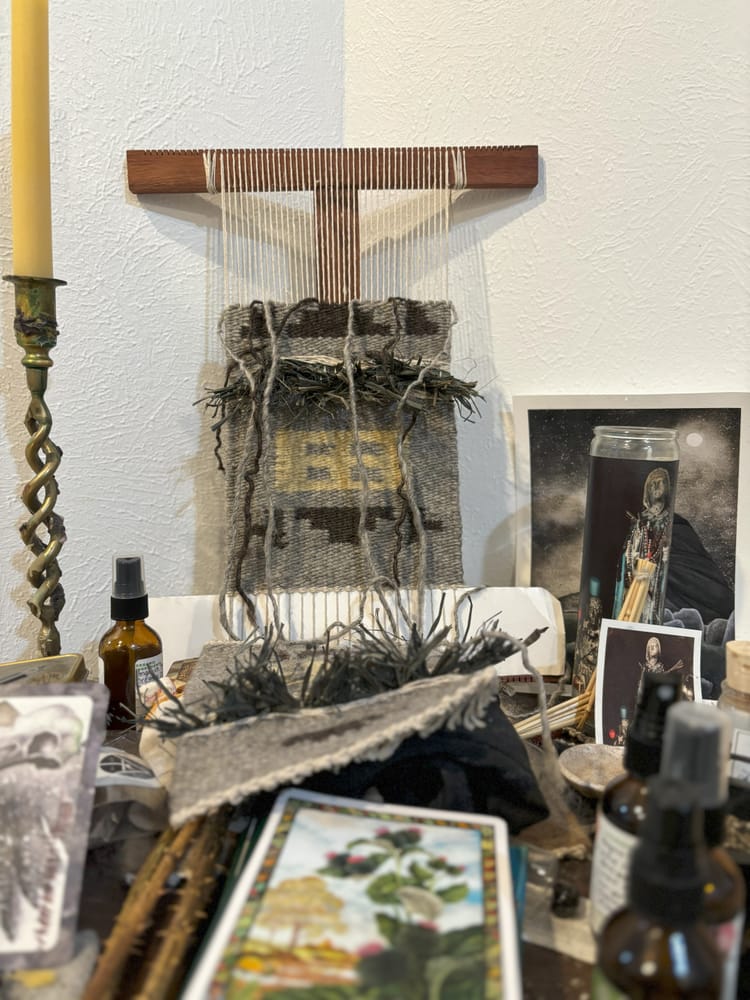
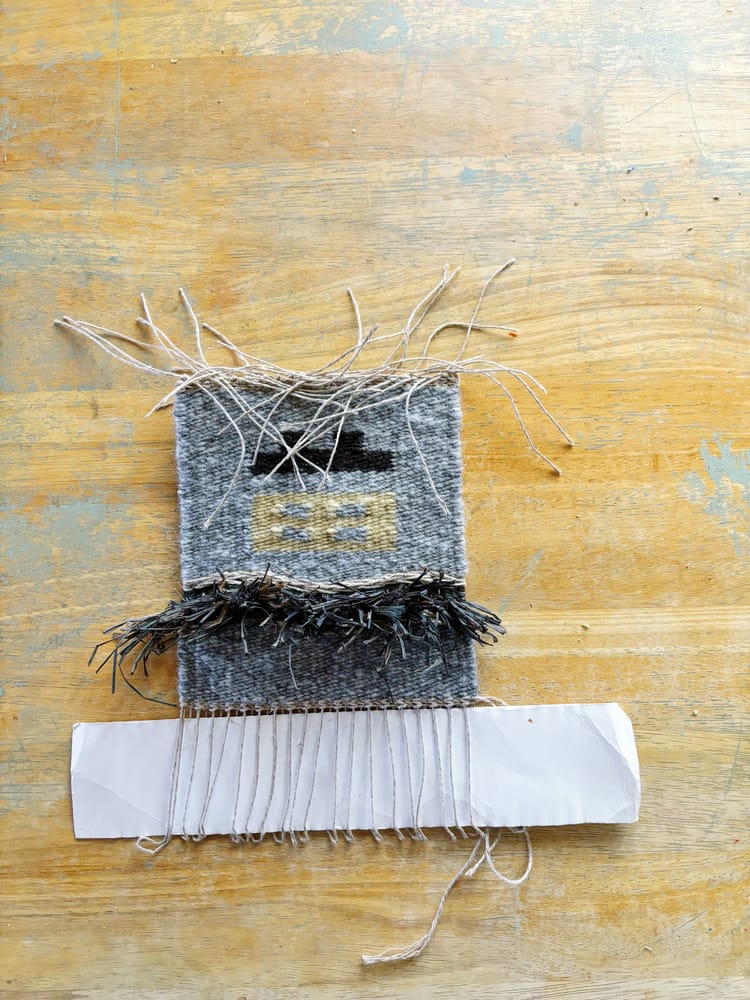
I went back to some of my writing about weaving from 2017 and 2018, the first two years of this project, and was surprised. It’s incredible how undecipherable but also still vaguely familiar I am now from the version of myself who started this project. Meeting that past version of myself via my writing is like talking to a family member you haven’t seen in years. You share this incredible history, but the intervening years have created a chasm that have markedly changed who you are. Upon that meeting, I see the broad outline, sure. Yet, it was just this briefest of sketches, a set of questions, a coterie of potential outcomes that connect me to that person. There are certainly many things that version of me never could have imagined happening, such as practicing magic or death work. The overall effect is this feeling of fondness and distance, which is emblematic of my own experience with family.
I am sure this encounter is a rather normal part of laying past versions of yourself to rest. How many versions of yourself have you buried to not return to? I mean, if we really wanted to, each of us could dredge up some version of ourselves that appears wildly out-of-step with our current lived reality. The encounter with that person would leave any person with the visceral experience of saying with aplomb, “No, that part of me is dead and gone.” This is likely only exacerbated with time and decisive experiences of trauma that would necessitate closing the door on that version of yourself. For instance, I had such a negative experience conducting policy research as a consultant in the private sector that there is no way I could even fathom holding any of the beliefs that led me to believe real societal change could be created from that position.
Yet, this person I am encountering in my old writings has already learned this lesson, so there is less need to close the door on them. It’s easy to see that we share a common set of values. If we are being cheeky, we could even say that we share a common set of enemies. It’s just that they lack the time and hard-won experience I have gained becoming a father, experiencing cheeto-head, surviving a pandemic, setting firm boundaries with my dad, and advocating for criminal justice reform for five years in the bowels of a bureaucracy. So, this week, I want to give past me a nice hug and thank them for dreaming this life I am living into being. I could of kept going talking about my faults when I was younger. I sure intended to, having drafted a paragraph about some nonsense related to my naive fanatacism. But, I think I will forego my typical ritual flogging in the public square, for now.
I was prompted to encounter myself through my own writing after reading the following excerpt from Jenny Odell’s “Saving Time: Discovering a Life Beyond the Clock:”
“Every piece of writing is a time capsule. It assembles fragments of its own world and send them onward to a reader who exists in a different one, not just in space but also in time. Even writing privately in a journal presupposes a future self who will be reading it—and a future at all.”
Jenny Odell
In Odell’s view, I can view my past storytelling as a mnemonic device that will help me remember the world I inhabited in that past time and place. Principally, I have empathy for myself through this encounter. I can read between the lines and see the the place of deep suffering I was in then, walking around with undiagnosed generalized anxiety and obsessive compulsive disorder. I wasn’t on lexapro. I was always on the verge of a panic attack. The weaving was just starting to work its magic on untying the knots that were preventing me from getting help for these mental health issues and really beginning to inhabit my grief. When approaching someone who is already suffering so much, flogging them or burying them will only add insult to injury, so I want to be gentle with myself.
This encounter with myself also has me thinking about how we encounter each other throughout our process of growing while we fight for collective liberation. As the tragedies and crises continue to come fast and heavy, I think its important to show understanding and empathy for folks that are slow to catch up with the calls for action. I know the hour is late and folx, especially white men like me, need to hurry on up. I know also that this work should not fall on any group who is just trying to resist domination in any of its forms. No, here I am explicitly talking to those other white folx on our work with folx in our community who are slow on the take. I want to make sure we don’t throw out those folx who agree with us on 95% of any issue because they are still learning how to quickly read between the lines of government and mass media propaganda and digest a conflict for what it really is. Yes, one of the most difficult things for white folx is learning how to quickly read most of the crises we witness today as so many examples of a disadvantaged group being pummeled by a unilaterally greater power protecting the economic, social, or political capital of the those in power.
Alongside the tangible actions of bringing along my folks who trying to catch up, I want to take a queue from afrofuturism and keep my imagination alive to what could be possible for these potential white allies. Here, I am specifically thinking about the work that Anaïs Duplan recently shared on their Instagram about how afrofuturism teaches us that storytelling is essential to liberation:
“Stories don't replace the need for protest, but neither do protests replace the need for stories. People who dismiss the power of stories to motivate social change misunderstand the role of imaginative work in liberation struggle. Activism, in fact, relies on storytelling for meaning.”
Hear! hear! yes, I want to imagine a world where white folx who have been slow to act or full engage themselves in the intertwined struggles we have experienced in last six years come into their power as people who approaches the liberation of Gaza, people experiencing homelessness, the LGBTQIA+ community; Black, Indigenous, Latinx and Asian American kin, animals, disabled folx, women, and plants as inextricably tied together. I want to imagine a world where a majority of my white kin are willing to sacrifice their wealth, privilege, and supposed feelings of comfort and safety to ensure that reparations are made to make good on past harms and ensure that all folks can be provided for and feel comfortable and safe. That imagined future is what will keep me pushing in times when I used to despair, even when I feel isolated by my own community.
I need to believe in the viability of that intersectional struggle for liberation, because I have struggled to believe its possible. After the last 6 years, this vision is hard for me to write about. I am not going to lie. If we had passed true universal health care in Obama’s first term, my mom could of had access to routine colonoscopies that would have found her cancer before it grew to its incredible size. She might even be alive. If we wouldn’t have allowed police departments across the country to use crime rates as a justification for the Biden administration’s funding of hiring of 100,000 police officer nationwide, we could have used that money to fund non-punitive approaches to community safety like offices of neighborhood safety or mental health response teams. Hell, if we could have just gotten people to all agree that COVID-19 is real, we could have saved tens of thousands of people by all agreeing to wear masks in public. These failures have made me question the feasibility of this imagined future. Yet, I want this storytelling to reaffirm my belief that its possible and that I can play a role in keeping it alive.
Don’t ever underestimate how grief will leave you in a desolate place without any belief that a better future is possible. In a recent podcast interview that Mara June of Motherwort and Rose did with the Missing Witches, they noted how grief can lead to shapeshifting:
“I’ve been just sort of coming back to and rooting in this idea of grief as a creative process as an organic process as shape shifting”
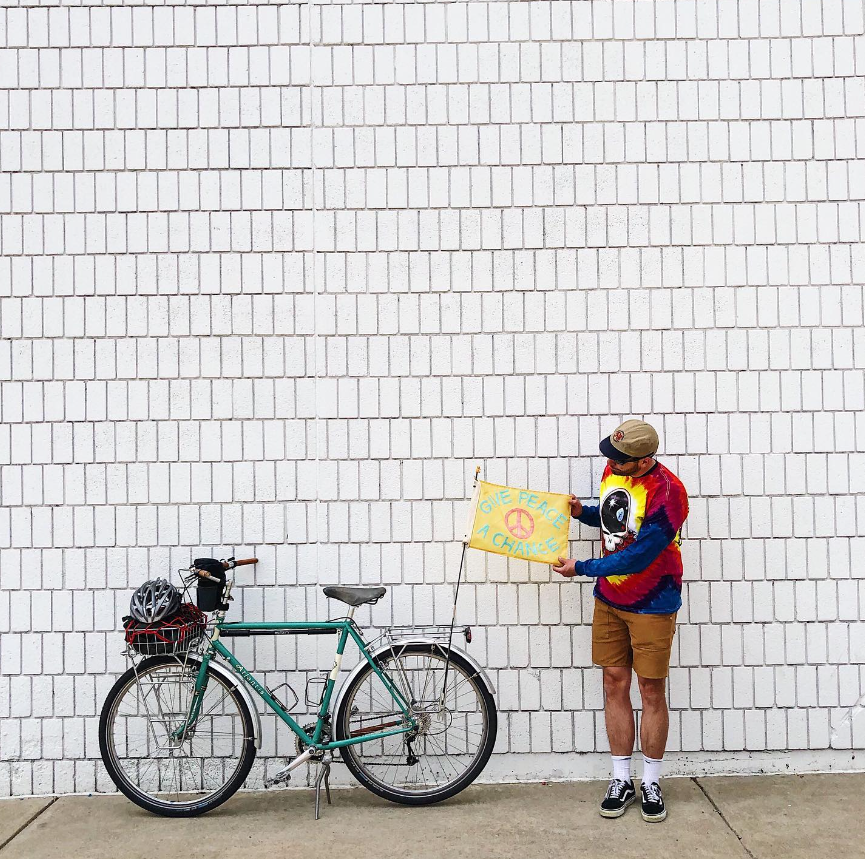
In my case, I responded to the tremendous difficulties of the last year by shapeshifting into a burning flame of righteous indignation. I shed relationships and set boundaries. I burned down bridges to my house and retreated from my own imagined futures of equality and justice. Yet, here I am again cracked open raw by the genocide in Gaza, shapeshifting back into a version of myself that has more in common with the version of me who flew this “give peace a chance” flag in 2019. Yes, grief is spiralic, leading you through looping iterations of yourself as you struggle to work towards a better future for the next generation.
That’s all y’all. I hope you are well. Thanks to y’all who are subscribers. I greatly appreciate it. Your support means the world to me.
All my best until next time, dear reader,
James
Member discussion