
Can I Still Do Hard Things?
“Can I still do hard things?” This question haunts me in my 30s as I struggle to work full time, maintain a spiritual art practice, and be a parent. Even as a death worker who has done things that some consider hard, like hold the hand of a parent as they die, I find that I still question myself whether I can really be a disciple of death. Even as a scholar who has gotten a doctorate, a feat of learning only 2% of my fellow Americans have attained, I find I still question whether I am smart enough to speak. Even as a person who went to therapy, completed exposure therapy for OCD, and accepted the help of Lexapro for my generalized anxiety, I find I still question whether I am well enough to do anything anymore. Even as an athlete who participated in NCAA tournaments and received all-conference accolades, I still question whether I am capable of physically moving my body anymore. Are you sick of hearing me questions myself? Yea, I am sick of questioning myself too.
The sort of irony to all of this questioning is that it really has never held me back from doing anything. Yes, I continually question whether I “good enough” or “experienced enough” to be a TA in a death workers course, but I still show up. Yes, I question whether I am “smart enough” or “interesting enough” for anyone to be interested in what I have to say, but I still have written long form essays from 500-3000 words every week for a year and some change. Sure, I also question whether I am of the “temperament” that will forestall a mental breakdown, but I still persist in tackling them everyday. After a myriad of leg injuries, I have even questioned my ability to move my bodies in ways that are similar to how I used to be able to use it while still moving forward with finding ways to move that please me. So, if the questions don’t stop me, then who cares, right?
A Quiet Practice is a reader-supported publication. To receive new posts and support my work, consider becoming a free or paid subscriber. Your support means the world to me.
Well, I think the constant questioning is enough to wear us down and dim our horizons. My constant internal monologue acts as this slight break on my inertia forward. I feel like I am Sisyphus pushing the boulder up the hill but little dark clouds are grabbing at my ankles to make it harder to walk. I feel like I must first conduct my routine litigation with myself of whether I am capable of completing anything before I set out to just do the thing. It’s a lot of energy to expend when there is already a finite amount of time and energy I have left after meeting the demands of my wage labor and parenting responsibilities. Consequently, I find myself just being able to meet those small goals I have set in front of me, rather than being able to reach toward grander horizons. For example, instead of tackling a books, I have set myself to the work of writing weekly essays. After writing consistently like this, a book feels so far off now. I do wonder if I will ever be able to keep up this series and write a book.
The pervasive nature of the questioning has got me thinking a lot about where these questions even come from. It certainly wasn’t something that I found to be sui generis to my experience of being a animate hump of clay. No, I have had time periods where this questioning surely wasn’t as big of a feature of my life. Yet, as time has past and my responsibilities grown, questioning has become a key feature of my own internal monologue. Yes, it does seem that our fundamental condition today in late stage capitalism is being ensnarled in ever more obtuse and difficult bureaucracies that all require special rituals of approach, speech, and offerings. For me, I have noticed that I have internalized a form of ready-made anxiety where I am constantly questioning whether I have completed all the requisite rituals, incantations, and offerings to ensure that I have appeased the 400 tentacle behemoth that represents the myriad of institutions that surround us at all times. Yes, much ballyhoo is made of advertising making us feel small and not enough, but I feel that is just one example of how bureaucratic organization is wielded to make us feel small before their power. Folks running institutions pass the burden onto the individual in order to habituate themselves before the institution’s power.
This is certainly how Foucault would approach the issue, believing that the creation of any form of knowledge or way of imposing your will by means of completely made-up routines or requirements on others was a use of power. Doubtless, he would look to how we are disciplined in so many ways today into habitual, predictable action as so many forms of domination. Today, we are surrounded by companies, political parties, religious institutions, and even family members that all require various forms of behavior to show our loyalty. Those forms of learned loyalty that I have encountered, accumulated over my lifetime, or were born into (e.g., here I am thinking of indoctrination into the catholic church before the age of 14 due to my family’s religious preferences) certainly have felt like a closing off of the world or possibility for free thought or action. There is no better way to control people than to leave them questioning their own power to create their own reality and future.
No better example, aside from various religious orthodoxies, exists than the deadening cry, “vote blue no matter who,” from the 2020 presidential election. As leftists, we were told that we have to vote for less than perfect candidates to ensure the horrors end. We were told that the cheeto-head fascist was an existential threat that demanded we all vote for some dude who was 78 years old who really stood for nothing. So, we did it. However, our loyalty was betrayed. Voting blue didn’t end the construction of Trump’s board wall, the placing of migrant children in detention centers, allowing our far right political ally Israeli to kill thousands of Palestinian children, or allowing the only Palestinian American member of congress, Rashida Tlaib to be censured for asking for a ceasefire in Gaza. The censure is perhaps the last straw, considering 22 democrats voted for the censure, 18 of which received thousands of dollars in campaign contributions from the pro-Israel American Israel Public Affairs Committee (“AIPAC”) in the last election cycle. This is how political parties make us feel small and make us question our capability to do anything.
While the questions persist, I have made it my never-ending quest to continue to do the things I don’t think are possible. This is no coincidence. I am a sociologist through and through. I understand that what we know as society is the product of the battles between individuals and larger structures that really want to discipline us into certain modes of action. A lot of times, it’s also a battle between those don’t got anything and those who got a lot who also control those very structures we are pushing back against. I am who I am, because I was raised by a single mom and forged my steely will dragging my anxiety ridden mind and body through every stage of my development as a person. The only person that can stop me is me. That’s why every action I take is taken to show others that action is always possible. That’s why I contacted all my reps three times this last week demanding a ceasefire. That’s why I continue to show up as the father I wished I had each day. That’s why I work in public policy everyday of my life, giving a voice to the voiceless. That’s why I show up to this essay series every week.
Yes, I will continue to use my platform to denounce the genocide in Gaza perpetuated with bombs paid for with my tax dollars. Not in my name. Not in my name. Not in my name. No, I support a ceasefire and a negotiated two state solution that is the best shot for an enduring peace in that struggle. I want that 17 billion dollars in military aid to Israel to go to Gaza for humanitarian aid. I want that money to go to the people in our country struggling from hunger, lack of access to shelter, addiction, or lack of healthcare. I got a response from one of my senators, calling for a humanitarian pause. No, cease-fire and take away the aid.
I completed two of my goals this past week, proving to myself I can do hard things. First, I rode the 66 miles from my house up Waterton Canyon. I trained for months and overcame a hamstring injury to get that ride done. I had dreamed of doing the ride for years, and finally I did it. Secondly, I finally completed all the paperwork to open up paid subscriptions for this project. I literally had to use paid time off from my job and spend the entire day going to the bank and filling out forms. But, I did it. I finally did the hard thing by investing in myself and allowing others to invest in me and this community. As my previous post earlier this week outlined, there are three tiers of offerings available:
- Free: You will receive two free essays a month on Sunday mornings (26 total a year). This offering is for folks curious about my thoughts and practice who want to get a feeling for if I would make a good addition to their headspace.
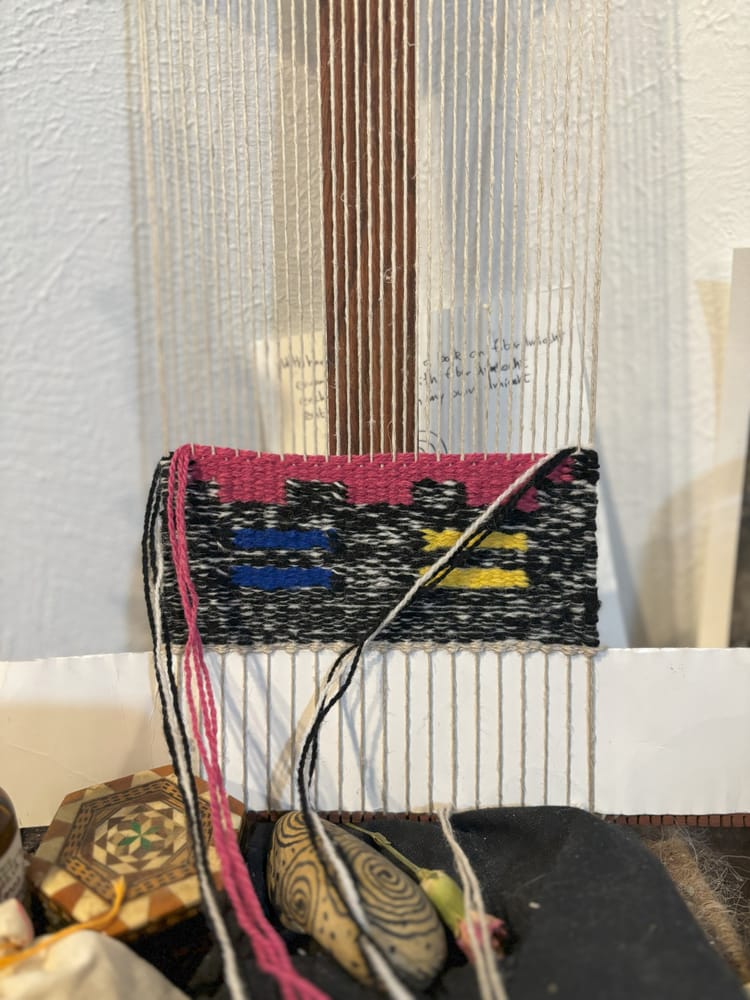
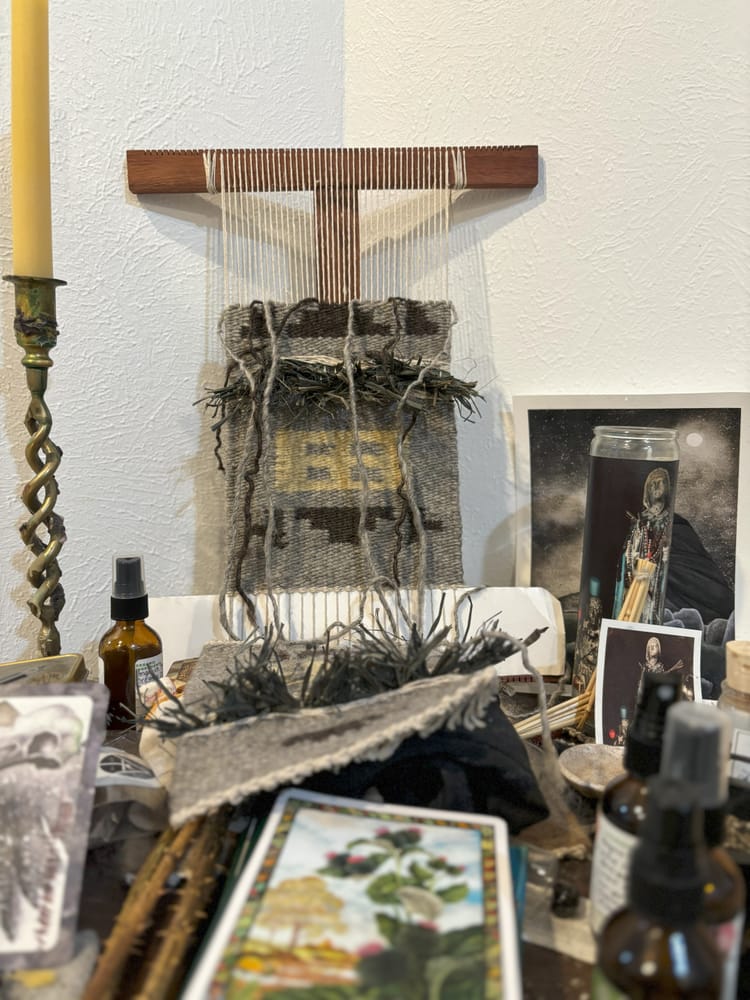
- Paid: For $8 dollars a month or $80 dollars a year, you will receive all essays that I publish on my substack. My plan is to continue to migrate more of my work off of Instagram in the coming months and share two essays a week. The Sunday essay will remain the polished artistic writing you have come to expect and another essay (Day TBD) will be more of a notes from the workshop on what I got cooking on the spindles and looms. This offering will be for folks who are really interested in my craft and thoughts and don’t want to miss what I am working or reflecting on.
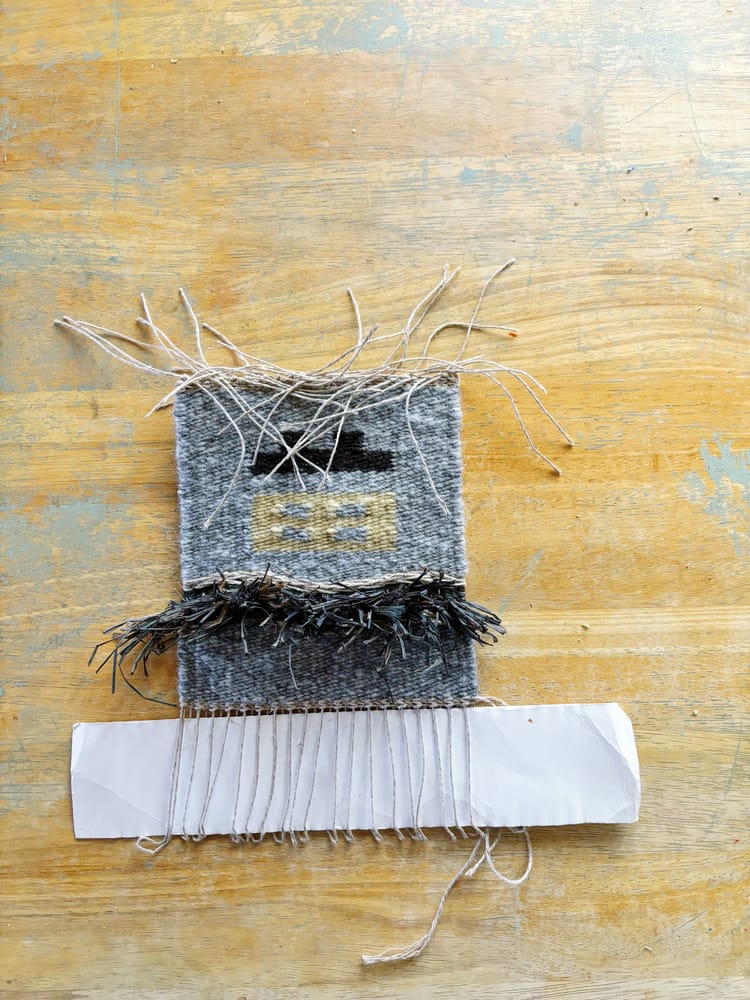
- Founders: For $200 dollars a year, you will get all the benefits outline above, but you will also receive a 30 minute zoom chat with me, a personalized thank you note, and a small fiber spell (roughly 5 in x 5 in.) I will also add a note at the end of every essay thanking you for your unique contribution as a founder to this project. This offering is for folks that want to be in community with me and want to be recognized as key underwriters of this magical fiber quest.
Also, If you are struggling financially or are a member of historically marginalized group such as the Latinx, BIPOC, or LGBTIA+ communities, please do not hesitate to reach out to me for a complimentary subscription by emailing me at jamesjdavis2@gmail.com. This community is stronger the more we actively take away barriers to folks who have traditionally been excluded from community conversations. I want this to be a safe place for you all to land. The first paid-tier essay will arrive next week, so be sure to upgrade your subscription this week to ensure you have access to the essay. If you have any questions or trouble with this process, let me know. I would be glad to help you.
All the best dear reader,
James
A Quiet Practice is a reader-supported publication. To receive new posts and support my work, consider becoming a free or paid subscriber.
Member discussion