
Death Meditation, 1
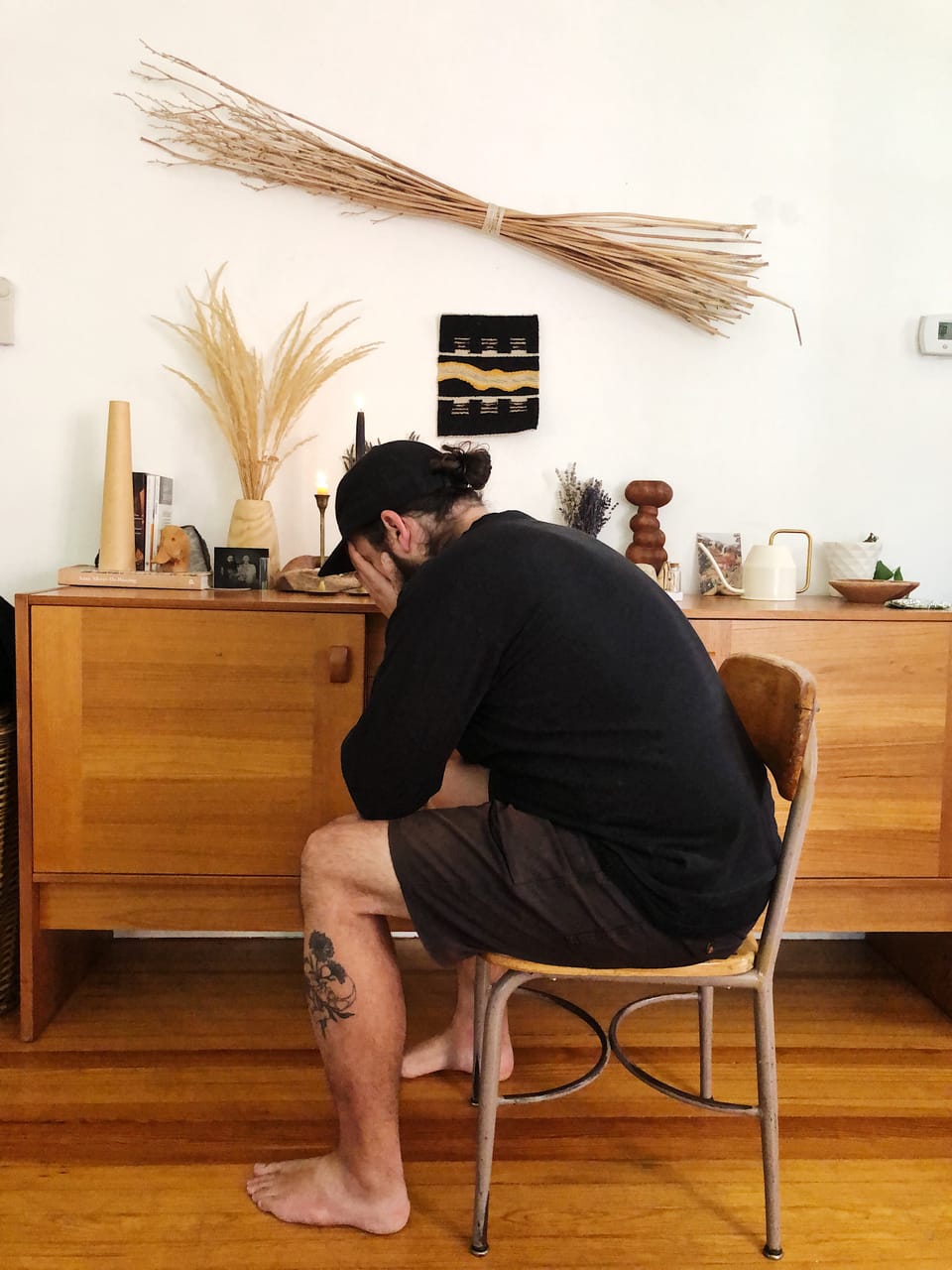
“Today, you could die,” the note said in my acquaintance’s sock drawer. He practiced this form of death meditation within his tradition each day as a reminder of the certainty and omnipresent nature of death. I was struck by the central role death played in his spiritual practice. I was, however, surprised that he shared that with me, given the taboo role that death plays in our society today. It certainly is not the norm for people to have death be one of their core concerns or deities they work with. However, it did not surprise or shock me that such a practice could be extremely beneficial, because death, even then, felt so vital and full of wisdom.
As I move through the Tending Descent spiritual death worker program with Hannah Haddadi of Mourning Light Divination and grow my own death work practice, I want to open up space within this weekly essay project to explore the ubiquity and everyday nature of death. In short, I want to foster my own death meditation essay series on the pervasive influence of death in my life. In this series, I will explore themes related to death work that I have learned in my training and walking my death work path. I want to share stories about death work records, stories of loss I have yet to share or have been reflecting on, and random bits of death work that I happened upon out in the world.
Let’s start the series by leveling a haymaker at my own storytelling around death. Specifically, I want to challenge how some of the story I have told of mom’s passing and the death work I performed to move through my grief inadvertently reinforced the cliché that all deaths happen for a reason. Yes, I experienced profound shifts in my life after my mom passed, but that has not been my only experience with death. I have experienced other deaths that have left me disconnected, cavernous, and paralyzed. I have experienced deaths that were dead-ends, providing no tangible pathways to the death work I needed to move through my grief. Consequently, I am sensitive to the fact that my writing about my magic practice being rooted in my mom’s death, though well-intentioned, could have led to some distress for people because I am out here just telling a cliche’d story that her death happened for a reason.
Why throw a shot at myself? I engage in a continual practice of self-critique, because I believe that language is a powerful form of magic, a technology in Sharon Arnold’s terminology, that has the tremendous capacity to build or destroy worlds. As I am learning in Tending Descent, it is my responsibility as a death worker to avoid clichés, especially clichés like “death happens for a reason” that have been used to downplay peoples’ experience of grief or as a rationale by the grieving to spiritually bypass the darkness they may be experiencing. If I want to build a death work practice that honors sacred death and the multifaceted forms of grief it brings, I want to be very careful to stress that my stories are just one possibility of an infinite number of forms that grief and death work can take. Though this seems like semantics, this is an important point, because we want to empower people to see that all forms their grief and death work take, regardless of how countercultural they may seem, are valid and not shut down people’s experiences as being invalid or wrong for not adhering to some cultural narrative people have popularized.
So, please do not come to my aid in this attack on my practice. One need not say, oh be gentle with yourself, or I don’t think that is what you are doing. I know what I am doing. I bear the sword of my intellect with seasoned hand. It is this sword that has allowed me to overcome many of the worst aspects of the masculinity taught to me in the capitalist christian patriarchal society1 I was raised in. I need to bask in the sludgy muck of those most virulent forms of darkness that come from death and find my way through the thicket to become more full. It is my practice of subjecting myself to this critic that has helped me become the person I am today. So, just let me be with my darkness, dear reader. Let me howl my laments in peace.
Thanks for reading A Quiet Practice! Subscribe for free to receive essays and support my work.
I opened up the discord app as I typically do each morning while starting work. Coffee in hand, I started to peruse through the various servers I belong to. As I navigated to the server with the folks I had been playing call of duty with for over a year and half, I saw a new message icon in the general chat. I clicked on the chat thread and saw a message from Selene’s (Luna as she was known while gaming) cousin in Mexico who we had played with a few times, “Pls pray for Luna something bad happens and don’t know what happen but pls pray for her.” Minutes later a mutual friend called me. I asked him if Luna was ok. He replied, “No, dude, she died in her sleep.” And with that one of my best friends that I spent hours with each day was gone.
I got off the phone and sat there crying. The loss was so visceral. The muted tears of my mother passing, shed in an alcove overlooking a forest in a hospice facility in fading light, were the first to pry loose the generational knot of repression that held back my grief. The repressive knot that I first witnessed in the stoic, silent burial of my grandfather, which was marked bereft of meaning making or emotion. In grieving the loss of my friend Luna, it was a full on burning of that repressive knot in the sacred fire that arose from my tears. Tears burned, burned, burned down my checks. I stared into the candlelight with everything inside me screaming. This is the solemn lament that comes from the knowledge that I would never talk to her again. How does one explain that visceral feeling in one’s chest when you feel like you have been broken open to the world and part of your light has escaped? To a lesser degree, this must be what Brighid felt when she lost her son before her eyes and let out the first keen.
Selene died in her sleep of an extremely rare pulmonary embolism, a blood clot in her lungs, at 35. Just like the loss of my mom, it feels like a sick joke. Of all the people to die that young, why did it have to be Selene? She was a bedrock for her friends and family. She was finishing her masters and had plans to move into better jobs, so she wouldn’t have to work nights. She never said it, but I also knew that her career advancement would of meant a better life for her family. She helped them ceaselessly. Tears burned, burned, burned. Talking to Lily, I would repeat “Why Luna? Why Luna? Why Luna?” as the tears kept coming.
Here, I sit listening to this two minute “Keening Song” by Áine Minogue seeping in the timbre and tenor of those memories as I approach the year anniversary of her passing. As I approach repetition 20 of listening to this song, I feel that I am in still in the wastleland of lamentation that this song so perfectly captures. There has been no pathway of death work I have discovered out of this loss. There has been no silver lining, no death happens for a reason narrative to justify these feelings. No, there is a hole, cavernous and deep. There is a darkness that blocks out the light sometimes. I am still haunted by the ever-present reminder of Luna’s continuation as I play video games and see her user profile marked as forever offline.
This experience has made it essential that I offer some nuanced discussion of the multiplicity of grief experiences I have gone through. I want people who have also experienced this sort of season of darkness in grief that you are not alone. Your experience is just as valid as those who find magic in grief. You do not need to find a reason for the loss. You do not need to feel like you are not doing grief wrong because you are not playing out some happy hollywood ending. Death brings all of those emotions with it and sometimes you just need to let that cavernous dark hole someone leaves behind be the great transformation that you will go through in the grief process.
Be well, dear reader,
James
Thanks for reading A Quiet Practice! Subscribe for free to receive essays and support my work.
Again, we not capitalizing any of these nouns out of spite. ↩
Member discussion