
Devotional Discipline
The game ended with the man’s avatar being killed by a team of higher skilled players, who flew around the map with skill and ease destroying the lobby with gleeful exuberance. As the screen faded to black, a feeling of deep malaise gripped the man as he strained his hands on his controller. He has been playing video games for an untold number hours that day and had yet to win one game. “What is wrong with me?” the man thought to himself. “Why am I still playing this game?” his mind churned in a spiral of self-immolating thoughts. The play again button pulsed on the screen with a count down 10, 9, 8… “Why are things so hard right now?” his mind reached for any sense of comfort. 7, 6, 5, 4. “I am just going to play one more game. I deserve rest. Things have been rough.” 3, 2, 1. A new game launched and the man avoided his problems for another thirty minutes, ignoring the darkness that lurked behind him like a shadow waiting to be invited in from the cold. A new game launched and he avoided the work that his soul sung for him to complete. He responded silently, “I have no time.”
He was cloaked in black, only his face, beard and an amulet of stinging nettle hanging from his neck could be seen. The earthen floor and walls of stone that comprised his hermitage were cast in the glow of gentle candlelight. The moon had risen to its highest heights and he was with his spindles, his looms, and his dye pots, bathed in fragrant Mugwort smoke. He sat with sacred death as his invited guest and a song emerged from the veil of their presence:
With his friend alongside, he set a mournful eye out the dusty window onto the ruins of burned and abandoned cars, their metal glistening in the moon’s pale glow. “All ages do fall, my friend,” he said with a strained voice, “But our practices of daily devotion offered beneath the gaze of this luminous moon will echo into the eons.” With this, he arose from his seat with vigor and, with spindle in hand, set about his daily offerings. As he flicked the spindle, he intoned “There may be no one left to witness this offering, but may its sacred reverberations be felt in distant times and spaces that will not know my name but may know my spirit.”
We have two vignettes. One person straining to avoid the death work that need to be completed by fading out into an endless game loop. Another person who had invited death in, gave them an exalted seat, and was transformed into a hermit druid. Would you be shocked to know that both of those people are me, dear reader? Well, for those who have read my previous writings you will know it to be true. I was lost for years in my most recent death and rebirth cycle, avoiding this most cherished of soul work I have undertaken here in this project. It was only until I re-invested in a daily devotional discipline practice that I was able to go through the transformation process that brought me to who I am here today.
It was my local witchcraft community that brought me back. In my most recent death and rebirth cycle, I was quite faded out from daily practice and was having trouble with sustained engagement with this practice of weaving, writing, and magic. I reflected about that death and rebirth cycle in the essay “Clean the Cobwebs and be Clear” a few weeks back.
Yet, that changed one day a few weeks back while listening to my friend Hannah Haddadi’s (of Mourning Light Divination) weekly divination. In the divination for that week, Hannah insisted on the importance of a devotional discipline practice. By devotional discipline, Hannah meant “having the love and drive to consistently show up while using personal knowledge of your innate wisdom that connects to your individual life, experience, and craft.” In her remarks during that divination, she talked about our society’s current willingness to brown out into a comatose of numbing when things get tough (as they always are now) and how we needed to build the spiritual foundation that would allow us to show up to our various devotional practices regardless of how hard things are. It felt like Hannah was offering me the exact value-aligned medicine with devotional discipline that I needed to step into so that I could meet the challenge of the death I was face in that moment.
Devotion is an important value to me as I have spent years as a spiritual seeker exploring various mysteries. I have pledge my loyalty and love to various religions and ideologies in the spirit of being a true believer of each their spiritual or materialist tracts. I have been a devout catholic, atheist, marxist, and buddhist in my life, experiencing the transcendence that comes from the exploring the mysteries each perspective opens for devotees. In each instance, a crisis of faith shook my devotion to each strain of spiritualism or materialism. Whether it was the limited horizons of materialist ideologies, the blood trail tied to christianity, or the inadequateness of a white man practicing a religion that was not his, I walked out of the practice of devoting myself to any one path to seek out my own path with a set of ethics and virtues that I define. In its place in the last three years, I have been walking a devotional path that weds elements of Irish Polytheism, Revivalist Druidry, and hedge magic. It’s within this self-defined path that I have found a devotional practice that feeds my soul.
Discipline is also a value that deeply speaks to something inside me that I have seen myself manifest in different forms from very young age. I first saw discipline reflected in the countless repetitions of body movements I performed on the tennis court for hours each day for years to earn my Dad’s love by becoming a college tennis player. I next displayed discipline in the dogged persistence of showing up each day during a ten year journey to earn a doctorate in Sociology. Finally, I turned that specialty in discipline on myself by practicing a form of Zen Buddhism in the hope I could cure myself of Obsessive Compulsive Disorder, generalized anxiety, and the world pummeling grief I felt in the loss of my mom. Yes, I was excellent at disciplining myself into various modes of action, but the purpose of each of those ends lacked the devotional focus that I craved in my life.
When I heard Hannah talk about devotional discipline, the merging of two values so dear to me, something was stimulated at a cellular level. I felt this stirring that only the discovery of my own magic has rivaled. You mean that I could just structure my day, my life with the intention to devout myself to my ancestors, my magic, and my crafts? For some reason, this awe-inspiringly simple idea was beyond my means of comprehension until she opened that door. Yet, once she did, I felt myself really being able to live out these practices, like Druidry, death work, fiber art, and magic everyday in my life, rather than in the sporadic fashion of working in a flurry and then fading out into oblivion. This daily discipline is what it was like in the beginning of my weaving practice and I am glad I am back there. I am setting aside chunks of time each day for myself to put on that black shroud of the hermit druid and put away the emptiness of video game warrior.
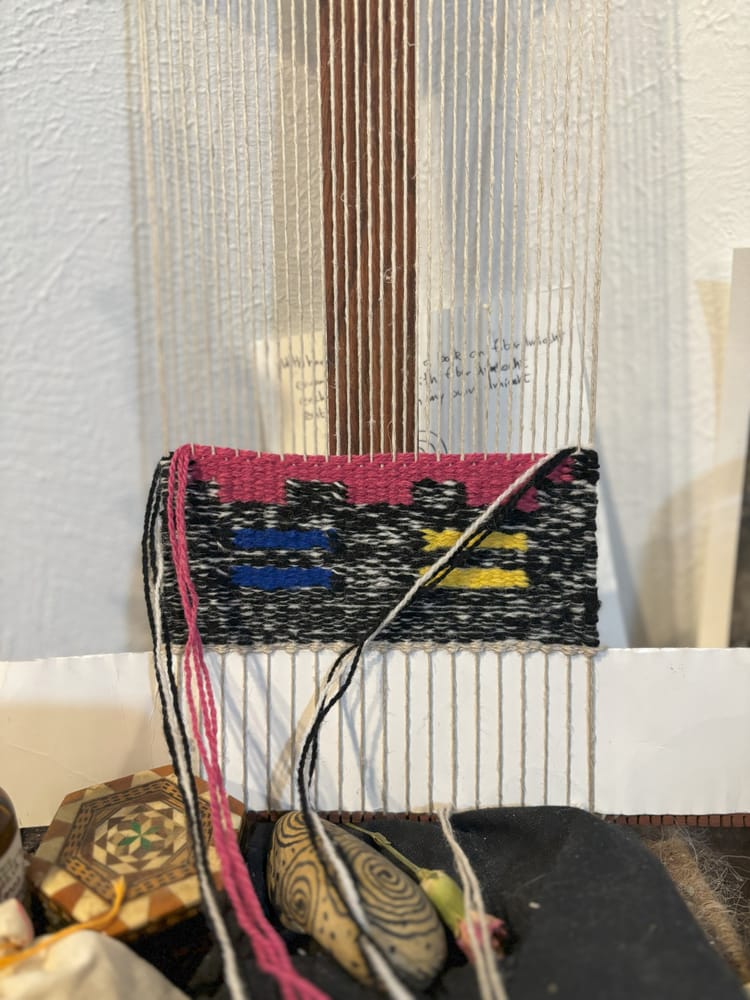
I started to talk about my devotional discipline practice two months ago in the “Clear the Cobwebs and be Clear” essay. In that piece, I defined my own approach to devotional discipline: “As magic workers, we are being called upon to move within our traditions toward a richer, recurring engagement with our goddesses and divinatory practices. We are called to deepen our engagement with our special gift to share with the world. For me, this means…getting myself on a schedule for tapping into the great flow beneath with ritual and setting dates with myself to release the magic that flows from my hands through weaving and tongue via the written word.” This definition was tremendously helpful as it kickstarted me writing a three part series of the spells and rituals I use while weaving, starting two grimoires, and working on a daily practice of tending to my goddesses and beloved dead.
Yet, with two months of practicing my devotional discipline, I want to update my definition. My initial definition was solid, but it lacks two key components that I think are vital: the frequency with which I will practice and how death work ties into my practice. Consequently, I want to build an aspirational definition of devotional discipline that sets the baseline for how I will show up to each day (i.e., how I will use my devotional discipline practice to change the texture of my days and, thus, change my own life) I approach my own devotional discipline practice as a pathway of sacred actions that stir my bones that I will perform dutifully each day with reverence to keep the flame of my traditions, my goddesses, my beloved dead, and my crafts alive in this world and to receive any wisdom that might be imparted in turn. I want my definition to be the north star guiding the actions of the hermit druid I see myself as in my mind’s eye.
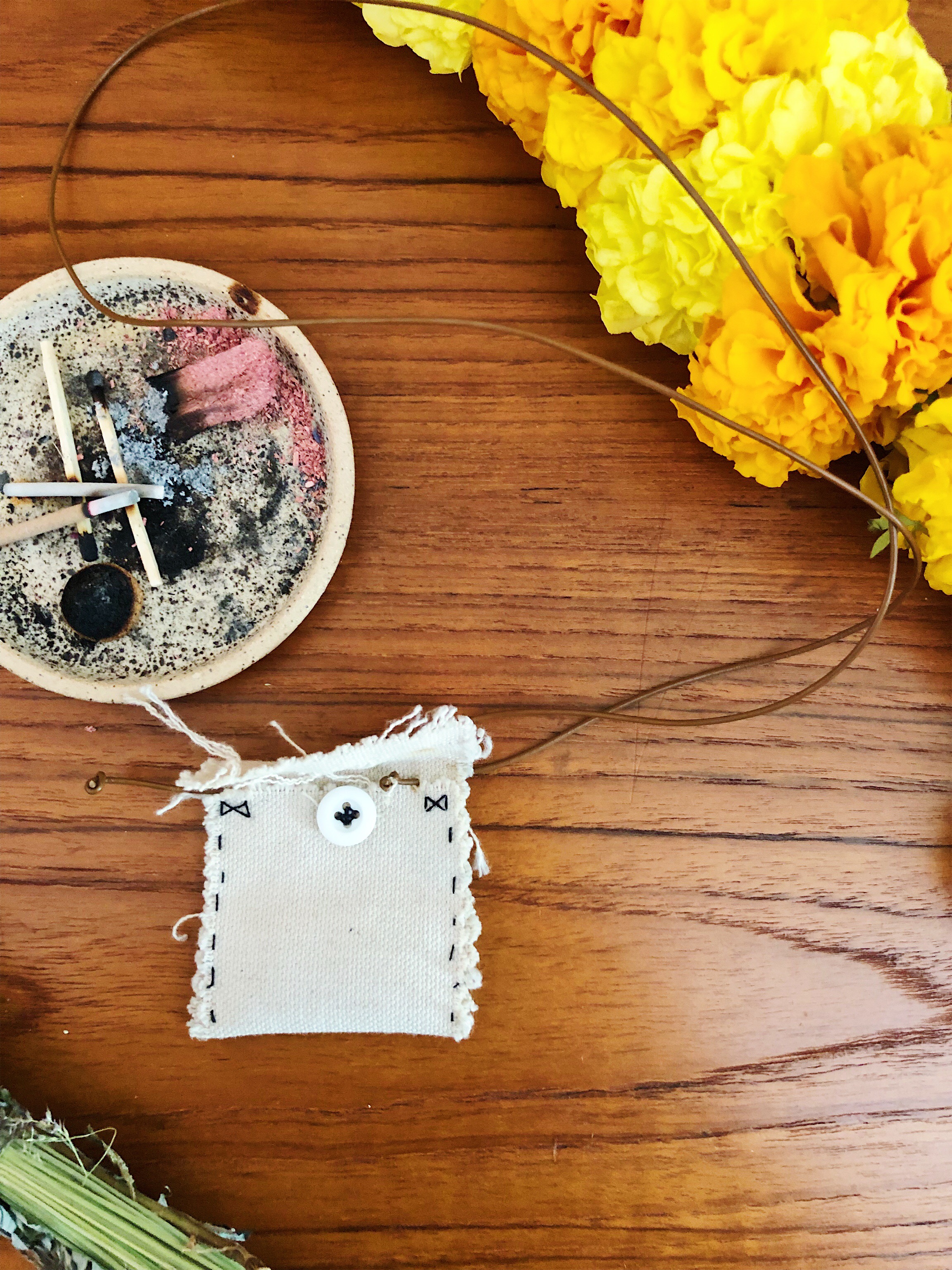
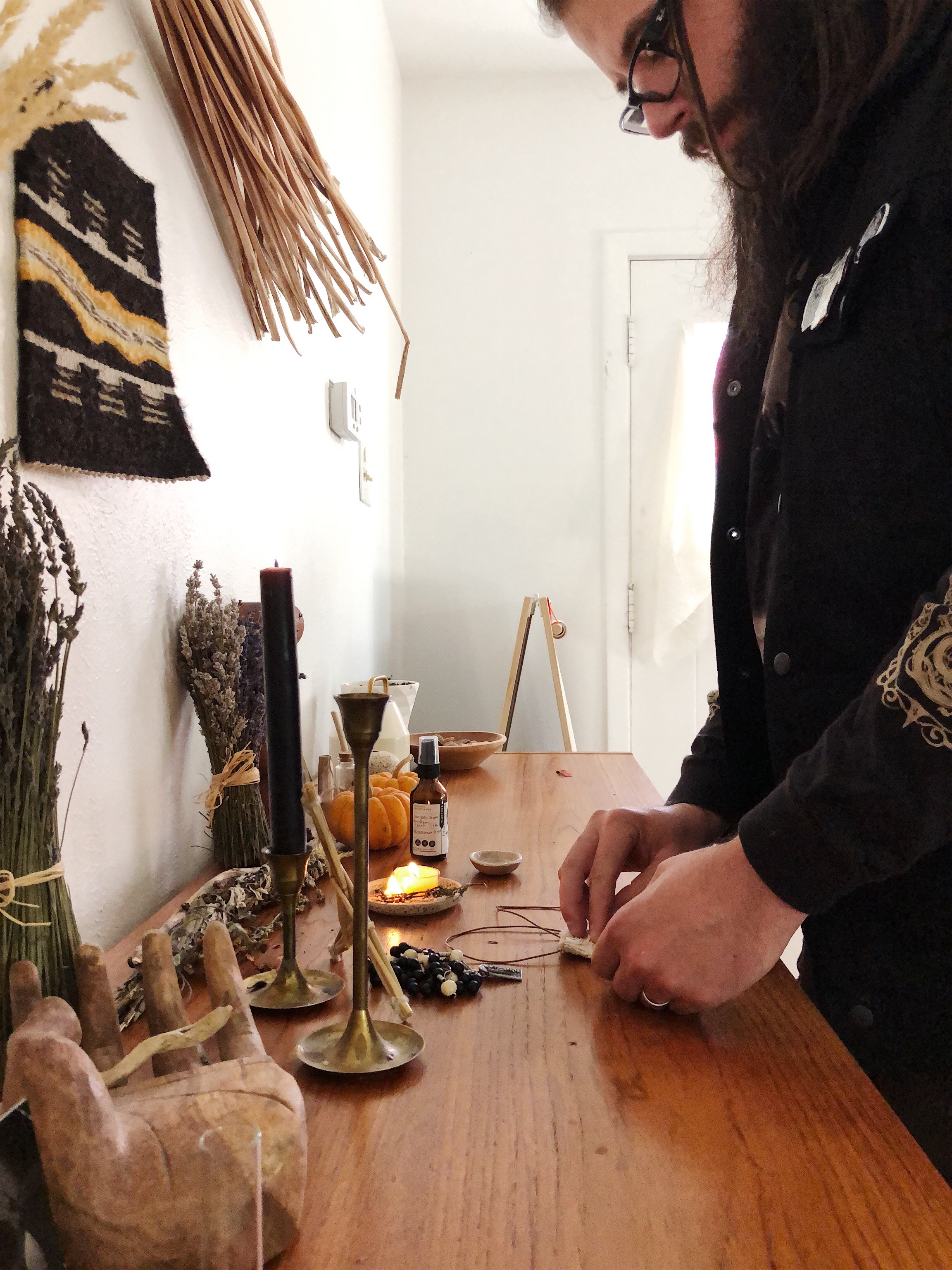
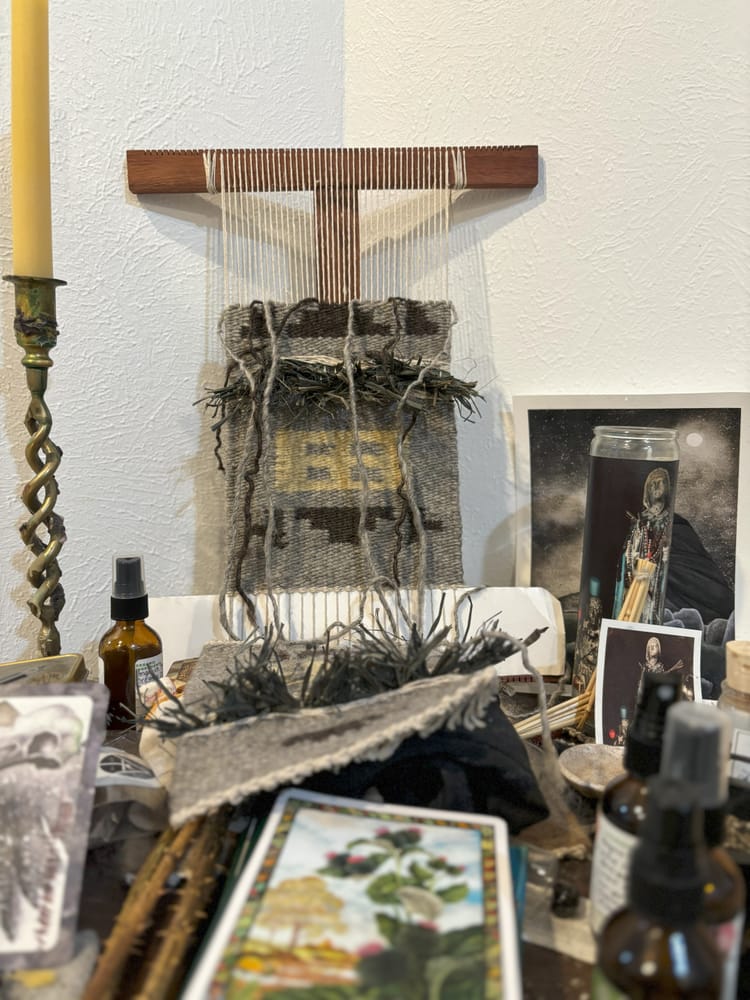
One of the key practices that has emerged as the cornerstone of my devotional discipline practice in these last two months is my own altar tending and my own protective magic. As part of the Tending Descent spiritual death work training that I have been participating in, we were asked to build a altar to our beloved dead and the sacred death deities within our tradition. Each day, when I come down into my subterranean hermitage, I refresh the offerings on my altars, discard any exhausted incense and matches, and refill the rose water anointing vessels. I then anoint my Brighid and Morrigan devotional items and my moms ashes in rose water before anointing the nape of my neck. With this completed, I put on my stinging nettle talisman necklace, adorned with my boundary sigil, and perform a quick boundary spell. With these small actions complete, I can begin the work of my day with the intention that this devotional practice and any spell, prose, or fiber craft that comes from my light is grounded in this enchanted world I have crafted for myself. Because, and this is the important part, devotional discipline is not a punishment to make up for time lost but an invitation to the enchanted world you always wanted to live in. In short, it is the armor that prepares you for a world that is disinterested or downright hostile to you embracing your own power.
One of the key things that has happened as a result of the devotional discipline practice is the continued death work of shedding things that are getting in the way of this devotional discipline. In Hannah’s discussion of devotional discipline, she noted that the boundaries of protection and routines we establish are just as important at the proactive sacred actions of devotion we perform each day. Consequently, I have continued the work of shedding things that do not fill up my cup by limiting my video game time to a set of pre-established blocks of time with my friends each week. I have continued to affirm the boundaries I established with my dad as he has attempted on two occasions to step across the clear fencing I have established for our relationship. Finally, more recently, I have placed limits on my time on Instagram. This is an emerging practice, but one I find may result in another revolution in my own practice. I would like to limit my time on that platform to three discrete chunks each day of my own choosing, not to exceed an hour and thirty minutes total. With that time, I would like to spend more time in discursive meditation, having fun with my family, and reading and crafting with my records in my hermitage.
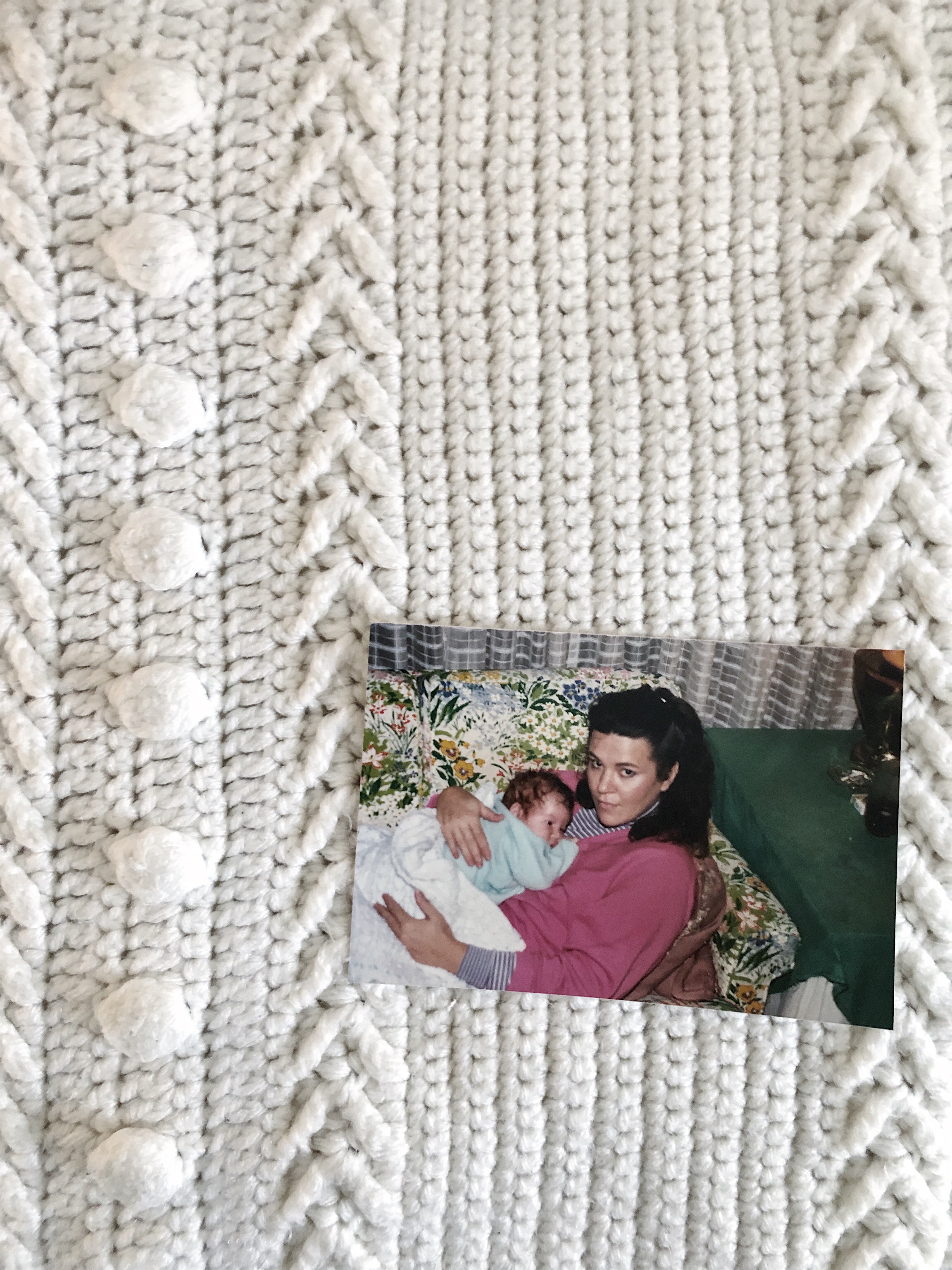
I was gifted one of the fruits of this ongoing practice during the celebration of my mom’s birthday this last week. Because I have an established practice now of checking in with my beloved dead each day and sitting with them, I was able to remember my mom’s birthday, which was a challenge for me when she was alive. This was such a big deal for me, because I was able to softly tend to myself and my mom by crafting an entire day of things she loved to do to mark her special day. I wrapped little juniper in a blanket that she crocheted while she watched cartoons. I looked through photo albums she made when she was my age. I added photos of her and other beloved dead to my sacred death altar. I cooked a huge batch of homemade vegetable soup. I drank coffee and ate chocolate with my mom by candlelight. Juniper and I also did some art while listening to Enya. These actions all brought her to life in the special way that death work of this sort always does; They marked with a special intention the continued presence of a beloved family member even after they have crossed into the Otherworld. I had not felt closer to my mom in some time.
As always, thanks for reading. Don’t be shy! I would love to know what you think of devotional discipline or your own sort of daily devotional practices in the comments below. Also, if interested, I included my reflection on my mom’s birthday that I published on Instagram on Sunday. In the effort of inclusion for those who have decided to step away from that platform, I will include those little pieces of writing after the weekly essay when they are germane to the general topic of what we are discussing. As I discussed before, I don’t really publish the real meat and potatoes of my prose on Instagram, but I do like to place little experimental threads I write in the dead of night as bread crumbs for people who are unfamiliar with me to find. Its one way of practicing algorithmic divination within that platform by using its rules for your own benevolent community-building ends.
All my best, dear reader,
James
Thanks for reading A Quiet Practice! Subscribe for free to receive new posts and support my work.
“Windspirit,” she was called; A libra through and through. She crocheted this wonderful blanket that this photo of her holding me as a baby sits on. She was around my age at this time. Her eyes staring out of this photo look like she has been waiting for me to look back for 35 years.
It’s her birth season. I sat with her today while listening to music, drinking coffee, and eating mini almond joys (one of her birthdays). I looked through old photos albums, where she was conspicuously absent because she was taking all the pictures. I hate that aspect for her and for me. She was always doing everything. Honestly, I wish the album was full of photos of us. Yet, the few photos I have are still a balm.
Marking her birthday is the sort of death work that comes with all the difficulty of losing someone too soon. I was so bad at remembering birthdays when she was alive. Literally, I could not remember a birthday to save my life, and it really bummed her out when I was out on my own and not in close contact with her. So I make an extra effort to put in the time with her during this season. I don’t make it just about her birthday, but a whole series of days. I should have done this while she was still here, but that is just the regret of a man who loses his mother too soon.
As Althea in Fear the Walking Dead said to Morgan who had lost his family, “What we lost doesn’t define us. Maybe what we do. Maybe. Or maybe what we are running from.” I’m doing this work hoping it’s the death work, the honoring, the offerings that defines me as worthy to be her ancestor. Cause, let me tell you, Hoss, I’m done running. I’m just doing the work, everyday of anointing her ashes and living how she would have lived. I feel her acceptance and love, but I don’t take it for granted any more. I work just as hard as I do with Juniper and Lily as I do with my mom to hold up my end of that relationship.
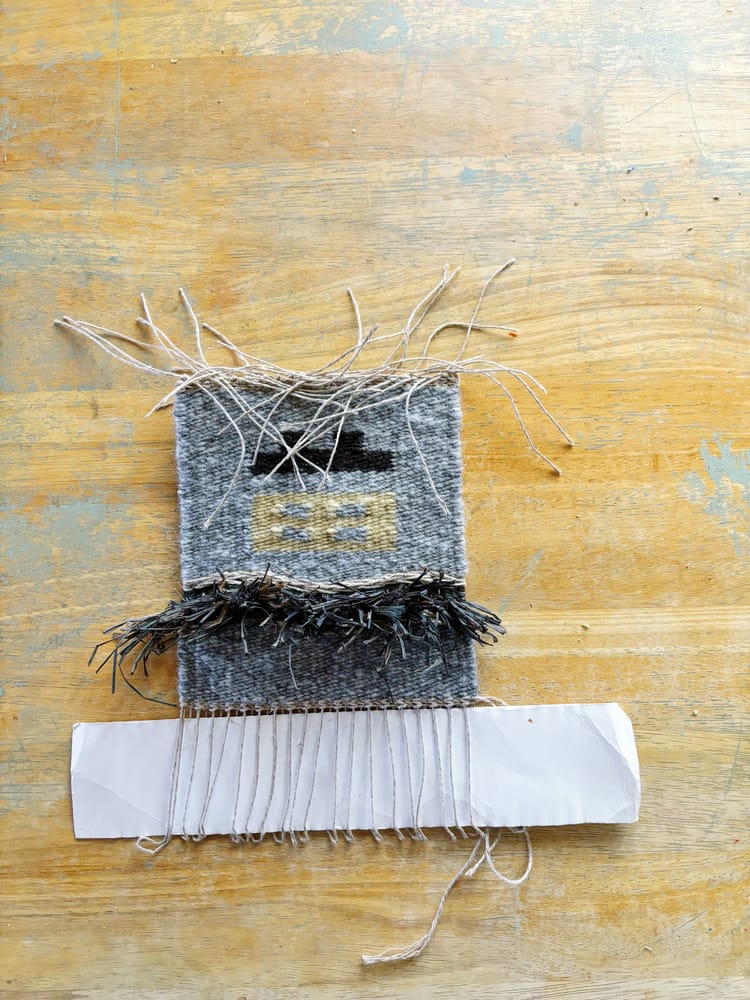
While doing all the work today, I kept thinking to myself: “Mom, I wear black because you are gone, I spin, weave, and dye because you crocheted.” We are the further elaboration of lines of action that were started with our beloved dead. We spiral out in ways they never knew possible. We are woven together in an endless spiral through the sands of time.
Member discussion