
I See Myself in These Stories
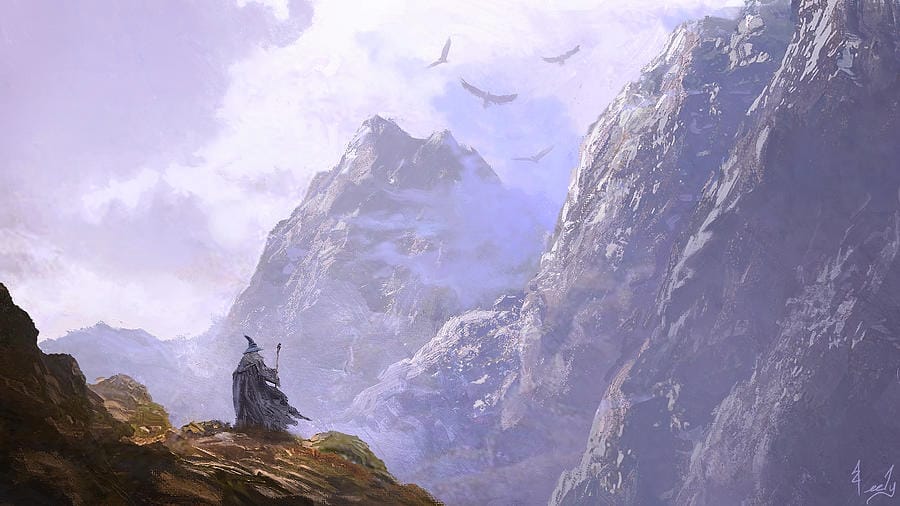
I have been sitting with Sophie Strand’s The Flowering Wand: Rewilding the Sacred Masculine the last week. She shares with a wild hope that her text might “crowd out” the virulent forms of masculinity that we are handed by empire, a christianity that is deracinated from its roots and used as a tool of empire, patriarchy, and capitalism with a ”biodiversity” of masculinities found in myth, legend, and lore.1 I let the stories she shares seep into my life little by little. They are wonderful, the stories. Hearing the tales of Merlin, Jesus, Tom Bombadil, Dionysus, Osiris, and other men who look and sound so different from the stereotypical male we might find today is a breath a fresh air. It’s like I am hearing from men I actually want to hear from, rather than liars, hypocrites, and demagogues. I see myself in the stories Strand shares. I find so much of use in Strand’s book and even stuff I have been chewing on for days—a rare feat these days.
Expanding the Masculine Through the Tarot
I share Strand’s conviction that we can let “the tarot be vital nourishment to the masculine…” by exploring how different archetypes can inform us of expanded conceptions of masculinity. Specifically, I was very taken by her discussion of The Hanged Man, what she lovingly referred to as the “The Rooted One,” who she noted could be held up as an exemplar of embodiment: embodiment of wisdom, tradition, and resistance by being present to your own bodily experience in the place you find yourself in as you cycle round the wheel of the year. In her usual eloquence, she describes how The Rooted One invites us to explore our own divinity through embodied experience with the world around us:
Rather than getting lost in the typical masculine quest to conquer or master all that is around us, Strand calls forth those interested in masculinity to consider how The Rooted One calls us to weave ourselves into the “chaotic difference” of the animate beings around us and enter into relationship with them.3
I was particularly taken by this discussion, because it reminds me of the wildcrafting I practice within my own the Druidry path. Following the guidance of John Michael Greer and Dana O’Driscoll, current grand archdruid in the Ancient Order of Druids in America, I have sought to be like The Rooted One in my own spiritual path by wildcrafting my Druidry into the place, the ecosystem of a high desert plain, I live in. This means moving beyond the oppressive confines of the white picket fence, the john deere tractor, and the carefully-manicured Kentucky Bluegrass patch into the mythic dimension of plant communication and tending beyond the confines of my own piece of land. For me, it wasn’t until I became rooted in my place, standing barefoot upon the dirt that held me, that I really felt that I knew how to let go of trying to conquer anything. I was just another sparkling dew drop in the dramatic web of life that I was enmeshed within.
This same conviction that Strand articulated cuts right to the core of my own fascination with the Hermit card. As readers of this project will know, I am also quite fond of the Hermit card for how it has provided me a model of how to approach this time of disenchantment in a broken time of plague and pestilence.4 Yet, with Strand’s discussion of the masculine dimensions of the Tarot, I realized that the Hermit card holds many possible pearls of wisdom for those seeking alternative forms of masculinity. Specifically, the hermit helps me work on one specific problem that our impoverished dominant sense of masculinity struggles with: knowing how to sit in the liminal space of the unknown in the face of a problem.
Our dominant masculinity loathes the liminal, whereas that is where the Hermit thrives. Our dominant masculinity wants the clarity of a black and white dualism. It wants to act immediately to “solve the problem” for it does not want to feel any of the darkness that comes with the liminal. Alternatively, the hermit is willing to hold the discomforting liminal space between two dualities, good and evil; light and darkness; and life and death, without finding a solution. The Hermit can make use of their lantern and positionality on the edge of society to help others see how supposed opposites positions are just different articulations of the same core idea. For example, in Meditations on the Tarot, our dear anonymous friend helped us understand how faith and doubt are just two positions which allow someone to feel like they can rest in the certainty of their convictions, even if that certainty does not exist.
Imagine if more people interested in embodying masculine traits took a queue from the Hermit and didn’t try to solve everyone’s problem. Rather than providing an immediate response, what if more male-identifying folx were willing to be in the liminal rupture that someone’s problem once exposed opens up. What if they took a seat on a rock, took down their hood, hung up their lantern on a nearby tree branch, and reflected upon the issue and how it could be viewed from all sides as the Hermit might do. Imagine if the listening ear and the reflection of the hermit was the only action a man might take in response to a rupture, unless asked for council. Maybe then the toxicity of the hot take that springs forth from dominant masculinity could be drowned out in the all-encompassing silence of more reflective consideration of the liminal rupture at hand.
Some of Those We Need are Already Here
One of Strand’s clear intentions with setting this book out into the world is to open a conversation into how these stories may be kept alive and worked with in our time to ensure they can be planted within the fertile soil of the way people live their lives.5 In this way, the stories become a living knowledge bank, as many myths and legends were in the past, that won’t lapse into the sort of dogma that comes with stories that become disconnected from people’s lives. One of the ways I have sought to keep this sort of living knowledge bank of stories of the masculine alive is to learn and share the stories of contemporary men who have championed alternative or expanded conceptions of masculinity that I have appreciated. John O'Donohue, who Strand cites in her discussion on healing and grief in relation to the Star card, is one of those people for me.
I cannot but speak of the glorious horizons of masculinity I have learned from John O’Donohue. The former priest who left the priesthood over disagreements he had with the hierarchy of the church and some of its views. The man who wrote of soul friends, beauty, belonging, and taught me my first lessons in Irish views of death. I still remember the first time I read his chapter on Death in his Best Seller Anam Cara: A Book of Celtic Wisdom. Yes, the man included an entire chapter on death in his book of Celtic wisdom, because in the Irish Wisdom Tradition we begin and and end all things in darkness. It is John who gave me the courage to become a death worker and taught me to never forget how death is my companion who has walked with me since birth:
I do not know where I would be without the guidance of John’s words like this in my life. It’s hard to underscore.
And yet, I have to think there are countless other fruiting bodies of this alternative masculinity that we have yet to hold up to the light. For every person who identifies as a man who seeks to open space beyond the cage of toxic masculinity, there has to be someone who has shown them the way, a role model that gave them courage, knowledge, or the simple acceptance they needed to walk another path. For every man who reifies the sorts of masculine traits I abhor, there is another who is walking their own crooked way. Who led them to their crooked path? We don’t know, because we don’t talk about it. Yet, I want to believe that the biodiversity that Strand hopes to bring about is already here; it’s just hard to find or see. It’s hidden beneath the ground like a mycelial web (One of Strand’s strongest metaphors she uses commonly), but it connects all us practitioners of the crooked way of masculinity. Here’s to more fruiting bodies of that web overtaking the typical virulent talking heads we have to endure.
I think many of these icons are hiding in plain sight, but are ignored because of their sex. Specifically, I want to blur the idea that we need to learn how to be masculine from people who identify as men. For example, I learned more about embodying an alternative masculinity from my mom than from anyone else. My mom, who lifted weights, gardened, wore all black, and took care of her family, was always more of role model for me than my dad would ever be. She exhibited the sort of strength, fight, and fortitude that we typically reserve for discussions of men. She even acknowledged her embodying of masculine virtues when she told me that one of the difficulties of being a single parent is attempting to be the mother and father to a child. Consequently, how many fruiting bodies of masculinity are we missing because we have restricted our purview to only male-identifying folk?
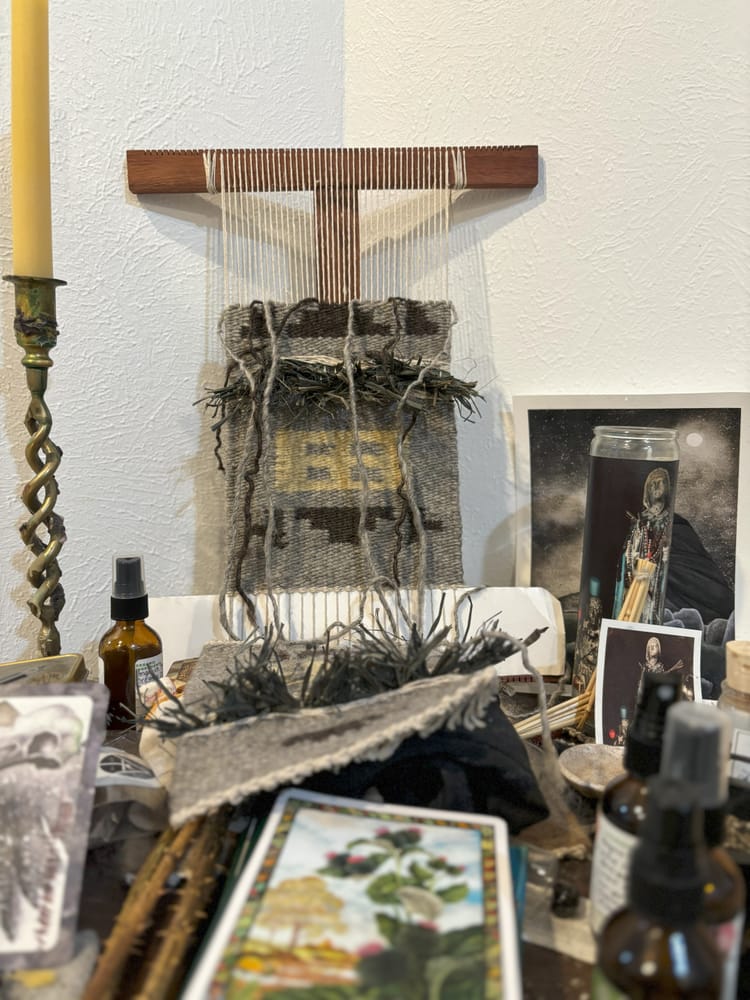
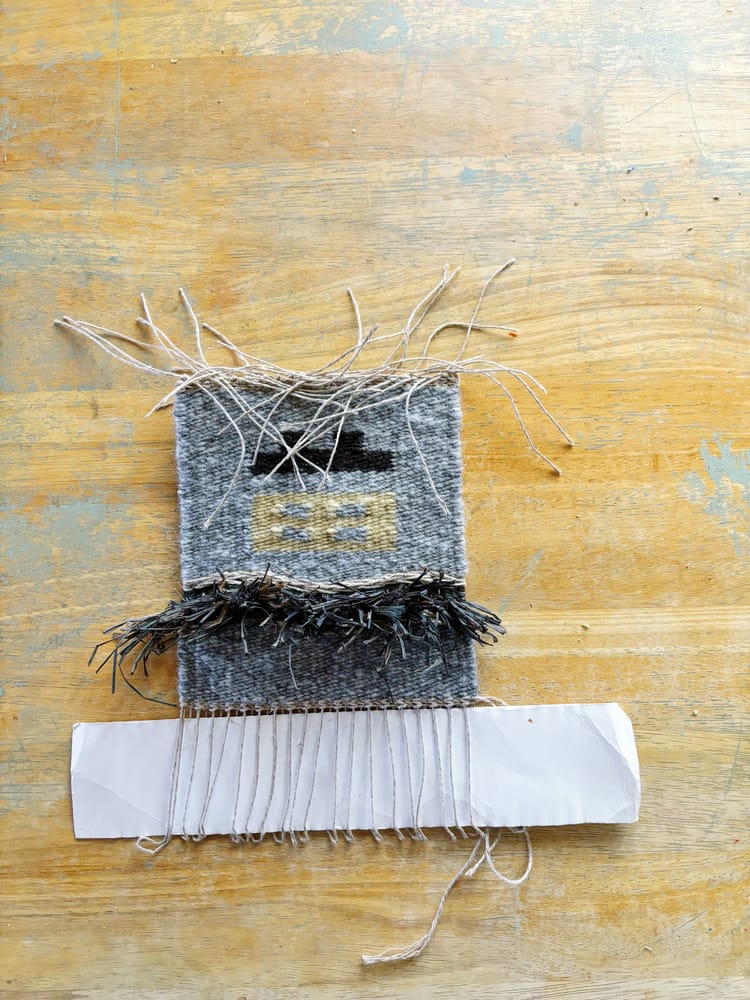
This is not in anyway peculiar for me, because mine is a masculinity built in female-dominated spaces. I am a man who was raised by a single mom, got a PhD in the social sciences, and practices magic and fiber art. My masculinity is deeply shaped in conversation with the feminine aspects of our society. I feel like Merlin, who Strand describes as “the ‘fatherless’ child outside of patriarchal monotheism.”7 Like Merlin, I do not know the world of success in patriarchal capitalism. It always rejected me as the poor son of a single mom surviving on irregular child support payments. I am regarded as another thing all together; a mutant hedge-rider as I have called myself before. Consequently, in a world that has spit in my face, I have used Merlin’s knowing scoff, which Strand adroitly describes in Merlin’s run-in with the warlord Vertigorn, to great effect against man-baby tyrants of all shapes and sizes to laugh in the face of their empty threats. I find strength in the resonances with Merlin that I learned from Strand's discussions in this book.
So, Huzzah to expanded masculinity with as many representations and fatherless children outside patriarchal monotheism. “That’s LITTY,” as the kids used to say. “It hit diffy,” they would exclaim.
Are their any Possibilities Left with the Sword?
If given the choice between the sword and the wand, Strand argues in her introduction that we should return the flowering wand to the masculine:8
This so deeply resonates with my own experiences as a man who has explored magic embedded within the dirt, plants and trees around me. I think this magic should be the birth right of any male-identifying person who wishes it to engage with it. I think it is right for men to want to embody a power that is soft, curious, connective, and celebratory. Witchcraft or magic does not need to be confined to specific gender expressions. Indeed, those are all forms that I hope my own power as a human takes.
Despite my own agrement with Strand's call for the wand, I struggle with the idea of setting aside the sword. It’s the one piece of the text that I have been wrestling with internally since I started reading the piece. A multitude of questions cascaded out of my copy of the book as I read Strand's question, “Do we want to hand the masculine a sword or a wand?”10 I had to just move forward, because I kept re-reading the introduction each night for three nights. I don't know what I hoped to find by re-reading it. At first, I thought I was missing something, the fear something is over your head is one that will be familiar to anyone who grew poor. Then, I started to just soak in Strand's idea of the sword. Of the sword, she says, "It either attacks or defends, affirming every interaction is conflict and every story is about domination or tragedy." She continues by calling for us to set the sword down as a symbol of the Anthropocene and let it become a fossilized monument of our age of disconnection:
As someone who bears the scars of the toxic form of patriarchal masculinity and dragged my own spirit out of its sludgy, black grips, the sword still resonates. One might ask: Given your avowed hatred of the violence perpetrated by and ideology of the men whose brains and spirits have been rotted by such sludge, how could such a tool still resonate? Have you gone mad? No, I have not gone mad. I am just drawing on a broader conception of the sword than is used in this text. I am drawing on the sword as a divination tool that is used to symbolize the mind’s power of discrimination. I am drawing on the power of the sword to draw necessary boundaries to protect people from the real threats they face in a dangerous world.
It took all 35 years of my life to bring the sword’s power of discrimination and boundary maintenance into my life. Before then, I tried to keep contact with people who had caused me harm. I tried to understand why people did the terrible things to harm me and others. Then, in a rather cliche turn of events, it all changed while watching a video of one of Rage Against the Machine’s live shows from their 2022 tour.
It is a story that I have told before. Something inside me changed that day, and I decided no more letting people step on me. I wrote a letter to my dad explaining how all the shitty stuff he did growing up harmed me. I followed through on re-establishing the boundary on three separate occasions when he or his wife overstepped the clearly demarcated boundaries. I stopped trying to understand people whose worldview put mine or my loved ones lives at risk, including any variant of white supremacist, christian, patriarchal, ableist, homophobic, capitalist idiocy that seems to legitimize the current violence that our world meets anyone with who does not fit into a particular mold in our society. This is particularly important in a place like Colorado where serious hate crimes have occurred and people from historically marginalized communities face continued death threats. I burned the bridge any person who could believe in such ideas could take to reach me and erected a monument of crossed swords as a reminder that they were not welcome here any longer.
Yet, this decision between the sword and the wand is one for every person to make on their own in accordance with their own values and experiences. If you want to be a pure wand person, do you, hoss! I am not here to tell you what to do. I am just describing to you where I am at right now on my path at this moment in history. I hold a sword of discrimination and protection in one hand and a wand of yew in the other, because of the tragedies and conflicts I have traversed in my life. The grinding barbarity of our institutions, our culture, and our way of life rendered my father useless and took my mom from a form of cancer that was entirely treated if you had health insurance (she didn’t) and access to regular routine checks. In such a context, I have needed to understand tragedy and domination as real nexuses that have taken people I have loved or threatened other chosen kin that I do not want taken from me. In such a context, the sword still retains a resonance alongside my endeavors to use the wand to weave myself into community with others.
Sophie Strand, “The Flowering Wand: Rewilding the Sacred Masculine,” Inner Traditions, at 99, 157, (2022). ↩
Sophie Strand, “The Flowering Wand: Rewilding the Sacred Masculine,” Inner Traditions, at 17, (2022). ↩
Sophie Strand, “The Flowering Wand: Rewilding the Sacred Masculine,” Inner Traditions, at 17, (2022). ↩
See The Hermit, Part 1, The Hermit, Part 2, and “May you be Protected on Your Creative Path” for those writings related to the hermit archetype. ↩
Here I am summarizing the excellent portion of Sophie’s discussion ↩
John O’Donohue, Anam Cara: A Book of Celtic Wisdom, at 199 (1998). ↩
Sophie Strand, “The Flowering Wand: Rewilding the Sacred Masculine,” Inner Traditions, at 102-103, (2022). ↩
Sophie, should you ever read this section, please approach it as more of a convivial call to consider the utility of the discerning nature of the sword from the experiences of a mutant on the edge. Love the book so much and it really prompted a lot of reflection. So Cheers to you! You can also just throw it out as a deeply subjective reading of the importance of the sword symbol, which seems pretty different than the more figurative and literal swords you were discussing. ↩
Sophie Strand, “The Flowering Wand: Rewilding the Sacred Masculine,” Inner Traditions, at 7, (2022). ↩
Sophie Strand, “The Flowering Wand: Rewilding the Sacred Masculine,” Inner Traditions, at 1, (2022). ↩
Sophie Strand, “The Flowering Wand: Rewilding the Sacred Masculine,” Inner Traditions, at 6 -7, (2022). ↩
Member discussion