
Sensing into the Mystery of Disavowal
The moon comes,
The moon goes.
The tides come.
The tides go.
The seasons come.
The seasons go.
Here I sit,
Betwixt
the coming
And going,
Riding the hedge,
Sensing into
that mystery
that flickers
Momentarily
in the liminality
Of the space
Between the
hauntings of
certainty.
-Untitled poem I wrote-
I saw Erik Olin Wright speak in the last decade of his life while in his full swing toward demarcating alternatives to capitalism. It was at a regional sociology conference in an ordinary, flourecent-lit hotel meeting room in Jacksonville, Florida. That room was as ready-made and cookie cutter of a space that your could create. It could have appeared in any regional hotel in any place in America. The room was overly chilled in that typical way that seeks to make white men in suits comfortable, even if that comfort is at the cost of discomforting all other folks in attendance and strangling out other life forms with the associated greenhouse gases. Olin Wright was there to discuss his recent book, “Envisioning Real Utopias,” which talked about various anticapitalist projects, like cooperative ownership, that he believed could be a first step towards alternatives to capitalism. This person, whose claim to fame, was creating better conceptualizations of social class inequality was shifting from what he disavowed (inequality) toward an exploration of what he avowed would provide a pathway toward more egalitarian futures, “utopias” in his wordage.
As a baby sociologist looking quite awkward at one of my first academic conferences, I didn’t think that utopias were possible or even close by. I had yet to read Mark Fishers’ “Capitalist Realism,” wherein he makes the point that capitalism seeks to entrench itself by convincing even those that hate it or are pummeled by it that there is no alternative. No, my training taught me to dissect previous work, demonstrate the extent of inequality in a novel way, and detail the incredible barriers there were to enacting change. Yes, I was your typical sociologist who responded to Olin Wright’s ability to push back against the hard inertia of disavowal in the field with the same sort of empty nodding that I saw all around me. We were all those noodling bobble heads, ready to go to lunch. Yet, Olin Wright was a person who was doing the hard work toward both disavowing what he saw wrong in the world, in this case capitalism, and pointing to real examples where people have pushed back against all odds against capitalism. I understand the importance of that now, another hard won truth that comes with being another noodling bobble head in a room that didn’t quite get it at the time.
Thank You for reading this essay! This work would not be possible without the support of readers like you. Please join our community by subscribing for free to our weekly Black Sabbath Essay Series.
I’m sort of waxing poetic on this moment because it’s personally important to me. One of my advisors, Rachel Dwyer, was Olin Wright’s student, so that places me within his extended tree or web. Such is not just the fond memory of a simple hermetic druid. Beyond simple nostalgia, it is helpful to have witnessed elders within your own community go against the grain to both disavow something they vehemently oppose, such as capitalism, and be willing to avow the alternatives that they would like to see, cooperative ownership. This is the sort of hedge-riding, portal opening moment that you can store away in the temple of your memory to draw on when you have reached the point in your life where you are looking for a way into approaching the mysteries of this world outside a dualistic, either-or worldview. The quality of the futures that were imagined in Olin Wright’s text are a moot point when the real gift is his example of providing an escape hatch out of the rote and routine of diagnosing and documenting social problems. And, shoot, am I glad to have the ability to go back in time, find that escape hatch, and, with haste, find a new way to relate to my disavowals.
I have been doing a lot of deep soul searching about my own disavowals in my life. This is partly prompted by my own grappling with the role that such rejections have played or will play in my life. This is the typical tightrope walk that plays out in my mind. As a deeply analytical and spiritual person who wants to live in alignment with my values, I am constantly trying to think through the larger picture of the effects that my decisions have had on my life. This has only been amplified in the last three years as social, political, family and climate conditions have prompted an entire sea change in what disavowal means to me. Yes, it was the weight of the world that pressed on my shoulders, prompting me to put some skin in the game and not just mutter things under my breath. No, I made my disavowal visceral. I took the fight to those who had rejected parts of me by making decisions that cast those people out of my life. I called the man babies out. I disavowed all those aspects of normie society that I couldn’t stand anymore by making my body an altar to my own disavowal. In short, I became the walking embodiment of the disavowal I always felt deep down in my heart to the way the world is organized.
My experience of disavowal isn’t one of just focusing on what I am against. Have you ever heard someone say that we as a society are too focused on what we are against and not focused yet enough on what we are for or what we want to live into? I think that’s the sort of stereotypical depiction people use to bypass staying with the work of setting boundaries and being genuinely angry with people and systems who have wronged us. Folx always want you to start writing yourself into your imagined future before you have adequately disavowed that which has haunted you. Me, I’m not ready to give up my disavowal, because it’s been with me for as long as I can remember. My experience of disavowal has been a deep bodily stirring that has been building for decades in my cells as I have been scarred by rejection after rejection from my dad and for being different and eating my feelings and being poor and being raised by a single mom and being a fucking ally to people who have been stomped on worse than me. It has taken my entire life to be brave enough to enter into the sort of full body righteous rage and associated despondency that I need to access to purge this trauma that has imbedded itself in my mind and body.
Start aside, yes, I wrote the last two paragraphs under the influence of Beck’s seminal 2002 album “Sea Change.” Can you spot the secret reference used in the text? If you get it, I will send you an overnighted air five. Honestly, this album has done more for me in helping me feel through depression, sadness, anger that’s showing up from sadness. It’s a beautiful record. Ok, end aside
As per usual, this work with disavowal is also driven by my monthly reading with Hannah Haddadi of Mourning Light Divination. In advance of our meeting, I asked Hannah if there is anything that I have left to clear in order to make way for my blooming this year. In characteristic fashion, Hannah’s pull cut to the heart of what I am working through. “You need to find a way to work with the pain that still haunts you,” Hannah said interpreting the pulled card. And just like that Hannah cut to the core of my life’s work with disavowal. What do you do with a deeply embodied feeling of being wronged and rejected? I used to channel it into beating people in games like tennis. Having ripped off that bandaid, I now am trying to be more explicit in how I use the volcano of anger and ooozing slow motion lava of despondency I feel from my rejections, because I do want to work with those feelings in a generative manner.
This is to lose oneself in the mystery of disavowal. In some way or another, I have been slowing feeling my way through to what I will do with that pain my whole life. This is just the most recent spiraling inward toward the answer for what I do with that cell and soul-stirring pain. Some bits of my first tentative answer to this spiraling came out in last week’s essay, “I Have Plants”:
“My fear underlying all of this was that this micro movement back toward love would never come. I was afraid that I would be stuck in this isolation forever. Yet, here I am traversing this great ocean of my life spiraling back toward love.”
Yes, in a world where I wondered whether I would be able to trust more than 5 people, there is healing in beginning to found in beginning to love and trust again. Yet, I don’t want to close up shop in the typical, “I found the light,” bullshit Hollywood endings, because that’s not what Hannah’s reading called for. It’s part of what irked me about last weeks essay and here my spiritual squad of killa bees (obligatory wu-tang reference) called me in to re-engage with my pain in direct way. Explicitly, they called me back in to work with that pain. I was called in to enter into the sort of rabid, guttural yelling that leaves one seeing spots. I was called in to wildly flail my body so as to give bodily expression to the disavowal to merge with its mystery and give it some bodily expression. I don’t have an answer for that, and I am willing to flail around, knee-deep in the mystery until something emerges from the space between the easy answers.
Following Jessica Dore’s lead again, I am trying my best to situate myself as a human who could never possibly find the perfect way to channel this pain so as to reach “total healing.”1 As we talked about in our essay “On the Verge of Bloom” two weeks ago, its important to resist closing down this soul searching for how to work with the pain, lest our easy-way-out answer result in a haunting (Dore’s excellent words not mine). Dore built upon this foundation this last week in her Offering by noting that all our efforts toward engaging with the great mysteries of our own suffering and the suffering of the world will always be partial and never be complete:
“I truly believe all of what I know is situated somewhere—in other words it's contextual and historical and didn’t fall out of the sky—well then I have to also accept that my perspective is partial. And it’s always going to be partial. If I accept that my perspective is partial, then I have to also accept that whatever work I might do, informed by that partial perspective, is going to be partial as well. I won’t be the hero, or the savior, or the knight who asks the perfect question that yields the total healing.”
Yes, and like Dore, this is not easy for me to do. Once Hannah told me this bit of my reading, I was already rapid fire cycling my mind for an answer, because you know I’m like a smart dude or whatever. Luckily, engaged in this deeper praxis to sit with the trouble a bit longer and wander around in the mystery of it, I was able to just feel ok, albeit a little uncomfortable without leaning on my crutch of the easy answer, without being the all-knowing, hermit druid.
Despite my dearth of answers for dealing with this mystery, I will tell you that experiencing extreme music live recently has helped me feel through and express that pain in constructive ways. I saw Agriculture perform this past week at the Hi-Dive. I was right up front, letting the music absolutely pummel me. I was sort of stuck in my head as I typically am in places I don’t feel totally comfortable in. I always walk around with the haunting of being afraid of being rejected. Then two folx came crashing through the crowd and started dancing next to me. I had been headbanging, as your friendly neighborhood druid is wont to do in such contexts, but those two folx’ presence let me loose onto a whole different level. Then Agriculture performed a song off of their upcoming self-titled, debut record “The Glory of the Ocean.”
I jumped, flailed, and screamed with these strangers. I was out of breath, felt my body almost give out, and felt the fear and pain melt away. In the communal, ecstatic experience of extreme music, I found a place where I could let that built up pain, which was embedded in my body and mind, out in a constructive way where it doesn’t get turned on me as a haunting. In short, I found a form of catharsis by embracing an activity and sounds that are a direct disavowal of mainstream norms and music.
Likewise, I also feel the catharsis of disavowal in getting tattoos. Someone once asked me if I get tattoos because I like pain. No, I don’t, but my tattoos help alchemize my pain into markings that ward off people from our dominant culture from feeling like I am their ally. As I fill my body with tattoos, I find myself thinking of my body as an altar of disavowal. I can no longer return to the worlds that I used to pass as a normie chad in nor do I want to return. Unlike most people, I covered all portions of my body that would be most visible with tattoos first. I don’t hide the fact that I am a weirdo. I wave my freak flag for all to see. I reject the norms of the dominant culture and use my tattoos to advertise that to anyone who looks at me. This is my weirdo homing beacon that I use to find other weirdos who disavow our society and want to build another one.
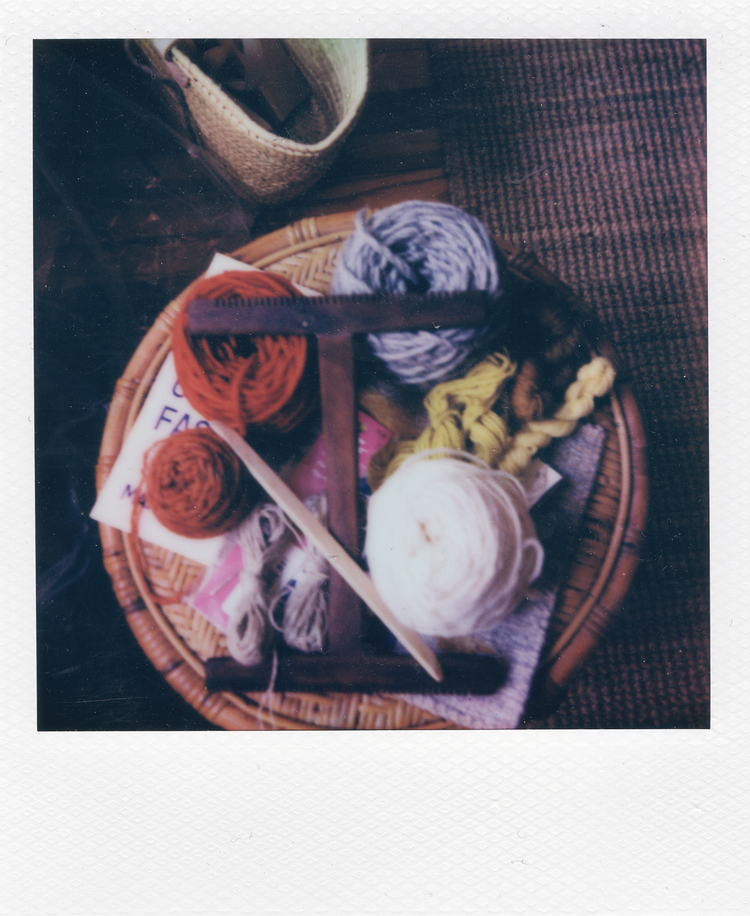
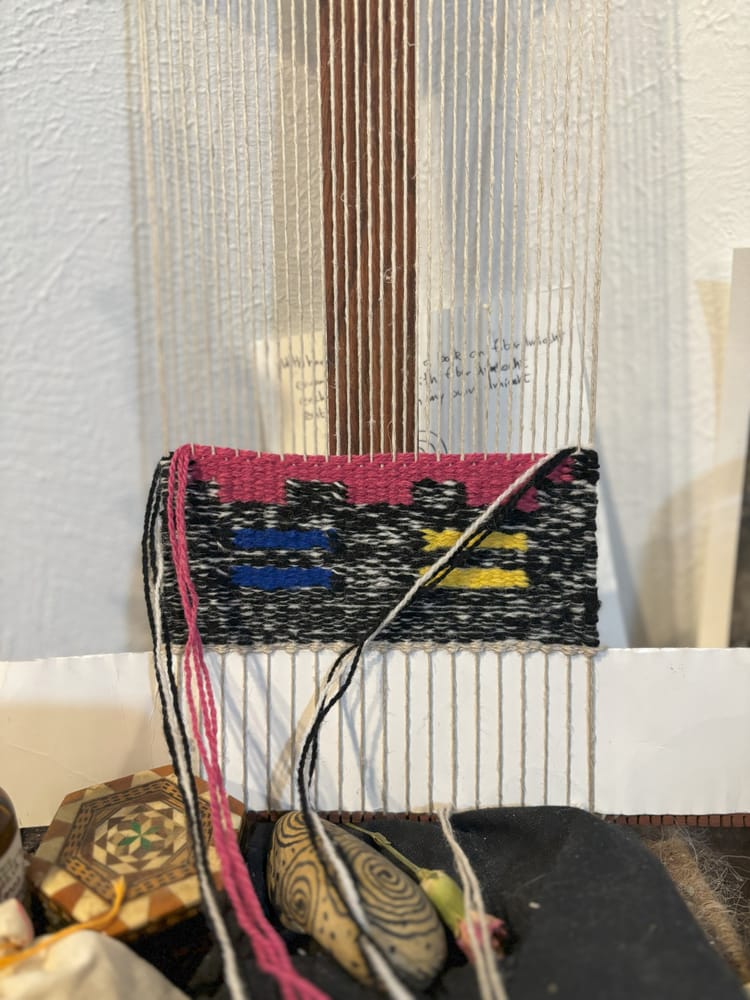
What I find most fascinating at these two provisional practices of disavowal is how linked they are with the sort of generative avowal work we talked about in our story of Erik Olin Wright. Disavowal is always linked with finding your chosen kin and avowing to build worlds together outside the one that is handed to you. I may be a basement hermit, but the ways I express my disavowal have linked me to hundreds of other people who have very explicit ideas of the world they want to build. This is why I don’t buy the false binary that some people posit around avowal and disavowal. No, like Olin Wright, my own disavowal was necessary to make a break with the incredibly strong dominant culture that has tried to force me back into the matrix. Whether your writhing around in the dark listening to extreme music, filling your body with tattoos, bartering your woven wares for knives, or growing food for your community, your acts of disavowal are just you burying the old world you inhabited so you can be born into a new one that is full of the practices that you want to continue long after you die.
So, don’t wait dear reader, become the flame on the hedge that will deliver you from all that you want to burn and bury deep in the ground from the old world. Take your own escape hatch, make a break with the old world, and begin the work to make the magic only you can bring to the world. All new paths begin when we decide to reject the ways things have always been. I promise you won’t regret it.
Until next time, dear reader,
James
Thank You for reading this essay! This work would not be possible without the support of readers like you. Please join our community by subscribing for free to our weekly Black Sabbath Essay Series.
Jessica Dore, Offering: June 11, 2023. Post is paywalled, so you can subscribe for $50 dollars a year to get access to the 52 weekly essays. ↩

Member discussion