
Societal Death
If you are sick of me writing about Gaza, to bad, because we back again with more. Specifically, I want to define a key death work term this week, societal death, and define what it is and is not. But, first, too many words about my own experience.
In the last year, I have been interested in merging my background in sociology with my death work practice. I have discussed this explicitly in a variety of essays for this project, including “Societal Death Work,” “Think of Death as a Friend,” “Sit With Me Now and Listen to my Broken, Melancholic Record,” and various death meditations. I would say much of my work in this essay practice has been to excavate what I think about death being from the imperial core where our economy is operated like a necronomy, where death, its implements, and its avoidance are big business. This project has involved adding a little more formality to typical expressive, self-reflective prose by discussing definitions, talking about social issues, and taking stands on what I think is appropriate action. I hope folx don’t find that off putting. I try to enliven it as much as I can with the same sort of artistic flair and emotion that render any of my essays interesting and human. That merging of the objective and the subject has been very healing for me.
In many ways, this merging has felt like a rebirth for me. I feel so much joy in bringing sociology back into my life in a way that provides color and understanding to my days. Any artist will tell you the heartbreak one feels when they have to sell their toolkit, skill, or art for coins to survive. Even if you enjoy the work, selling one’s skills always entails a curtailing of the horizons one can explore with that toolkit that can lead to feeling that the work is stifled or dead. Discussing societal death has offered this reintegration where the questions I explored in my PhD work regarding power, inequality, social movements, and culture can come back to life. It truly has felt like a re-integration of a part of myself that felt like it had been killed off by having to take my passion for sociological analysis and make a living in the trenches of a government bureaucracy.
So for me, this is a matter of life and death beyond just it being death work. I need to be engaged with this work or else I feel like a shriveled up husk. My push to write these words in the corners of my days, not the prime time slot of 9-5 Monday through Friday earmarked for wage labor, is that if I do not do this work I become depressed and despondent. So, I sacrifice rest, leisure, work out, family time to be here each week. I sacrifice sleep. I sacrifice my comfort and ease. You know why? It’s elementary, my dear reader. I literally could not go on without this work. I would lack the will to live without this work, which is of the most high value-aligned actions that I can take. Maybe I am being dramatic. I don’t really care. This work feels that important to me. I want this work to be the sacred work that honors my own unique contribution to the world that will not be stifled by the tremendous grief I feel about our world or the incredible deadening bludgeoning I face in late stage capitalism. Yes, my response to the depression and despondence is that I want to fight for my life.
This is where I think my own experience being raised by a single mom in the rust belt has made me distinctly different from a lot of my white male peers. I have never really had the luxury of just being depressed and despondent, numbed out on sportsball, beer, and drugs. My life has always depending on me fighting back. From an early age, my mom highlighted the examples of her own brothers not fighting for their lives and how that led to them leading lives of quiet desperation. This is where I differ deeply from someone like William Foster Wallace, author of Infinite Jest who was raised in relative comfort in the middle class by two professor parents. He was able to approach tennis as a game and an intellectual exercise. I had to approach tennis like my fucking life and future depended on it. I didn’t have the steely calm of my middle and upper class opponents. No, I was like a fucking fireball shot straight outta hell. If I was losing, the whole tennis facility would know. I would scream, “Fight,” so fucking loud that I saw stars and my eyes were blurred out. I guess not much has changed. I am still fighting for my fucking life.
This whole long-winded introduction is a long way of saying that I am just a dude with my own forms of privilege and disadvantage trying to find meaning in a world struggling through a new gilded age with multiple genocides, climate catastrophes, and actual fascist movements vying for power. I don’t have a monopoly on any of these concepts, nor am I interested in being an “Expert” in any of these fields. I am just a person interested in expressing myself and trying to leave the world a little bit better than how I found it. I am just interested in getting more people turned onto these ideas that we can actually fight for a better future while acknowledging the important place individual and collective death work plays in our work toward collective liberation. If you see gaps in my work, make your own work that addresses them. The world will be better for it. We all need to move out of our delicate glass houses of critique and get engaged in the real work building a better future in community with other folx.
Societal Deaths
I think the largest shortcoming in my previous work was that I did not have separate definitions of societal death and societal death work. I rushed to the action without first focusing on what a societal death is. This is a typical American response to death-related topics. We want to slip ourselves right out of sitting with a death by skipping right ahead to what we will do about the death. Sound familiar? I mean it is for me. I wouldn’t even address the simple fact of my mom’s death. I wanted to go back to normal, to unceasing action to bury her death in a flurry of activity. Consequently, as I was revisiting my previous definition of societal death work, the first order of business was to have a definition for what societal death is to ensure that we are clear in what our actions are actually addressing. Our definition is as follows:
Societal Death Definition
When groups of people, animals, plants; community groups; institutions; values; or ideas die, are murdered, become extinct, or are made illegal as a result of actions by powerful folks seeking to hoard social, economical, political, and cultural capital.
Another key dimension of our definition of societal death is that it is as broad as possible. We are not making any claims as to what a legitimate death is here, nor are we, as death workers, going to place ourselves in a position where we are telling folx whose deaths matter. As a result, our definition of a societal death is extremely broad to encompass mass extinctions of animals, plants bird, or insects; loss of biomes due to climate change; the loss of community groups due to mass migration as a result of economic, political, or climate shifts; the death of values like solidarity with the ride of hyper-individualism; or the literal murder of people in genocides, mass shootings, and the like. No one animate being is being excluded here. In fact, we are also included communities and the values that knit people together as key societal deaths that we can individually or collectively grieve.
I think an excellent example of the tension inherent in this stance is those people who are the victims of political violence in Palestine. In this case, there have been innocent Israelis murdered in a terrorist attack and innocent Palestinians murdered by an endless ground and air campaign. In each case, these innocent folx were caught up in a political battle between a far right state bent on genocide and a political party in Gaza that uses violence to counter that state. There seems to be a lot of folx on the left that want to flatten the world and make the argument that Israeli deaths are justified because those folx are complicit in the occupation of Palestine. Similarly, there are also folx on the right that want to flatten the world and make the argument that any Palestinian deaths (even if the scale is much higher) are justified because they are complicit in the terrorist attack of October 7. My position is that all human life is sacred and all those lost lives are a societal death. I am for dispensing with the justification for violence and holding space for grieving folx who were killed for some state or political party pursues a political project or makes a political point. Sharon Arnold put this perfectly when they said,
“I don’t stand behind political parties or nation states. I stand behind people and I believe that the liberation of Palestinian and Jewish people is inextricable.”
Despite this big tent approach to a societal death, we are not saying that scale does matter. This is especially the case in the example of Palestine above. Any sensible person will see the dramatic imbalance in the number of lives lost and the ugliness with which the violence is perpetuated by a far right state hell bent on genocide and appropriately direct their concern and action toward that yawning chasm of the plight of the Palestinian people. What I won’t to do as a death worker though is say that any innocent life lost as part of political violence is justified. No, I believe we are capable of holding the complexity of decrying far-right, nationalist genocide of the Israeli government the and deaths of innocent Israeli civilians AT THE SAME TIME. Here, I am mostly just responding to some leftists that want to look hard by saying that some people deserve to die. Let me be clear, I will never advocate that as a death worker. if interested, I wrote a whole essay entitled “Am I just like the guy screaming into traffic?” about this issue.
In addition, this big tent approach does not provide safe haven for bigots of any type. I want to explicitly say how much the sensible death worker rejects the statement of the far right in the United States that “all lives matter.” Within the U.S. context with our institutions being systemically allayed against the lives of the poor, people of color, women, folx who identify as nonbinary or transgendered, and religious minorities, among others, we cannot allow such a statement to be embraced, because it is not coming from a good faith hope that we can value all human life. No, that statement is a rallying cry of a privileged white minority that wishes to discredit the movement for black lives and allow carceral capitalism, mass incarceration, and the racially-motivated policing to continue unchecked. It’s unfortunate that we have so many people on the right who dress up their atrocities in human dignity language to justify continued oppression and domination, but it’s the reality we are dealing with here. I stand opposed to the co-opting of death worker language for the perpetuation of status-based violence.
The final item I wanted to add to the definition of societal death was power. Yes, I wanted to explicit reference to who is responsible for the mass death. As a technical writer and sociologist, it is very evident to me where folx are unable or unwilling to address power when their discussions of mass death exclude identifying who is responsible for the death. This is really explicit in newspaper media headlines of the number of Palestinians killed in a genocidal bombing campaign perpetuated by the far right Isreali state. Take this recent headline from the Guardian:
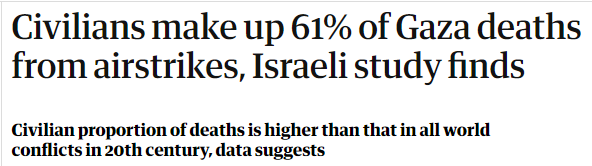
Notice how their is no statement about who did the airstrikes? This is a perfect example of an identification of a societal death that refuses to label who is murdering civilians at a higher rate than “that in all world conflicts in the 20th century.” I want to bring power up front in center in my definition of societal death, so we are clear about who is responsible for the death. In the case of gaza, its the far right Israeli state and the United States who supplies weapons and vetoed UN resolutions calling for a ceasefire on three separate occasions. Yes, in order to speak truth to power, one must very clearly link mass death to the folx who are responsible for it.
If we want a robust, socially conscious death work, we have to be explicit about how individual people like politicians, CEOs, religious leaders, executive directors and the political parties, corporations, non-profits, and religious institutions that they are in charge of are responsible for mass deaths. This simple fact that all of death work is inherently political has only become more clear to me while participating in the current cohort of Tending Descent, a spiritual death worker training led by Hannah Haddadi of Mourning Light Divination. To ignore the dimension of power in societal death would be to deny the inherently political nature of death work. Me, I refuse to deny that political dimension and want to be clear about who is responsible so that we can target our societal death work to those powerful people and institutions that are responsible for the deaths. In the case of Gaza, we are seeking to identify that it is Israeli government, with the support of the US government, that is killing those Palestinians. In the case of climate change, it is multinational corporations and various governments around the world (most notably the United States and China) that are responsible for climate change. In the case of mass incarceration and disproportionate policing, its the police, the jails, and policy makers that have incentivized the over policing of black and brown neighborhoods and locking too many folks up.
Why does this matter? Well, as we talked about last week in our discussion of Adam Curtis’ Hypernormalisation in the essay “There Comes a Time to Burst One’s Own Bubble,” I am interested in moving beyond individual, art-based dissent in favor of just continually engaging in the sort of dissent needed to create a new world. Like I said, I am sick of arguing with people on the internet to change their mind. I would rather use that time to send mutual aid to an organization working on the ground, contact my representative, educate myself on an issue, or write and create art. Seriously, of all the benefits of the internet, one of the least helpful things it has brought about is constantly checking each other for purity along some every shifting ideological line or engage with trolls on the right. Enough with that. Stop making people who agree with on 95% of issues your mortal enemies. Keep your eyes on the people and institutions with actual power who are killing or creating the conditions for mass death. Just respond to the calls for action when folx are hurting and stick to the issues that are most important to you. Let that work be your praxis and change you.
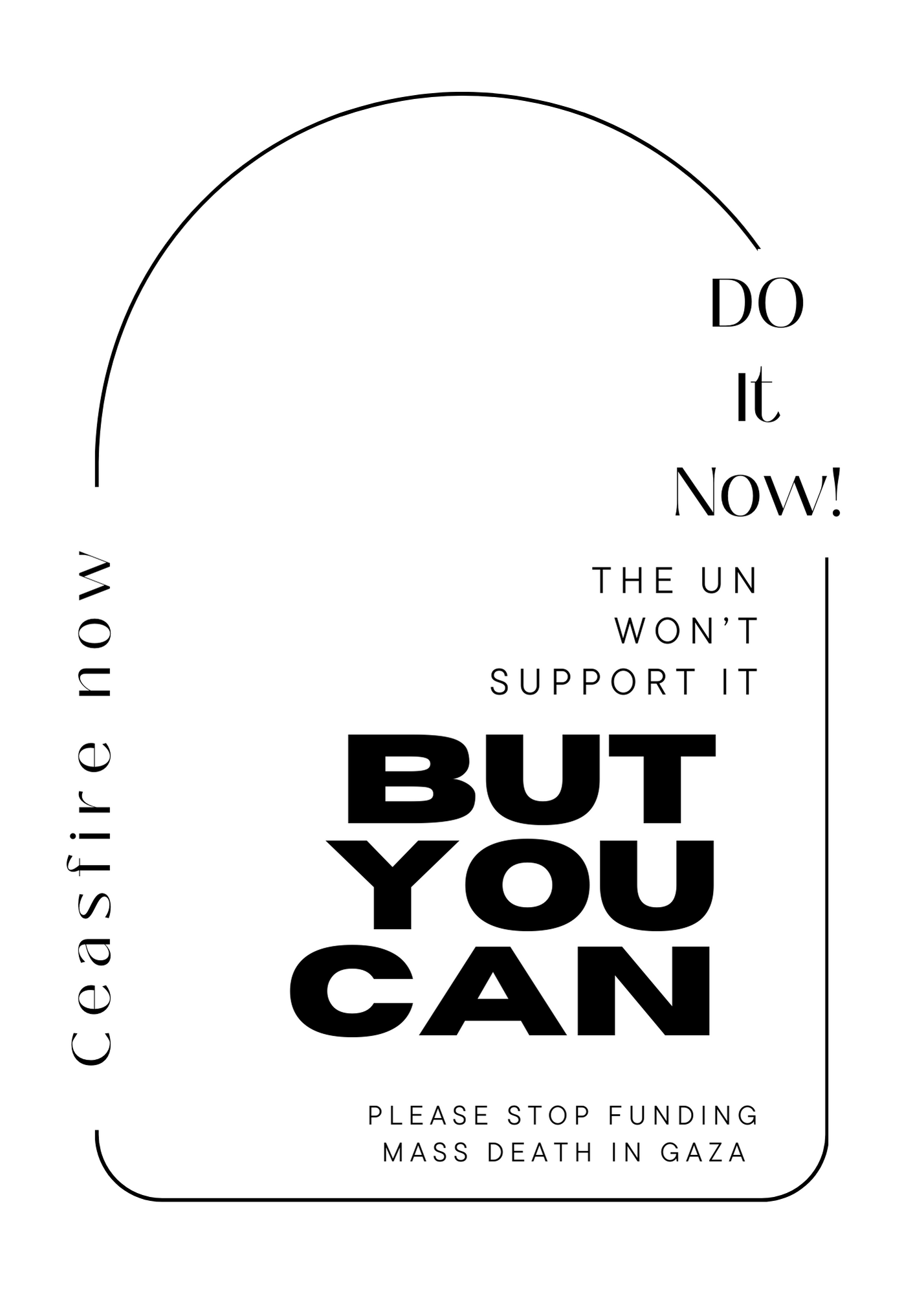
Free fax-friendly graphic to send your reps and senators this week. Right-click, save, and send to your reps and senators via Fax Zero.
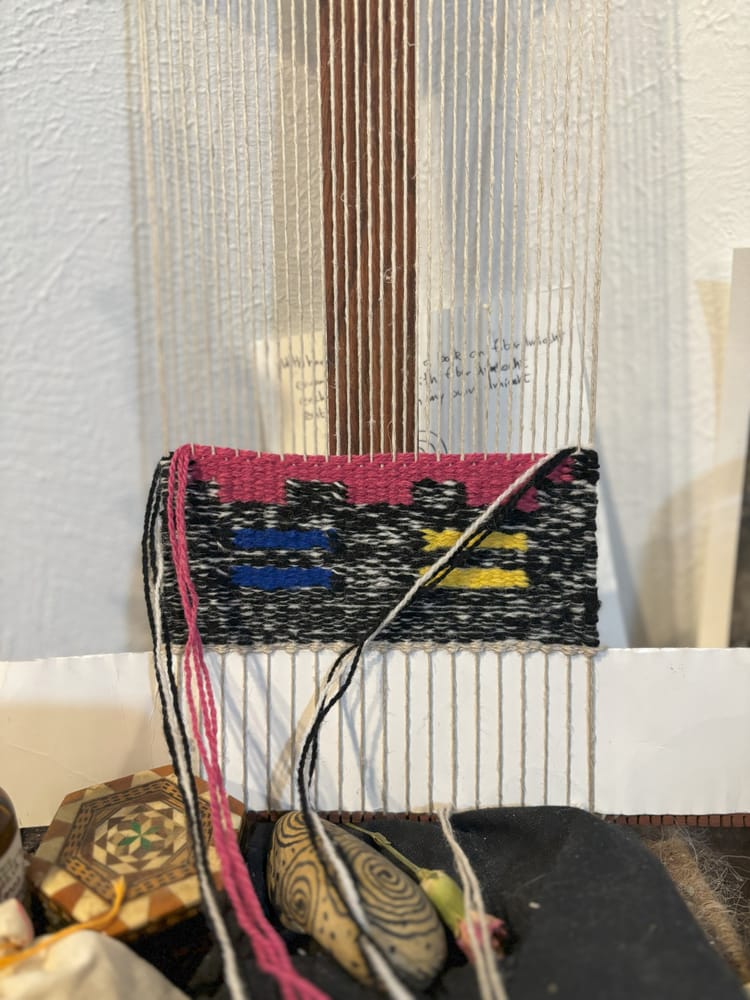
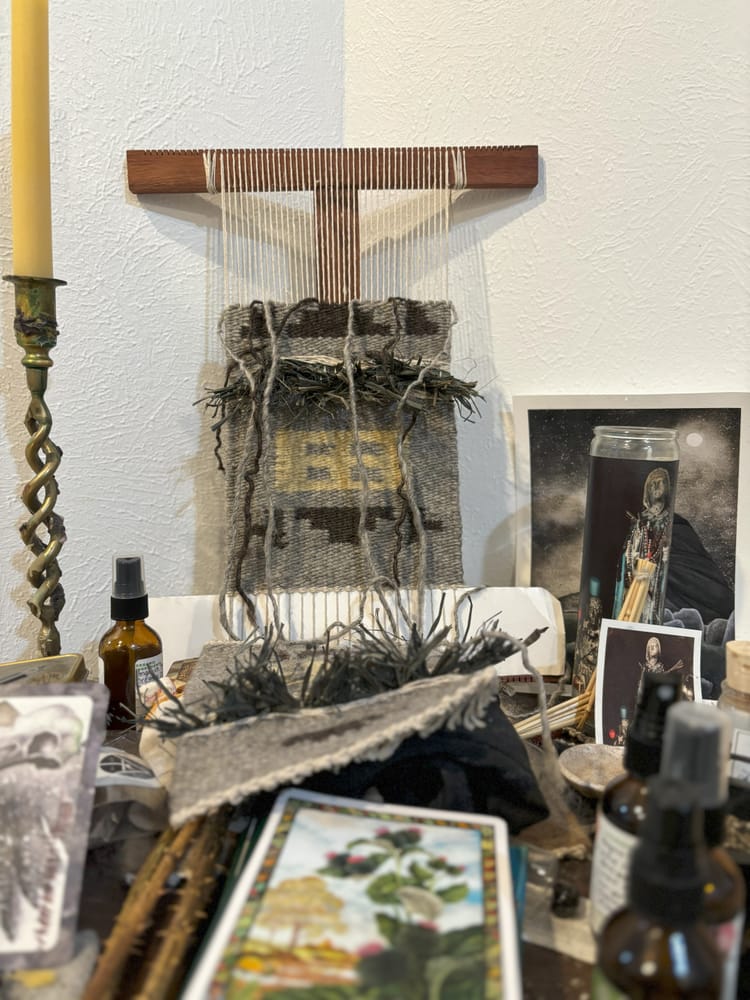
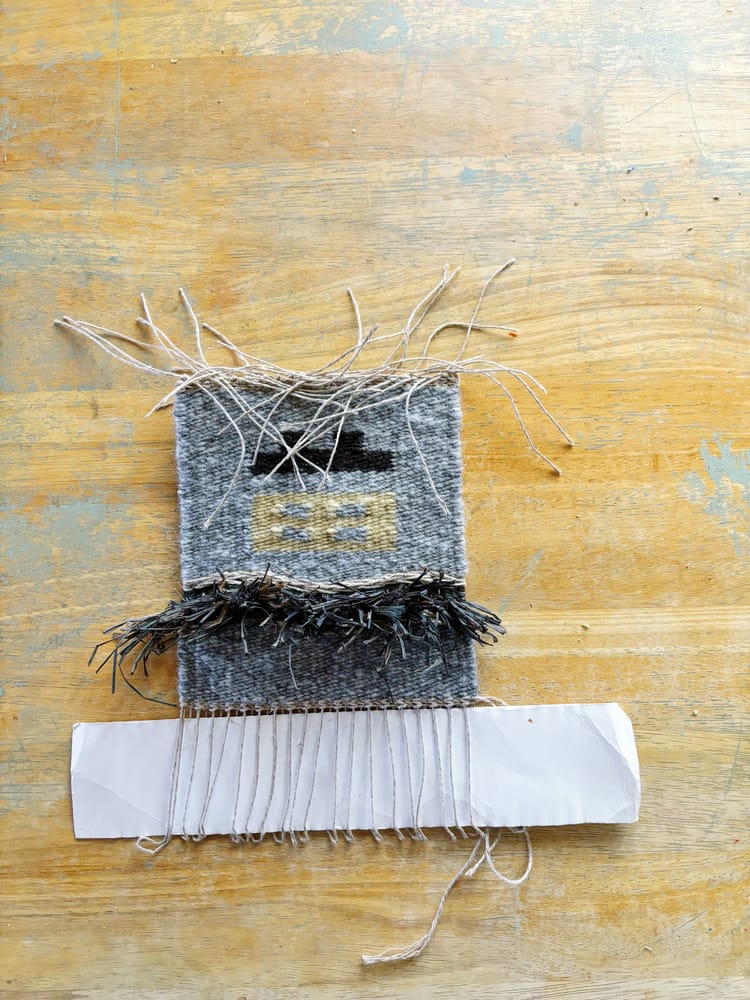
Thank you for being here, dear reader. I am so grateful you got this far in the essay. This whole project is reader-supported. We have paid 24 subscribers and handful of folx who are recipients of complimentary subscriptions. I would love for you to be a part of our community. If you are interested in a free subscription because times are tough financially, please just shoot me a message and I will give you a year of full access to A Quiet Practice for free. I also appreciate all folx who are willing to pay the five dollars a month to be a subscriber to this project. I have completely moved off of posting any original content on Instragram and only post my prose and weaving and spinning updates here. So this is the place to be if you are interested in my work. If interested, I would be so grateful for you to support my work through a subscription, whether paid or free. As a paid subscriber, you get access to at least 8 essays a month and as a free subscriber you get access to 4 essays a month.


Member discussion