
Societal Death Work
I rode the bike out to pick up Juniper. It was a cold March afternoon. Earlier that day during a routine safety pat down at a local high school, a student pulled a gun on his teachers and wounded them both. Lily called me soon after with that slight tinge of directness that only comes from fear, asking me if I knew anything. She was on lockdown again at the recreation center across the street from the school. This wasn’t the first time gun violence has resulted in my family members or me being locked down for our own safety. It won’t be the last. This is America.
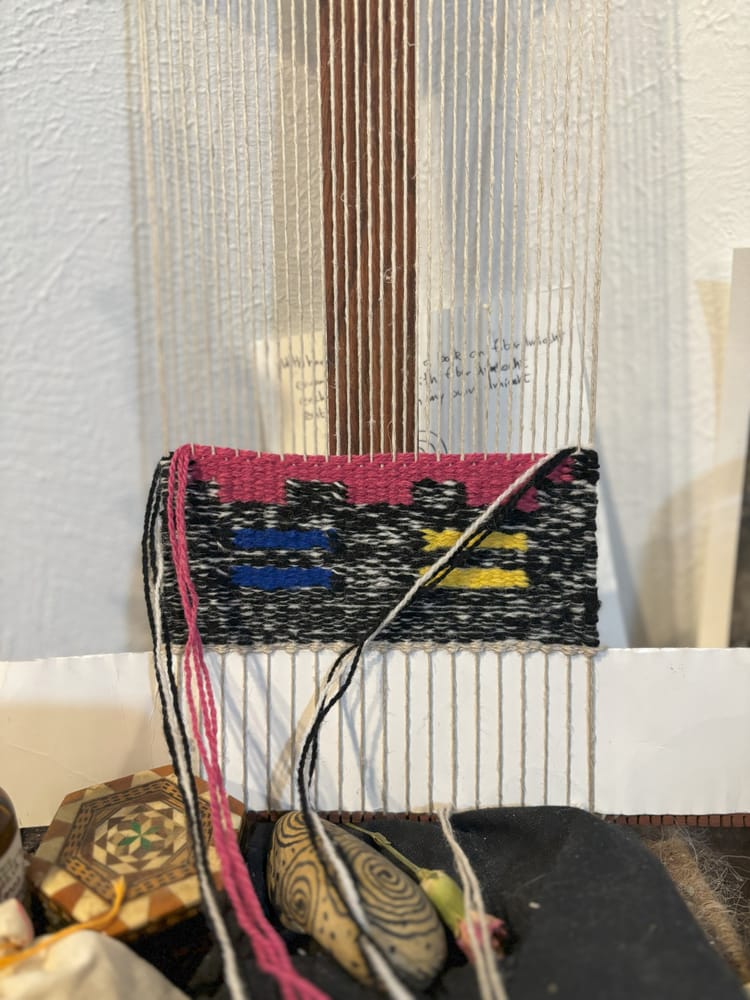
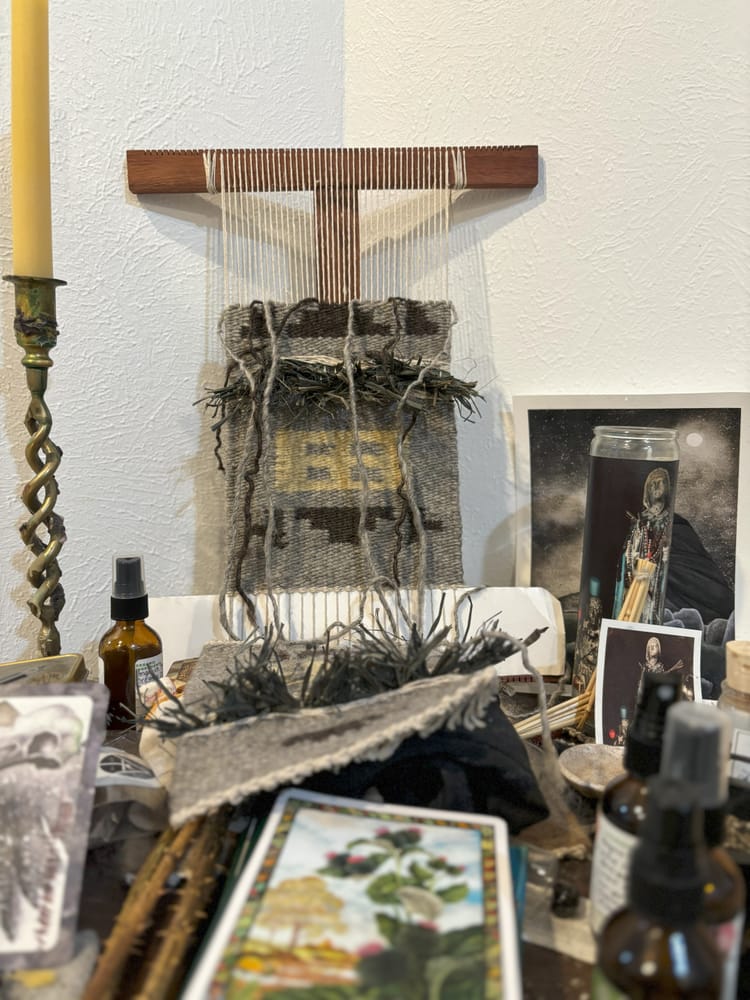
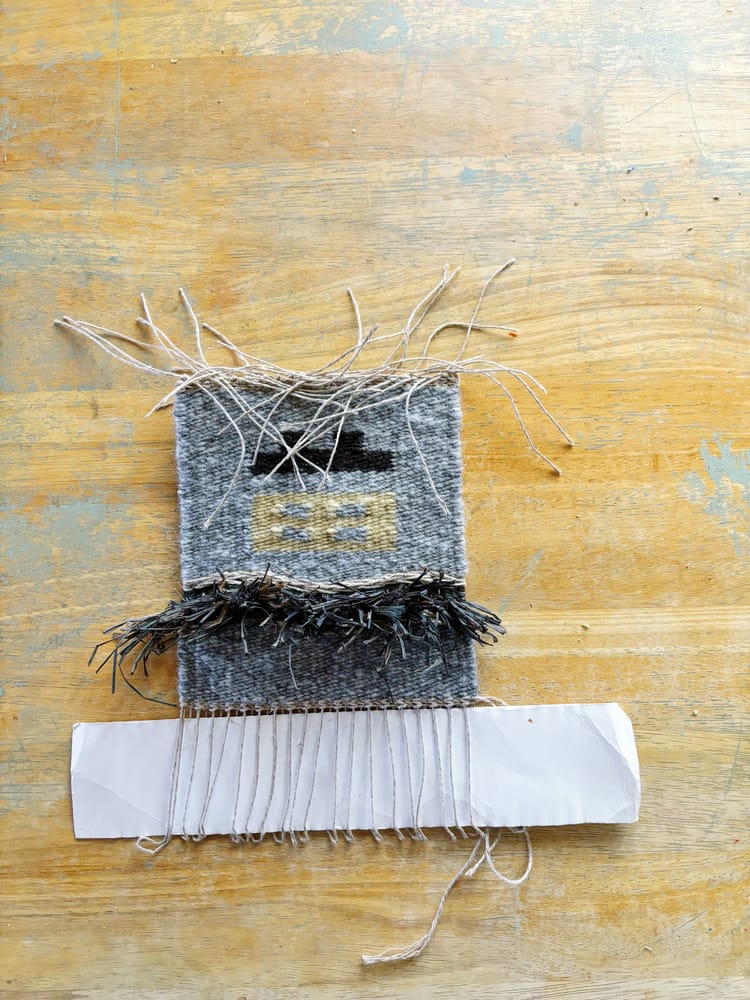
I rode out into the city that afternoon with gentle flurries falling against a gently-shrouded sun, which still shown through the thinnest sheet of clouds. I was on my way to the high school to cast a spell. Whenever approaching death magic, my senses are on overdrive. I felt intimately connected to the cold wind hitting my bearded face, the sound of rustling birds as I rode through the part, and the dark drapery of grief that veiled the entire area. An idea for my first large scale weaving snuck into my head when I least expected it. I was in the flow on my way to do the work that brings such meaning to my life.
Having already listened to Mournful Congregation’s “The June Frost” (One of my go-to death work albums) immediately upon finishing my call with Lily, I was playing Evoken’s “Anthithesis of Light” through my tiny speaker on my cargo bike. Evoken are one of the most important funeral doom metal bands in the world, having released seven albums that have deepened my own understanding of death and my own grief. You see, I steep myself in these sounds while doing death work, because I need that sonic accompaniment to tap into the griefscape of such public tragedies to negate our society’s refusal to acknowledge them.
I pulled up to the school with Evoken’s song “In Solitary Ruin” playing through the speaker. I, clad all in black, looked like the oddest form of death clergy, flanked with my own 21st century dirge to accompany me.
“Deadened Eyes, Extinguished Dreams, Muffled Sounds, As the coffin’s Lid Is slowly nailed shut.”
There was no one around the school, save the film crews from approximately 10 local news stations, who were waiting to give live, on the scene updates for their 6 o’clock news broadcasts. We were all quite the group to behold: One olde hedge druid and a gaggle of talking heads. Yet, this is what our reversion to death and suffering does. It leaves these shrouds of grief and destruction untended. We all just retreat to our homes to mourn in isolation or fearfully purchase comfort on the internet, leaving the information vultures to fly.
I pulled out my rose water, which in my own Irish wisdom tradition and in my practice is a powerful tool to open up space for grief and healing. I opened the lid to the jar, held my fingers tight to the opening to wet them, pulled them away, and flung the rose water down on school grounds multiple times. With the first anointing of the ground with rose water, I intoned, “Sacred Death, let the death of safety and comfort be seen clearly here.” As I said these first words of the spell, a magpie flew overhead and rested high up in a tree next to the school, a marker to me that sacred death was near. With the second anointing, I whispered, “ Brighid, let there be healing that comes to this place.” With the third, I softly said, “Morrigan, let those who need to step into their own sovereignty change what needs to be changed.” Finally, with the fourth, I chanted, “Bóinn, let there be rebirth here in this place.” With the final line of the spell done, I put my rose water away and just looked at the school. My death work was done here. I rode away and picked up Juniper, transforming from a wee hedge druid into a dad in record time.
This is what societal death work looks like. It looks like the tiny, practical bits of magic tucked into an everyday routine that illuminate this typically invisible shroud of grief that cloak sites of public tragedies. It pulls back the curtain on this grief and renders absurd the machinations of our necronomy, what Franco Berardi called the “economy of death” where people make money from such tragedies.1 In this case, juxtapose the vultures of television news all vying for attention of a scared, mourning population at home in order to sell them new furniture or lays potato chips in between segments of news on the shooting with some bearded weirdo uttering spells to funeral doom metal while magpies fly over hear. The absurdity of my own presentation of self matches the absurdity of television news cycle, allowing the spectacle of the site of a tragedy being empty save for the talking heads to be seen more clearly.
Societal death work centered around the collective grieving process moves us beyond our own American individualized, private approach to death. When we mourn in America, it is about very personal tragedies, like losing a friend or family member. It is almost unheard of to grieve collective deaths in the US. Collective deaths are those deaths caused by the societal failures of the political and economic system. Here I am talking about the deaths of over a million to COVID-19, the victims of mass shootings and hate crimes, and people we have lost due to lack to housing or health care. Until I learned to grieve these deaths, they tore me apart, because no one taught me it was appropriate to grieve these experiences. In fact, our society encourages us not to grieve collective tragedies together, because it is more profitable for the necronomists to have you at home alone, scared absorbing a bunch of advertisements for hot garbage while you are spoon fed information about a tragedy. Well, I am here to tell you that we need a communal approach to grief to tackle these large collective tragedies or they will continue to tear us apart.
My approach described above is just one. I am a practitioner within an Irish Wisdom tradition, walking my own enchanted death work way. There are many pathways to letting your grief flow for these collective tragedies. Let your grief spill out into spells in the streets where blood was spilled. Let your tears anoint the ground, cleansing the site. Caress the void left after the shroud of grief has been lifted by bearing witness to the chasm of darkness death brings. Make art that channels your griefscape and leave it at the site. Light candles to your death deities or sacred death at the site. Return to the site over and over with the tragedy in mind, holding all those effected in your heart. Pour your own grief into the soil beneath your feet and let the earth, that which we have always been fated to return to, hold you. Whatever you do, don’t let the necronomists isolate you into an atom. You have always been part of this larger communal web that has always been bigger than your kin circle. Never forget that.
Ok, extra credit if you listen to Hell’s “Helmzmen,” which includes the distress call of a the FSS Northern Belle that sunk in 2010. This is a particular dramatic way to approach collective death work.
Until next time, dear reader,
James
Thanks for reading A Quiet Practice! Subscribe for free to receive new posts and support my work.
Franco Berardi, After the Future, pg 114 (2010) at https://files.libcom.org/files/AfterFuture.pdf. ↩
Member discussion