
The Joie de Vivre of City Life
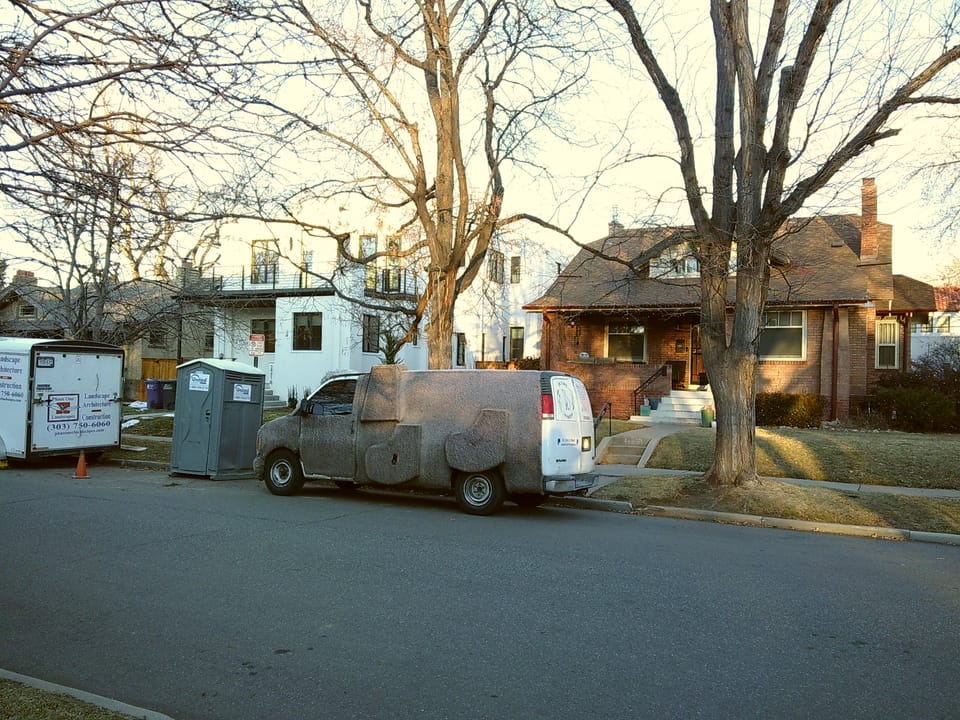
Recently, I was pointed in the direction of Rebecca Solnit’s article in the London Review, entitled “In the Shadow of Silicon Valley.” Her piece paints an impressionistic portrait of living in San Francisco in this age of increasing automation and alienation, drawing on her experience riding a bike alongside self-driving vehicles to illustrate the loneliness of some aspects of living in the shadow of silicon valley:
“Seeing cars with no human inside move through San Francisco’s streets is eerie enough as a pedestrian, but when I’m on my bicycle I often find myself riding alongside them, and from that vantage point you catch the ghostly spectacle of a steering wheel turning without a hand.”
Solnit notes that the autonomous vehicles have serious shortcomings, such as block traffic or getting involved in accidents, because driving and navigating a city is a “co-operative social activity, in which part of the job of whoever’s behind the wheel is to communicate with others on the road.” It is this loss of another avenue of obligatory co-operative social activity within an already eroding cityscape that make this example Solnit uses so powerful.
It is co-operative social activity that makes a city a place. Now there is a distinction for me when one talks about a city and a place. A city is a legal reality imposed on people living within the confines of certain boundaries that implies a set of taxes and associated services to be rendered by the city government or used by its community members. A place is something that is brought to life by the cooperative social activity of people that reside in and around such legal realities. One can have countless different places within a city, which represent the multiple possible dimensions and realities that can coexist within space. For example, when I think of Denver, I think the city only exists to make sure that we are fairly contributing to the operation of basic public resources, like schools, libraries, community centers, and are actively working to address the root cause of the secondary consequences that have arisen to capitalisms impulse to externalize every social problem it creates. However, It is the actual work that we as community members do together in Denver that creates what people think of when they think of Denver.
Solnit explains this sort of co-operative work perfectly when she describes the intrinsic social benefits of the liveliness that accompanied small businesses and cafes in San Francisco:
“The San Francisco of my youth was full of small shops whose friendly eccentricity felt like part of the place. Some of them still exist but they’re rarer now. Many had old photographs of the business or the neighbourhood, some had artefacts of the past or pieces of the owner’s art. The little liquor and grocery store in my old neighbourhood had a wall of pictures of locals attending its annual barbecue and a ledger in which the proprietor recorded transactions with elderly locals who bought their groceries on credit and paid up at the end of the month. The exchanges between people who knew one another were non-commodities these small businesses offered along with whatever was for sale.”
I can feel that sort of placemaking in my neighborhood, where my local deli still has the same sort of feel as when it was first opened by an Italian family back in the 1970s. I feel this in the cafes, tattoo parlors, and bike shops that I have gone to where I have met most of the people that I know in my neighborhood. I even see it in the local community pre-school that we go to and the weekly gymnastics class that Juniper and I go to. I suppose I am lucky that I am able to live so richly within a mile of my home. I became a form of local color in these places by embedding myself into the webs of relationships that knit my community into an inhabited place. Yet, it was a choice to participate in the placemaking rather than to drop out into techno-dystopianism in my basement hermitage.
The disappearance of this sort of placemaking is the at the heart of Solnit’s critique of contemporary San Francisco. She notes that San Francisco is much more hallowed out and those people that are left are much more insular and standoffish. Specifically, Solnit terms this shift the “the great withdrawl,” where office towers are emptied out due to COVID19, layoffs, and a huge shift toward folx working from home. This shift resulted in many of those small businesses, which we talked about above, closing. Hallowing has huge implications for how Solnit believes folx experience San Francisco:
“More than the shrinkage of the population and the emptying out of downtown, the new mood of the city seems to be influenced by a kind of shrinking from human contact. The city remains the densely urban place it always was, but the way people inhabit it is increasingly suburban, looking to avoid strangers and surprises.”
I think Solnit’s analysis perfectly crystalizes how social media, pandemic capitalism, and the tech boom contributed to a fundamental restructuring of how folx interact with urban places in America. Yes, the folx that still live in cities are loosely tied to their municipal responsibilities but are more more alienated from the actual sort of placemaking opportunities that such places used to afford. I know I feel the resonance of this critique in Denver. As of December 2023, over 30% of downtown offices spaces are empty and others are “zombie buildings” where office space is leased but not used.1 Many of my bike shops and former cafes I frequented have closed. I mourn the loss of these places while I ride in places that feel empty or are being filled in by chains.
And yet despite that resonance, I believe that this emptiness is an opportunity for community members to fill it in. While wealth and capital attempts to render you, me, buildings, objects into zombified versions of our former vitality, we still have the ability to creatively reimagine how we define what a city is and how it will be used. It’s not just small businesses that offer opportunities for placemaking. No, its the very streets, the very parks that we all still share. That’s why activities like walking, biking, and taking public transportation are all incredible vehicles that render you capable of moving beyond just paying taxes and accessing services to becoming a participant in placemaking where you live. I also just want to be explicit here. Placemaking is not the BS that the planners in your local planning office are talking about. At best, planners can only ensure that enough space stays public and that they don’t sell out public space to private entities in the hope that they “activate,” aka make people pay to inhabit space. No, I am talking about the organic assemblages of people that find solidarity in common political, recreational, craft, art, religious pursuits or just share a commitment to hijinx and cheap, everyday thrills of revealing in the ephemerality of a churning metropole.
It’s funny that I am so verbose about this when it’s really not that complicated. I will always be of that underclass, that rascal contingent that is more interested in my own quests and my friend’s quest lines than in any capital-drenched spectacle. I think the whole underlying ethos of my omen bike questing is being more interested in building my own places and moments in cities than in just consuming what some rich person has created for me. I am also more interested in co-operating to create meaning in a place than just imbibing some BS “curation” from someone running an event production company. I also live in a place where tech bros have tried to dramatically alter a city, and they have largely failed. There is too much magic and beauty to discover and too much pure kinetic energy of people bouncing off one another for those buffoons to have any lasting effect.
Meredith Graves, fellow rapscallion, quest conqueror, and comrade in arms, summarized the possibility of magic to be discovered in a city perfectly in an interview with me back in September:
“I live in New York City, which is functionally eighty million zillion tons of energy condensed into a few square miles. When I hear my fellow transplants grousing about the city as if it’s a weird burden, or in any way tiresome or predictable, that’s an immediate red flag. You should never be bored here. The second you leave your apartment, something is going to happen. Every person carries a treasure or secret or bit of information that could change your day or life for the foreseeable future. When life becomes an adventure and each day a quest, you have motivation to remember that everything is exciting and important. “
Honestly, it’s my cycling around my own city looking for those bits of magic, taking photographs of fleeting moments, and interacting with others that got me so hooked on defending my city. I decided to jump off the hamster-death-wheel of mystification that wants to frame everything as doomed and look at the still-existing possibilities for imagination that still exist in our cities. Yes, as long as we have each other, we have the possibilities for creating a whole new world in the place where we live. Viva, la revolution of synchronicity and happenstance encounter that is the absolute joie de vivre of this simple, everyday existence we live through each day.
Read the rest of Meredith’s excellent QUESTLYFE interview in this essay from September.
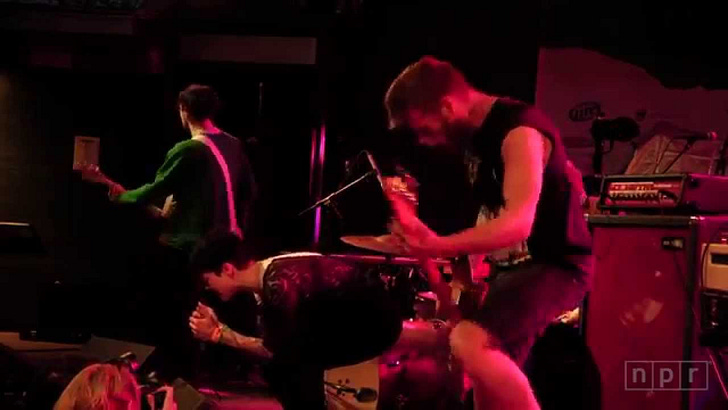
This is why I am bullish on the power of everyday life in a city. I am not trying to escape from the mundane and quotidian. Quite to the contrary, I am trying to, as Lefebrve argued so forcefully in The Critique of Everyday Life, save the everyday from a bunch of zealots, capital prophets, and idiots who want you to think that you need to be delivered from everyday life to some moment of transcendence or that you in your simple comforts aren’t enough. Yes, I am trying to devote myself to the thriving void of nothingness that is everyday life as if it as sacred as the tablet of enoch. What does this mean? Well, it means engaging in the world right outside our door for no other reason than there are like sick tight quests and random encounters that when taken as a whole constitute an enchanted life where one is embedded in a community and a place. Let that be enough. Let us replace all our hopes for recognition or wealth with the simple pleasure of everyday embeddedness.
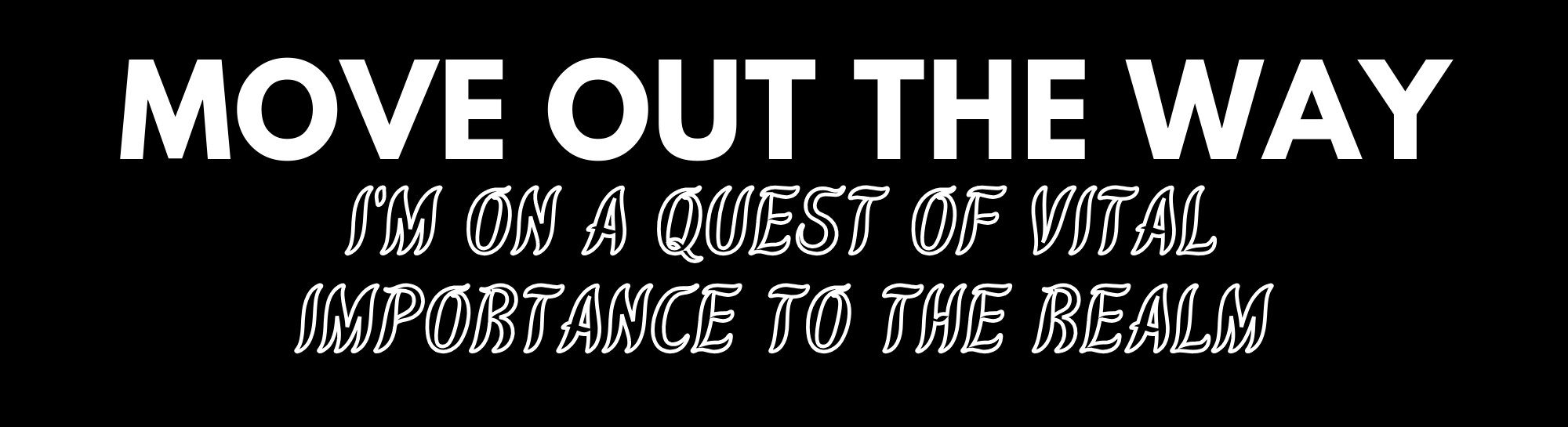
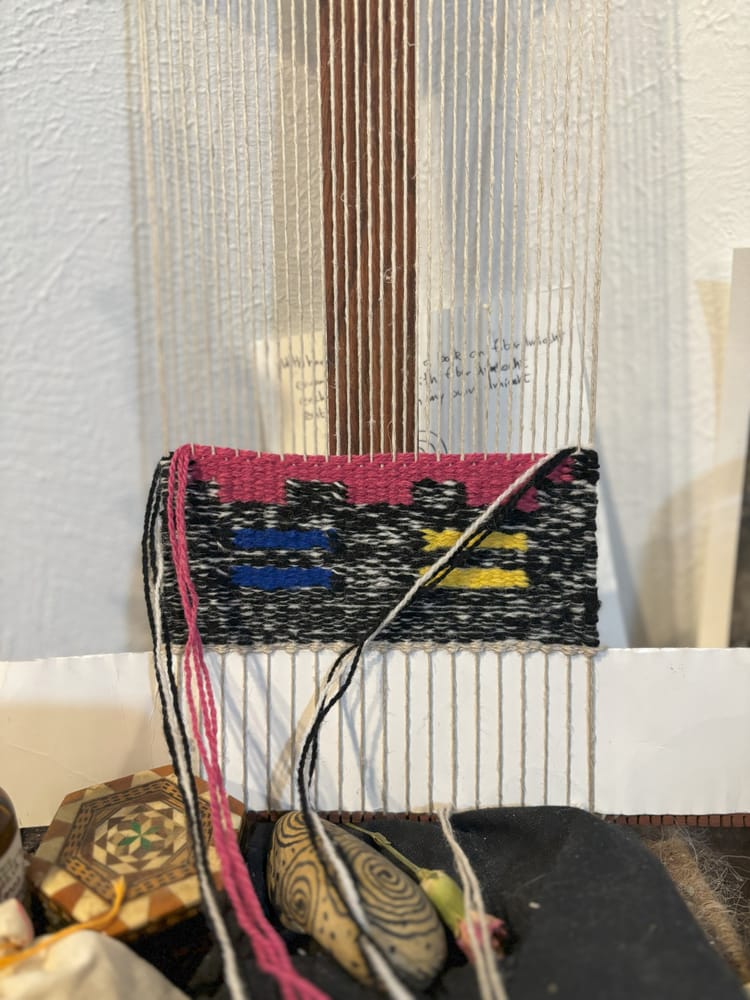
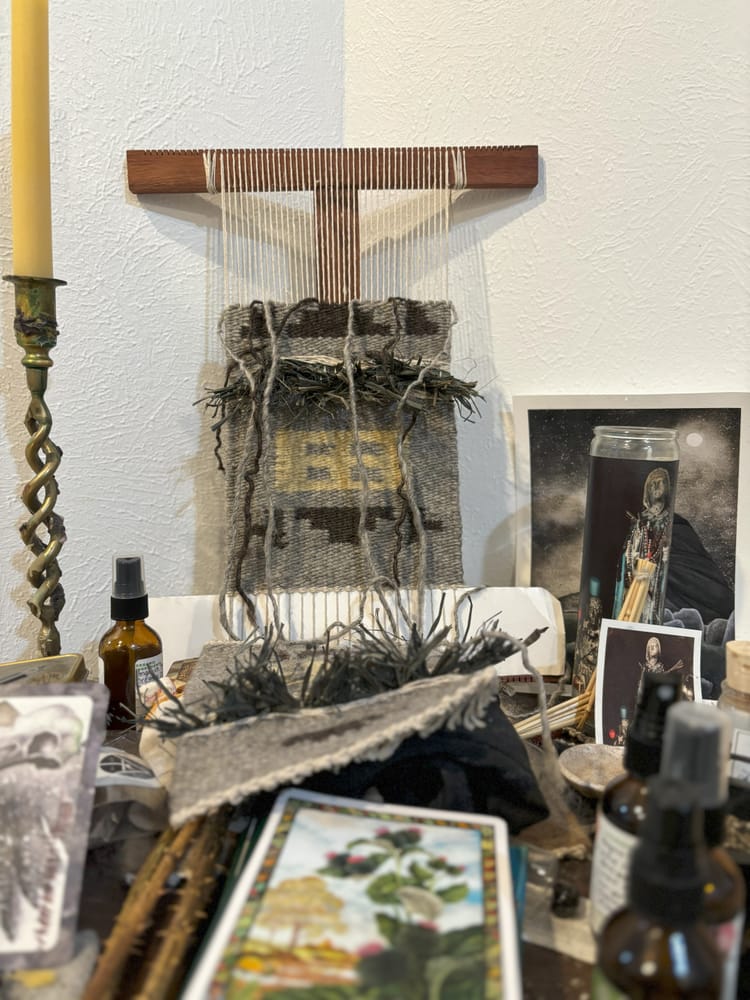
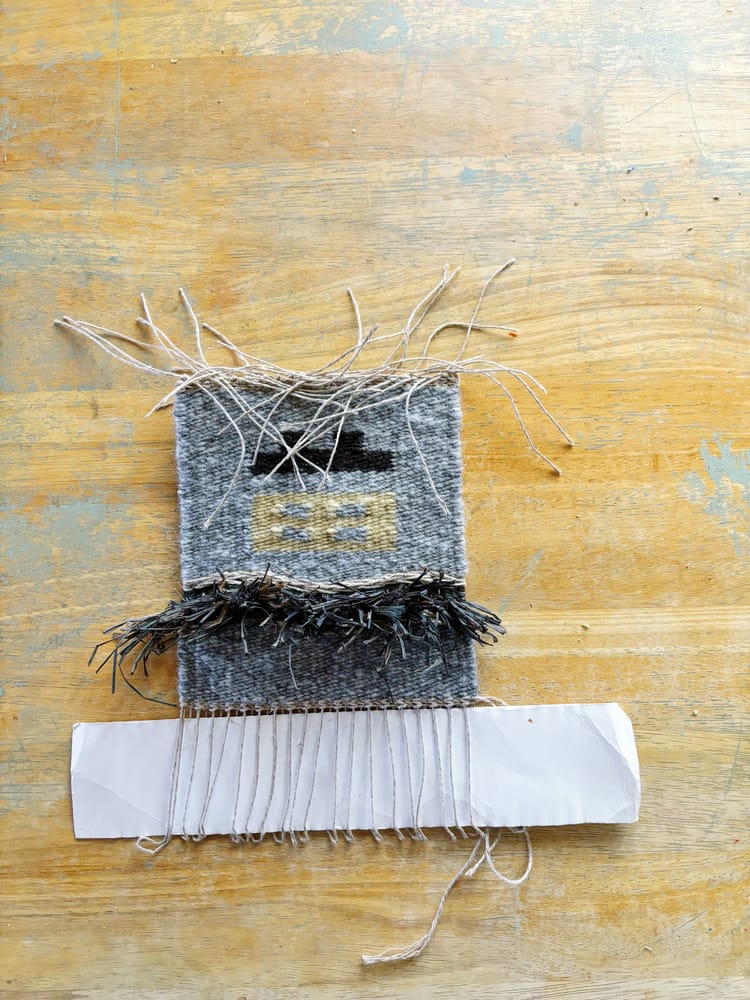
Official sticker of today’s QUESTLYFE essay. Also, all the wool stickers are completed too BTW. I need to go pick them up though.
Anyways, thanks for being paid subscribers to this project. Y’all are the real ones.
Until next time, dear reader,
James
https://coloradosun.com/2023/12/07/denver-metro-office-vacancy-empty/ ↩
Member discussion