
The Words Are Coming Through Me
“And I would like to able to continue
To let what is inside of me which is,
which comes from all the music that I hear
I would like for that to come out
And it's like, it's not really me that's coming
The music's coming through me
The music's coming through me.”
DJ Shadow — Building Steam with a Grain of Salt — Endtroducing
Did your mom have you read James Redfield’s “The Celestine Prophecy” when you were growing up? No, ohhhh, that was just me being simmered in a new age milieu. Well, you are missing…wait, no your not. There is so much garbage associated with new age spiritualism, especially the appropriation of indigenous and eastern traditions. This also spills over into occult circles as well, where there has been this interest in finding ancient secrets hidden in other people’s cultures (typically eastern cultures). Look, I’m still steeped in it here in the rocky mountains. We are full up with people still waiting for the dawning of the new age in their mountain retreat centers and in their mountain homes. Spoiler alert: if your new age is still waiting to dawn some 50 years later, you might have been sold on a pyramid scheme, a cult, or just some twisted form of millenarianism that has been dressed up in some other costume.
Redfield’s book falls into the typical new age trap, but also echoes ideas from my own wisdom tradition that provide some important corrective to this extractive mindset. One new age idea that is strongly suggested in Redfield’s book that finds an echo in my own Irish Wisdom Tradition is the interwoven, threaded nature of our lives with one another. In Redfield’s case, the interwoven nature of all things leads to a sort of synchronicity that leads the protagonist (a white dude) of his novel toward the realization of ancient secrets in Peru (again ancient civilization outside the west). As the protagonist reads the wisdom shared in conversations he has on his journey, he gains insights into the nature of reality. In the Irish Wisdom Tradition, we are taught that we are fite fuaite, Gaeilge for being intertwined with one another.1 However, this intertwining calls one into the immediacy of the embrace of the people, plants, rocks, animals, and places around you, rather than burning more dinosaur bones to fly to someone else’s community and try to extract their wisdom.
There is something so distinctly special to the process of burying yourself into a place and letting the relationships you build there with its people, plants, and animals shape you. It’s how I prefer to live. I learned how to do that in Columbus, OH. At the time, I was in graduate school and learning about stories of the people who inhabited the electronic music and noise communities there. I became a de-facto archivist and chronicler of that scene for a few years on a blog called Local Autonomy. I did interviews, wrote show reviews, and helped promote underground electronic music. We were in flyover country doing our best to build a small community of people to keep the scene alive. It was the time of dubstep, but I was drawn to the house and techno that shaped Columbus’ scene in the 90s to that day. I learned that we all needed each other: the musicians, the writers, the dancers, to keep a culture alive in the waypoint between Chicago and Detroit—A historically significant waypoint that is often overlooked in the broader dance music world.
Of special significance to me was my friend Kevin Kennedy, FBK, who taught me so much of the history of that scene and what it meant to be a member of a community who was responsible for helping that community. He is who gifted me with a label I wear proudly, that of a deep sea diver and a doer. We both were. We were builders that were dedicated to our crafts. At the time, I was devoted to writing and hadn’t found the craft y’all know me for. This was before the times of the weaving, spinning, and dyeing. These were the times of wearing baggies shorts, a bandana, and running shoes and dancing for 3-5 hours straight. These were the times of listening to Kevin and James Johnson (plural) perform live sets as The Fallen on the spot and then writing about what it meant to create fully improvised music in a historically significant space that no one wants to recognize as such.
It’s within that local community that I learned how to be a conduit for telling stories that deserved to be recognized. Still to this day, I bet people remember the ethos of Local Autonomy, but don’t remember who the hell I was. This is the way. I would be glad to plant the seeds that your local scene is worth defending and techno is a Black futurist project from the Midwest that has changed the world of electronic music forever and fade into the ether forever. I am sure there will be a day that will come when I will disappear from this space as well, just like Theo Parrish does when he gets back to Detroit.
Alan Moore’s novel Jerusalem oozes with the same enchanted multidimensional, multigenerational possibility of such a rootedness. He eloquently weaves together narratives of gentrification, poverty, the fae, drug abuse, and magic across centuries of life in his home neighborhood of Northampton, England. Moore’s novel helps you recognize this sort of intertwining in your life. After reading Jerusalem, you start to question the idea that there are distinct ideas that you might claim for yourself as your super official, trademarked, published, commodifiable truth and you understand that you are woven into this elaborate quilt as one odd little square in a larger whole. I suppose this is why I don’t make any money for what I write. I do not possess the typical arrogance of the cis-gendered white man who puts a fence around anything that floats through his ears and into his mind and proudly calls it invention. “Eureka,” he stupidly exclaims to himself and seeks to monetize it immediately. No, I am just another odd furry mutant that sings forth the common refrain from this larger common quilt that me and my oddkin are stitched together in here in this quickly gentrifying metropolis on the edge of the great plains of the US.
I want to term this approach to an interwoven notion of writing from being buried into a place community authorship. I’m sure someone else has a better name for that process, but that’s what I am calling it. Hilariously, I looked up community authorship on the goo goo goggles mothership search engine and was directed to resources on co-authoring and communal publishing. It seems that US trademark law has yet to catch up with the emerging niche idea that we are nothing but a part of a larger assemblage/community of kin we are embedded in. I literally cackle thinking about trying to publish a book under the moniker of, “Thee Good Assembled People of the South Platte River Water Basin,” when its literally just me and my friends who inspire me that I am talking about. Then I think about doubling down and giving a different name each time I am asked. That makes me laugh even harder. “Yes, please make the advance check out to Thee Diabolical Cabal of the Mycorrhizal Network Adjacent to the Sand Creek please.”
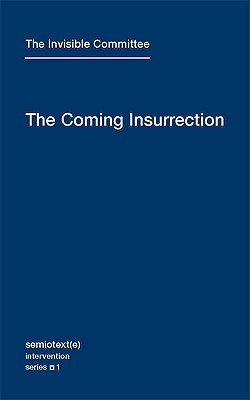
This approach is akin to the work that the Invisible Committee put into their classic 2005 manifesto, “The Coming Insurrection.” Speaking from a position of invisibility and for the whole of the French youth, The Invisible Committee laments the forced imposition of individuality on all of us in its manifesto:
“The self is not something within us that is in a state of crisis; it is the form they mean to stamp upon us. They want to make our self something sharply defined, separate, assessable in terms of qualities, controllable, when in fact we are creatures among creatures, singularities among similars, living flesh weaving the flesh of the world.”
Yes, we are nothing but an uncontrollable mass of human flesh, discernable only in the corporal demarcation of bodies running into other bodies. The flows, flows, flows of electronic datum that follow along with our social security, credit card, band account, loan account numbers, that is the simulation. Pinch yourself. You are not the simulation. Debt is only a construct that could easily be erased with the click of a finger.2 You are as wild and free as any anarchist racoon brigade. Speak forth from the invisibility of the mass, that mass that is so feared by those who wish to foist an electronic world onto you. Yes, chop and screw the electronics for your own purposes. Become the cyborg mutant you always wanted to be, interwoven with the rest of the flesh of the world.
This sort of community authorship approach begs us to take extremely seriously Donna Haraway’s sage wisdom in Staying with the Trouble: Making Kin in the Chthulucene:
“We become with each other or not at all.” (pg.4)
Like, do you actually think that you are doing this all on your own? You’re not. You are always growing together with your oddkin: your collaborators; your friends; your chosen family; heck, even your enemies. You are growing in endless spiraling cycles with your rabbitsbrush kin, your crow kin, your beloved nettle kin. Your voice at any one moment is just a distillation of all the interrelationships that you maintain with all this kin at any given time. Its only discernable as unique to the degree to which someone does not have access to the entire community voice that an author is speaking from. So, in the ever constant refrain I seem to find myself uttering, find your kin, whomever they may be, knit yourself to them, and get on with the work of becoming together toward your collective values and dreams.
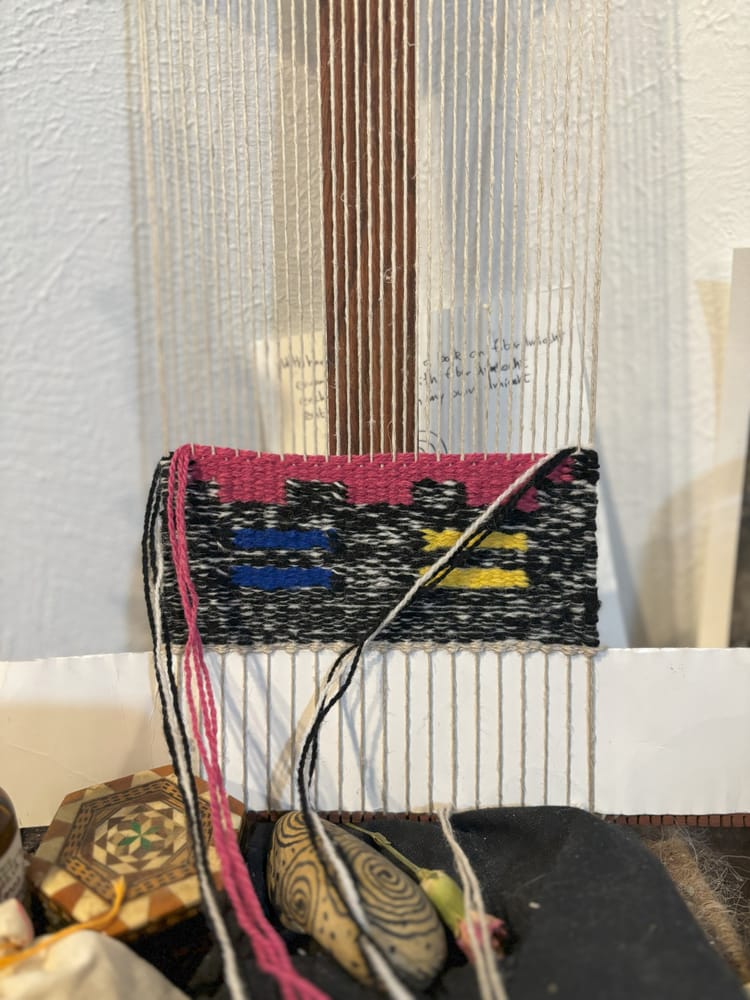
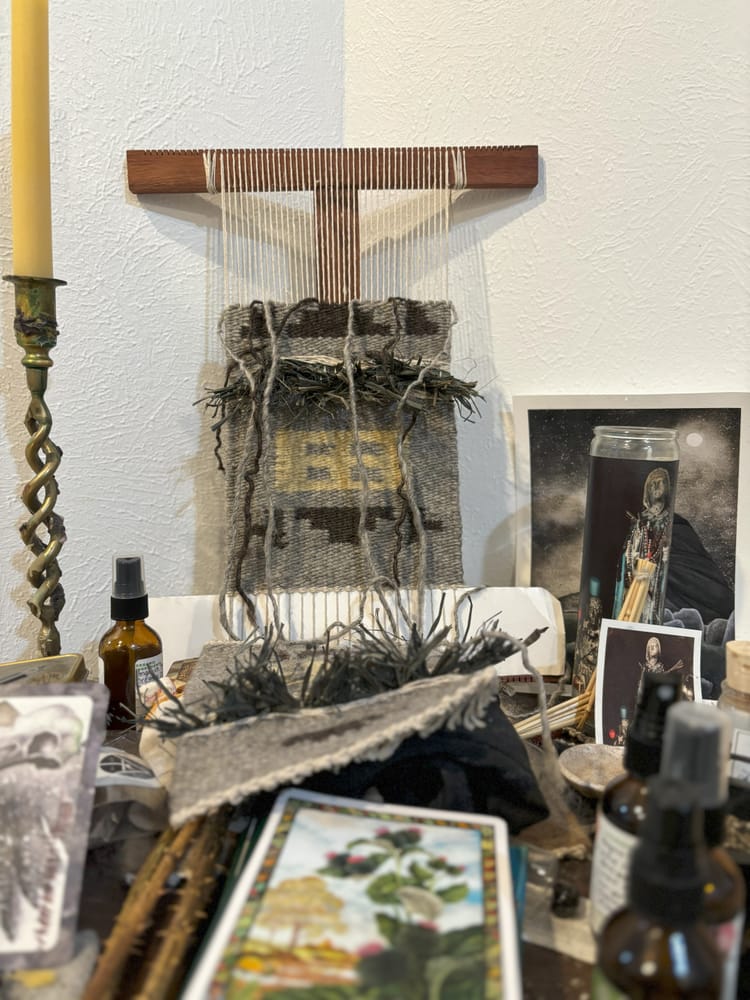
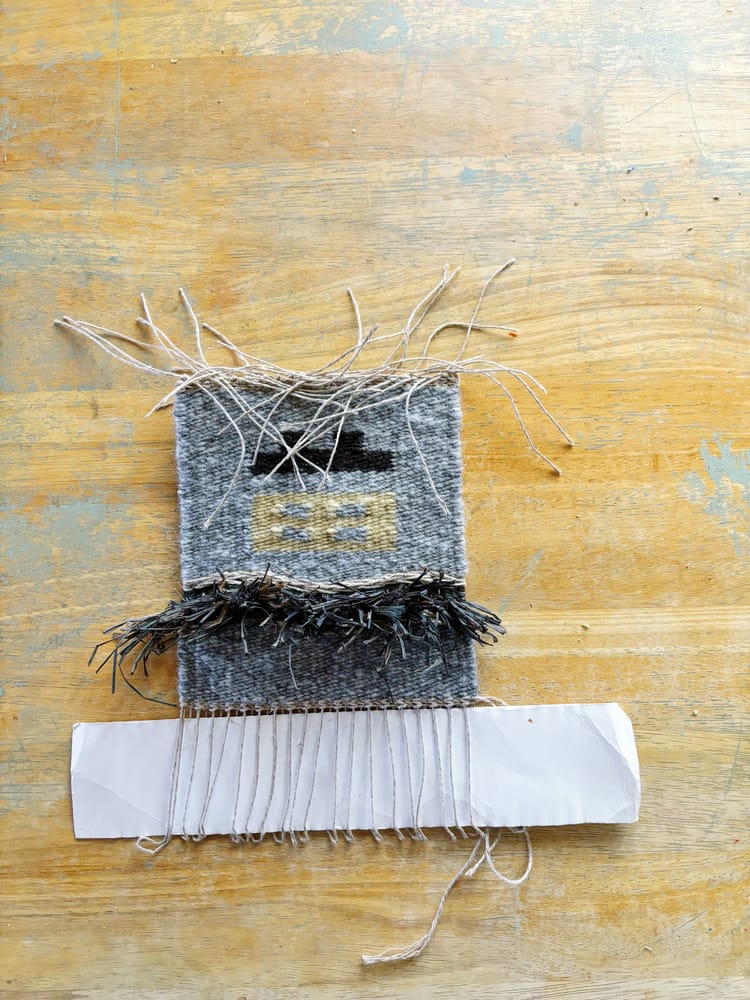
So, what are the implications of all this? Sole authorship is an illusion. No one person owns any idea or story. Its all the emergence of collective wisdom and storytelling that is going endlessly. To put your name on something and publish it is sorta rubbish, but is just necessary to make enough little pennies to feed your grubby little face some bread and cheese. For instance, I would not be a fiber artist if it wasn’t for my partner Lily’s own clothing making practice with Eli & Barry inspiring me to make stuff with my hands and my mom passing away. I would not know that everything I do is death work if it were not for Hannah Haddadi of Mourning Light Divination teaching me about death work. I would not be discussing theory so much now if I was not in the Beyond the Altar theory discussion series with Sharon Arnold. I would not be talking about incomplete knowledges or have the courage to go paid if it were not for Jessica Dore’s weekly essays showing a model for how to do that successfully. I would not be talking so much about music, magic, or quests if it were not for my discussions with Meredith Graves. It goes on endlessly. We are just one sound in a chorus from the place we inhabit; the claims of your separateness are greatly exaggerated. Can you see it now? I am not the author, the words are just coming through me. The words are just coming through me. The words are just coming through me.
As always, dear friend, thanks for being here.
James
Holy Smokes! You read the whole thing? Wow, well, this is awesome. I never expected this. Thank you for your time and attention. I hope you enjoyed the essay. If you did, you can subscribe for free below to get my weekly essay right in your inbox each Sunday morning.
This is in John O’Donohue’s Anam Cara somewhere. I cannot for the life of me remember what section though and its driving me up a wall. ↩
Here I am specifically referencing the socially constructed nature of debt that David Graeber noted in Debt: the First 5,000 Years. Specifically, the notion of Jubilee in Judaic history where one’s debts were wiped out after a period of a select number of years. This was only reaffirmed in the US recently as Biden proposed to move forward with eliminating 39 billion in student debt amassed due to clerical errors. ↩
Member discussion