
Workshop Notes - 1/24/24
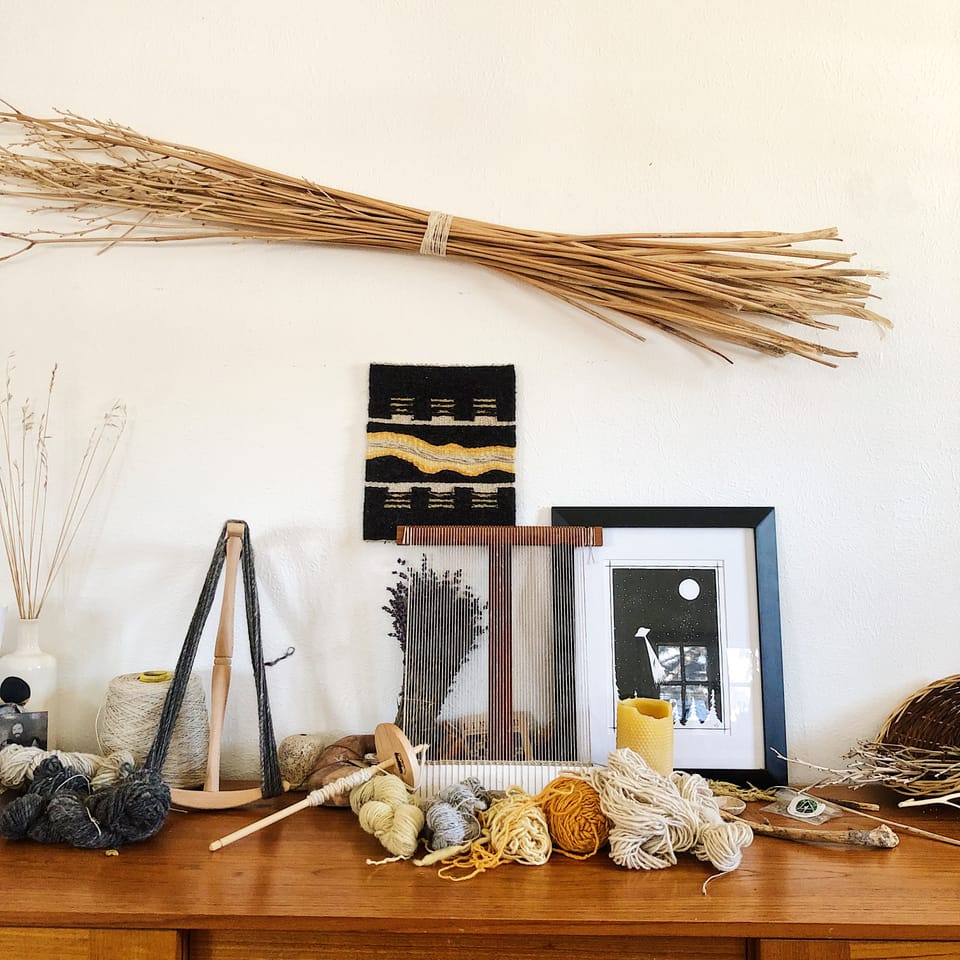
This past week has been a slog. I have been slowly getting sick with this cold that is rendering my nasal passageways as tubes of dried quick-crete. However, the work continues, even though I have shut down all extra-curricular activities like tattoos and bike rides. Heck, I am even writing this at 5:30 AM because I can’t sleep due to my decongestion meds wearing off.
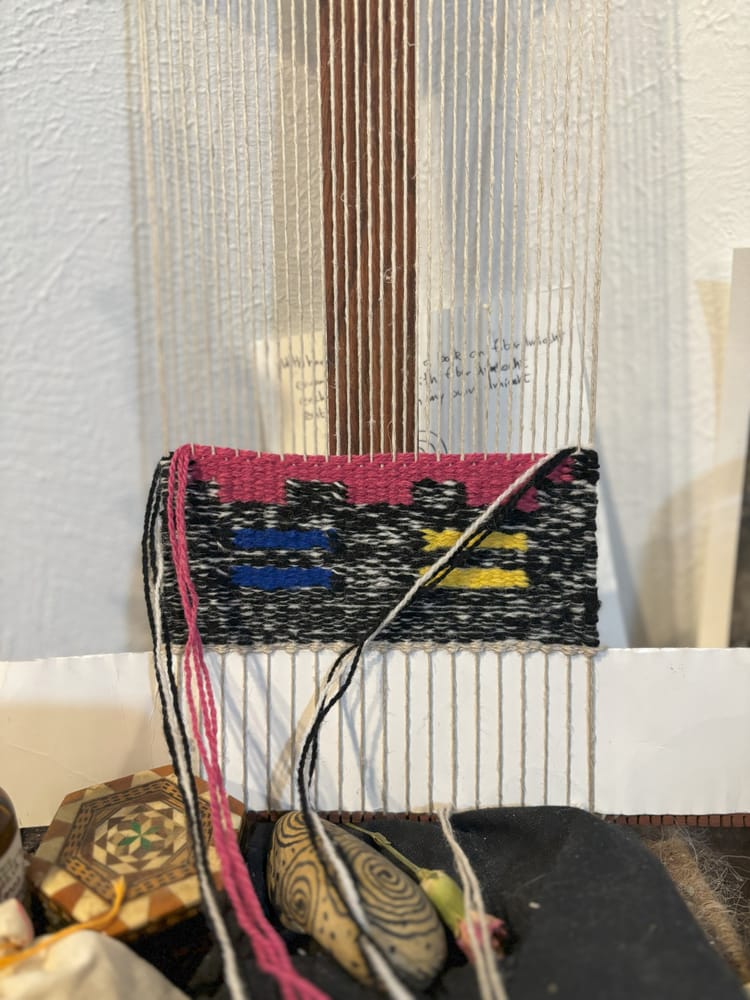
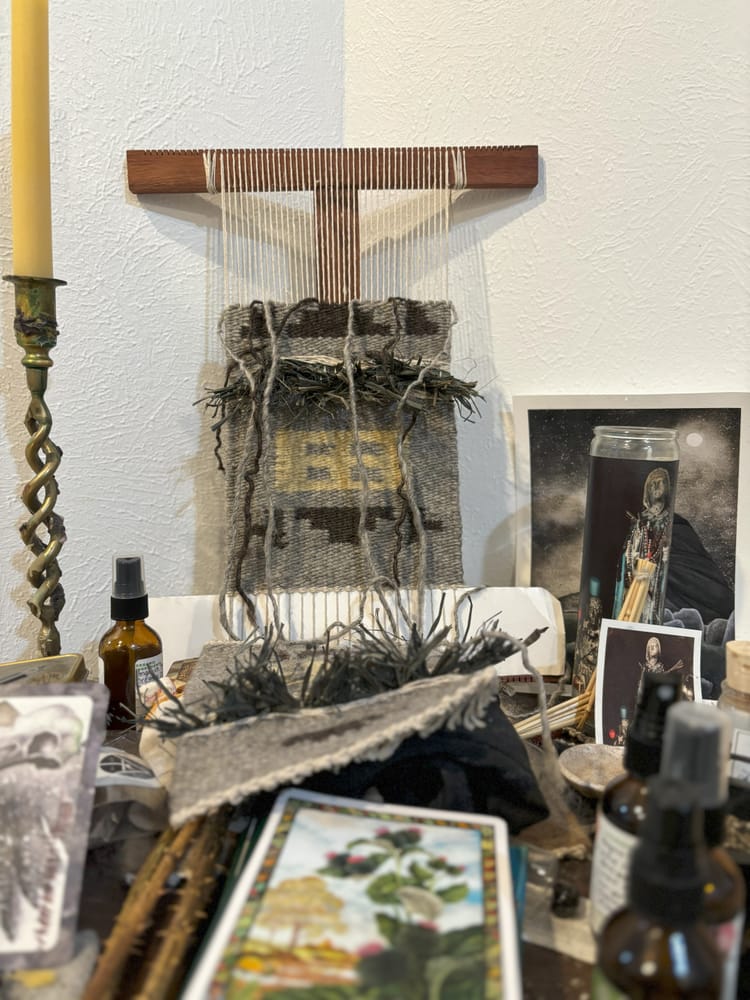
The slow methodical nature that I have to take when I am under the weather is perfect for the beginning stages of a weaving. This past week I was working on doing a bunch of loom and yarn prep. This stuff is the real meat and potatoes of weaving. I always start by doing a little ritual clearing and cleansing of my loom with myyrh and juniper oils. It’s important to me to have a clean slate from which to start a weaving, especially if its a fiber spell that will be crafted for a specific person and purpose. I do not want any residual parts of a previous weaving or myself attached to the piece. I don’t think that this has to be incredible arcane and otherworldly. I make it simple my anointing the empty loom with the two oils and then speaking simple spells for clearing and cleansing. However, this is just a quick and dirty way to accomplish this end. You can get much more involved and ritualistic with it if you want. Since I was sick, I dispensed with the pageantry and went for parsimony.
With that complete, I had to get all my strings together. Here, I am talking about my hemp warm (6-ply rawganique hemp twine — still use it after Neil Goss suggested it to me many years ago). In my beginning stages of sick brain, I thought I needed to prep some more warp, so I spent about an hour or so of active and passive time winding a big ball of hemp twine, skeining it on a niddy noddy, and relaxing it in a bowl of lukewarm water for 15 minutes. While the skein of hemp was in its bath, I found my existing ball of hemp twine warp and did the universal Homer, “DOH!” face palm.
Such is the nature of working while not at 100%. You are moving at a snails pace and subject to the limitations of your own very obvious fallibility. Despite this discovery proving the redundancy of the work I just completed, I completed the prep process by dry the hemp warp and now its just hanging in my basement waiting to be used.
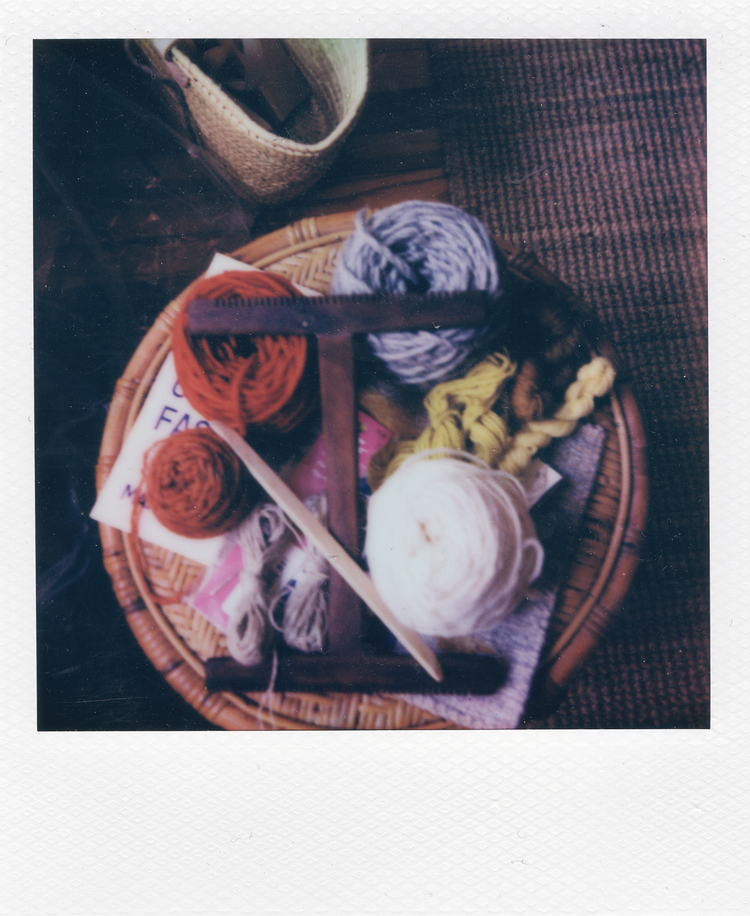
I also got my yarn together for the project. This entails thinking about the divinatory power that specific colors will play in the weaving and what plant magic I want to add in with naturally-dyed yarns. Destiny, our client, decided on a white background and some plant magic that is typical to the naturally-dyed yarns that I already have on hand. I do not have a ton of white yarn, so I decided to start spinning a new skein from the shetland roving I have from Dyer’s wool in the four corners. The beginning of this skein was pretty hilarious. I was having all sorta trouble with breaking my yarn because I wasn’t happy with the slubbiness that I left in some of initial drafts of the fiber. Then I put the wrong twist into the fiber. Yes, again, my own fallibility was super obvious. Just because I am a glutton for punishment, let’s watch a video of me screwing up for funsies.
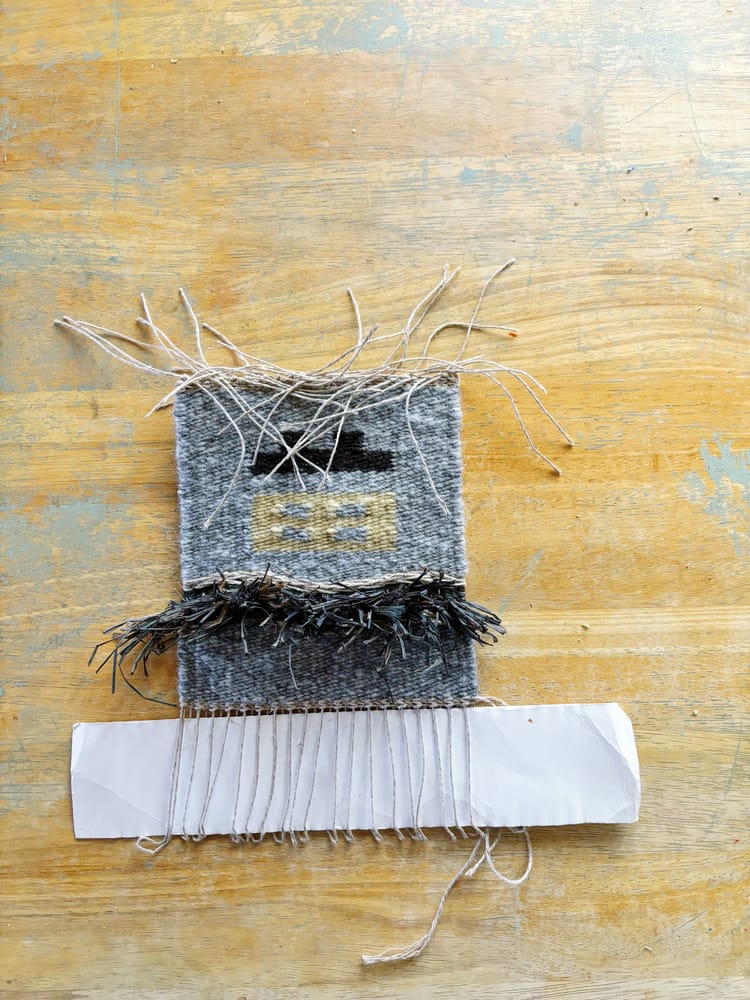
The new idea that I am exploring with this piece is adding in a plant essence, so that a full natural dye process is not needed for every bit of plant magic that I want to add into the piece. Specifically, in the winter months, it is not easy to natural dye in Colorado. Well, I should say that I personally prefer to solar dye outside than run my burners for hours at a time. Consequently, I will be working on making infusions that I will paint on with my finger that bring certain magical properties to the textile without needing to burn an incredible amount of fossil fuel and use metallic salts to achieve the end. In this instance, I will be working with dandelion for the first time as a way to bring a feeling of “confident self-expression” to Destiny in this piece.1 I am indebted as always to Tonja Reichley for her book Wild Irish Roots: A Guidebook of Herbs, Ritual, and Connection for this correspondence for dandelion. In my own experience, dandelion is full of this defiant, creative energy that we find as spring transitions into summer. It blossoms on its own with very little regard for any care or concern that folks pay to it. I think it will be a WONDERFUL addition to this piece and I am really excited to see how the process plays out.
Album of the Week
There is no mix this week, but there is an album recommendation. I revisited Lupe Fiasco’s 2006 album “Food and Liquor” album this week while riding. I remember listening to it as an 19 year old sitting in my dorm room, pouring over the socially-conscious lyrics. As a baby sociologist, listening to some speak on a range of issues from technology addiction, skateboarding, to American foreign policy was incredibly refreshing. You see, this was the high era of southern rap with Three Six Mafia appearing on their MTV reality show Adventures in Hollywood and singles from T.I.’s King album dominating charts. Though T.I. and Three Six Mafia had their own nuances, they were still very focused on rapping on the main themes of rap at the time drugs, alcohol, money, women, sex, and self-glorification and were from the south, hotbed of rap of the early 2000s. Lupe, though, was in a different place sonically; lyrically; and spatially, hailing from Chicago.
There are a couple moments lyrically that really stood out to me. While riding the other day, I found this new found appreciation for this section of Lupe’s Kick, Push, his breakthrough song:
“Before he knew, he had a crew that wasn't no punk
In they Spitfire shirts and SB dunks
They would push 'til they couldn't skate no more
Office building lobbies wasn't safe no more
And it wasn't like they wasn't getting chased no more
Just the freedom was better than breathing they said (they said)
An escape route they used to escape out
When things got crazy, they needed to break out.”
“Kick, Push” — Lupe Fiasco
Lupe’s expression of freedom on your set of wheels in this section from “Kick, Push” is something that resonates with any one who rides skateboards or bikes. This isn’t a groundbreaking statement in itself, but it is groundbreaking when you realize how different it was to rap about skateboarding in the saturated commercialized rap space. It hadn’t hit me how much this song applies to how I ride bikes until listening on that ride. It mighta been the multiple old white dudes mean mugging me for listening to this record on my little bike speakers while wearing normal clothes that finally made this song click for me in a new way. You shoulda seen their faces, y’all. Shout out to all my haters, thank you!
Another moment that jumped off the record was in his exploration of technology addiction on “The Instrumental:”
“He just sits, and watches the people in the boxes
Everything he sees he absorbs and adopts it
He mimics and he mocks it
Really hates the box but he can't remember how to stop, it
Uh, so he continues to watch it
Hoping that it'll give him somethin that he can box with
Or how the locksmith, see the box as, locked in the box
Ain't got the combination to unlock, it
That's why he watch-es, scared to look away
'Cause at that moment, it might show him
What to take off the locks with
So he chained himself to the box, took a lock and then he locked it
Swallowed the combination and then forgot, it
As the doctors jot it all down, with they pens and pencils
The same ones that took away his voice.”
“The Instrumental” — Lupe Fiasco
While I was riding, I couldn’t help but think about how our phones are “the box” of our times. Lupe notes that its the box that takes away our voice, and I think he is really right. There is tremendous potential with technology to put your stories, pictures, and sounds out into the world, but I wonder how many of us are taking advantage of those opportunities. I know I have to really work everyday to not just stay in a lull with the cold blue light of my phone screen lulling me into a waking slumber.
Then, finally, we have his record “American Terrorist,” which was just wild to hear in 2006 America. I mean, think of it, we were in the second term of George W. Bush’s presidency knee-deep in the war in Iraq and Afghanistan. Then here comes a Muslim-American rapper from Chicago telling us that the weaponization of religion leads to innocent civilians and children being harmed:
“We came through the storm, nooses on our necks
And a smallpox blanket to keep us warm
On a 747 on the Pentagon lawn
Wake up, the alarm clock is connected to a bomb
Anthrax lab on a West Virginia farm
Shorty ain't learned to walk, already heavily armed
Civilians and little children is especially harmed
Camouflaged Torahs, Bibles, and glorious Qurans
The books that take you to heaven and let you meet the Lord there
Have become misinterpreted reasons for warfare
Reread 'em with blind eyes, I guarantee you there's more there
Rich must be blind 'cause they ain't see the poor there, yeah”
“American Terrorist” — Lupe Fiasco
Sound familiar? Yeah, this is why you go back and listen to old records. It’s not to wax nostalgic about the good old days. No, it’s about experience a piece of art with the vantage point of more experience under your belt. It’s a tragedy that we have to keep re-learning this essential lesson that the keeps occurring again whereby the US and its allies continue to weaponize their religions to commit atrocities.
Yet, this is no surprise that this wealth of truth is coming from Lupe. This is just the hallmark of his scholarship and his devotion to telling real human stories with his music. You can tell the year’s of work, reading, and experience that goes into his music. To him and his colleagues at the Society of Spoken Art, RAPS were something much more than just a music genre. No, they defined RAPS by what its acronym stood for: Rhetorical, Anthropological, Philosophical Structures and created an entire class around defining rap in that manner. In a recent talk he gave at the Massachusetts Institute of technology in 2022 to introduce his class Rap Theory & Practice, he talked about our collective responsibility to Rap music:
“It (Rap) deserves constant attention; constant focus; constant alternation; constant changing in the face of new ventures, new places, new spaces, new ideas, new generations as they take it and make it what it means for them.”
I don’t think you can come up with a better discipline than to be devoted to your craft with that level of devotion. With an artist so interested in excavating all the possibilities of what Rap music can be and how it can consistently be reborn, I am not surprised that he created Food & Liquor or The Cool. This guy is just a PhD-level music theorist that the world tried to ignore. Lucky for us, Lupe had no intention of going away.
Anyway, thanks for being here, dear reader. I hope you enjoyed the essay. If you are a frequent reader of this project, consider dropping a paid subscription to support my work into the future. However, its not necessary. All subscribers are appreciated and most of all, I appreciate you caring to read this project. If you are a frequent reader and you cannot afford this publication, shoot me a line and I can comp you a subscripton.
Until next time, dear reader,
James
Reichley, Tonja, Wild Irish Roots, Pg 48. ↩
Member discussion