
Workshop Notes - 12/6/2023
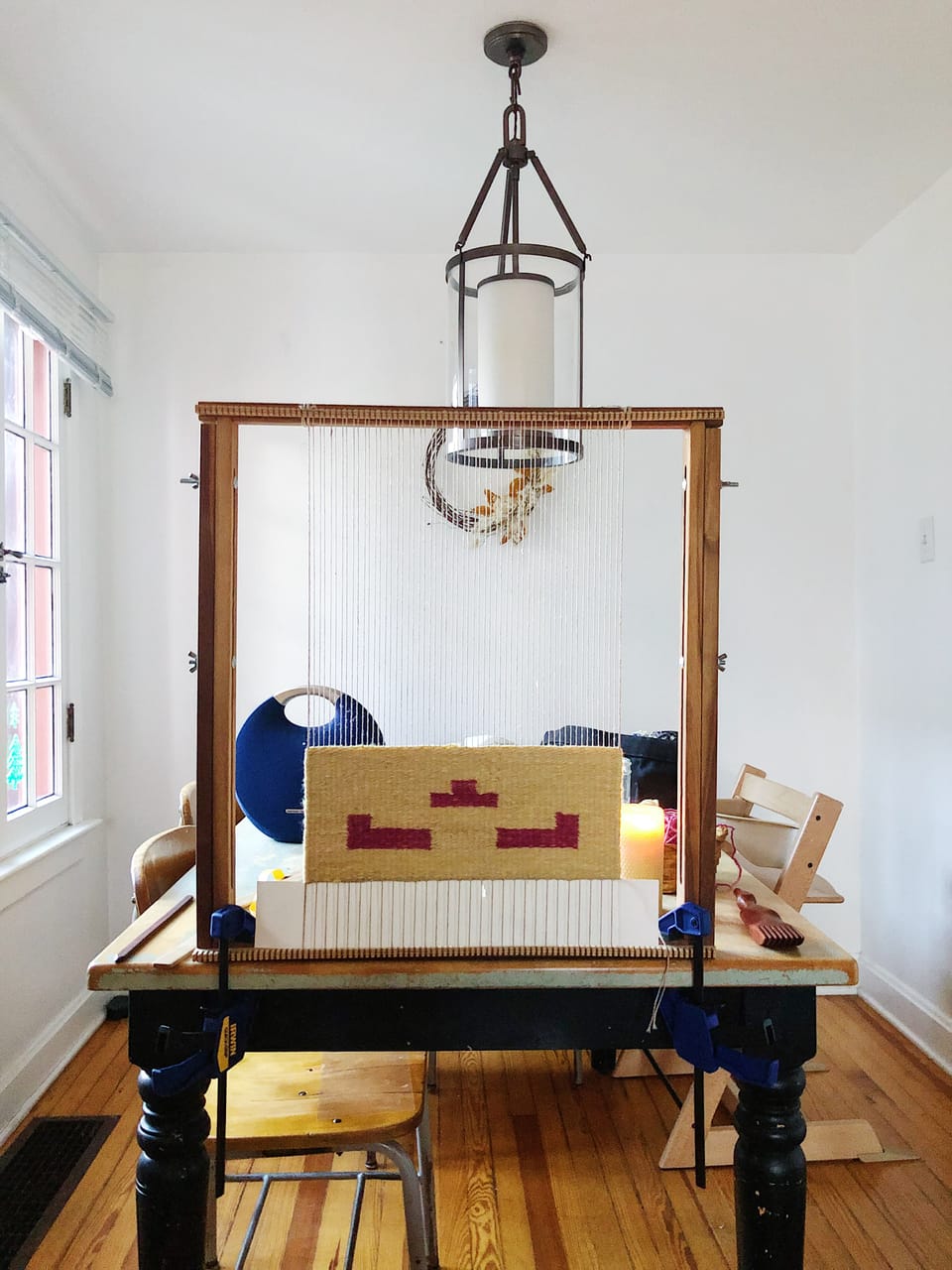
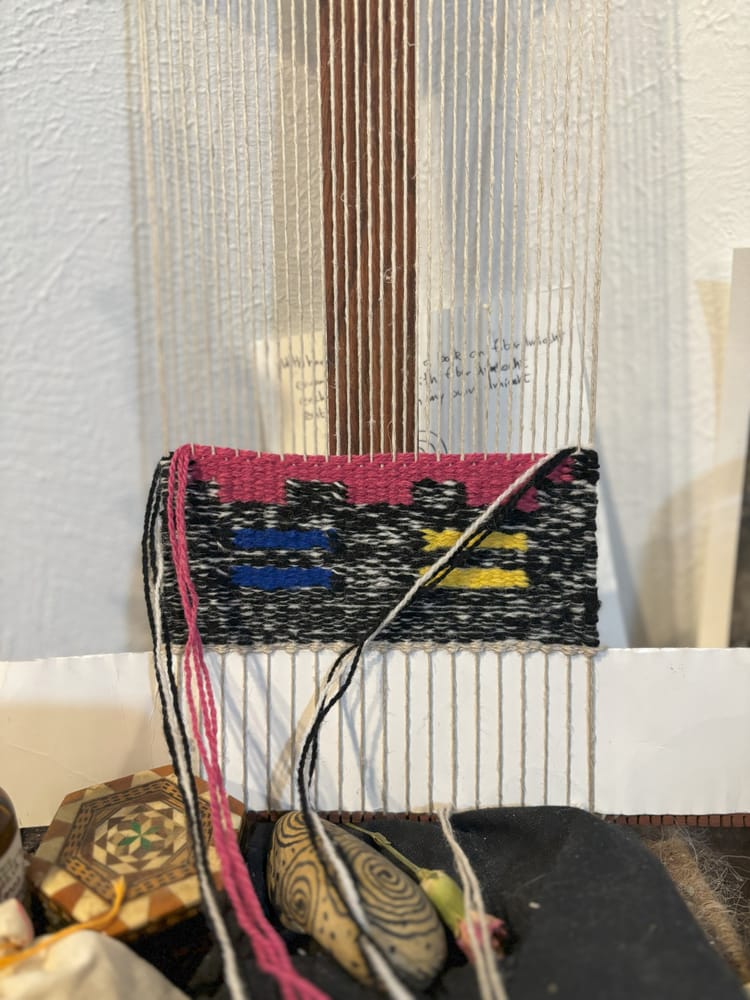
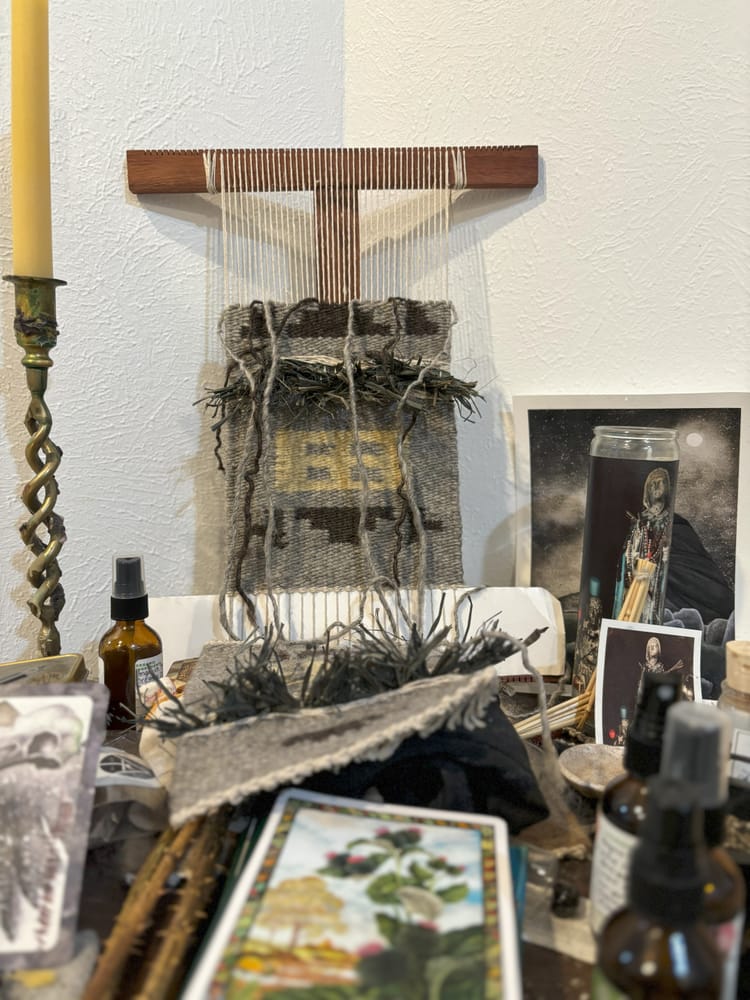
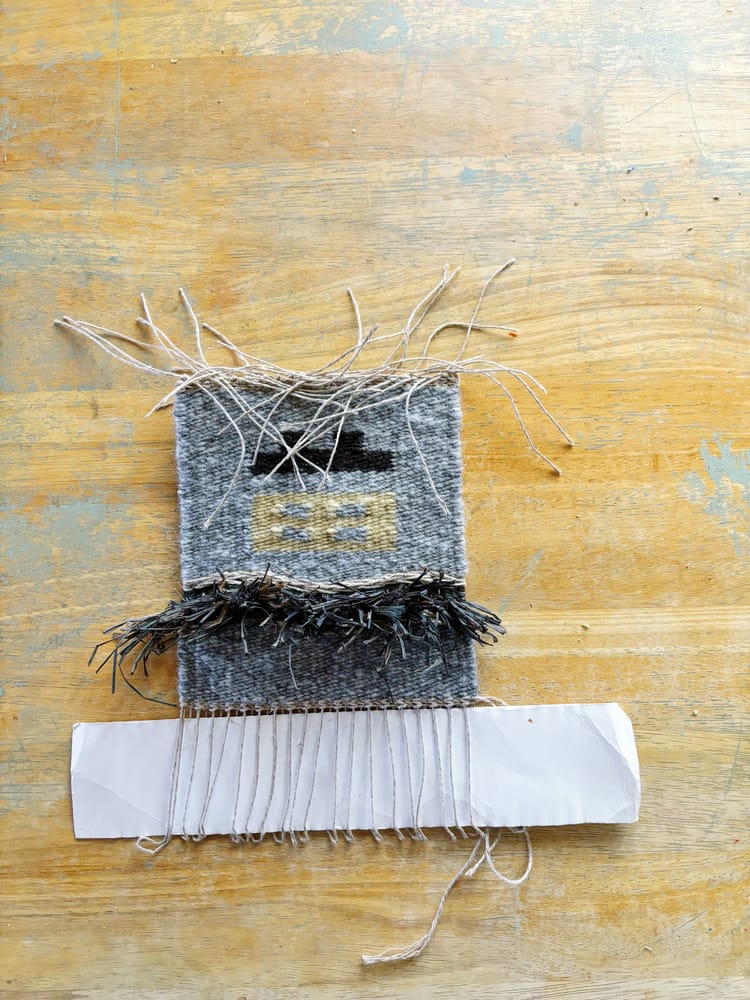
This is a prototype of a weaving that was made to fit the dimensions of the front of a wald 139 basket, which is popular front cargo holder on the retro grouch steel bikes that I like to ride. It is roughly 14 in. by 6 in. and made of my own naturally-dyed, Shetland sheep handspun. All Shetland fiber was procured as roving from The yellow dyed yarn is dyed with yarrow gathered from my own and my neighbors garden. The purplish pink yarn is from an extremely strong batch of cochineal, which is an insect that lives on prickly pear cactuses in the desert southwest. I got the cochineal from a natural dye supply company, probably Dharma Trading Company.
I have taken to calling these bicycle-specific weavings I have been working on prototypes. Calling it a prototype is helpful to me, so I don’t diminish my work. I think a lot of fiber art is consider superfluous or decorative nowadays, especially today when folks have no idea how thread or fabric is even made. In response to that, I want to use the most annoying technology-research-and-development phraseology that I can find to place the simple handwoven garment into rarified air alongside the next 5000 series Nvidia Graphics Cards and the 15th generation Intel CPU. This little ontological move will do nothing to combat how our culture views handwoven items, but it makes me feel like my little studio is just as important as Bell Labs.
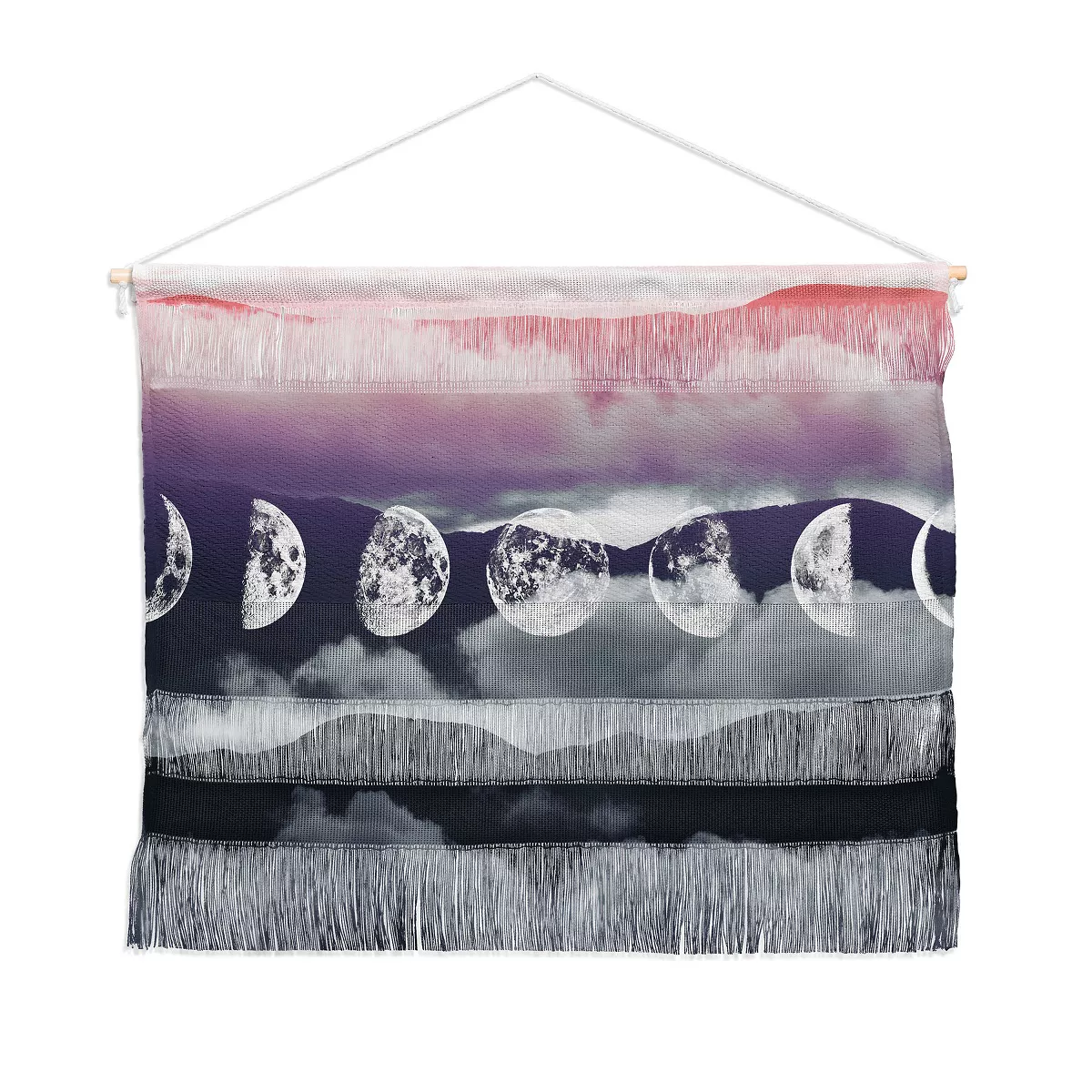
Half the trouble nowadays of maintaining a fiber arts practice is in continuing to toil away in obscurity while most of the world is happy to buy readymade tapestries at Target (Pronounced in the flemish Tar-GEY) made out of plastic yarn. Take this “wall hanging landscape tapestry” above, which you can get on Target’s website right now or $39.00. For someone like me, who spins heritage-breed Shetland yarn, dyes the yarn with plants and insects, and weaves the tapestries with no machine, its pretty hilarious to see somethin like this offered for $39 dollars. I mean, the Shetland Fiber I would source from Dyer Wool near Durango, Colorado for a piece this size would run me $50-70 dollars alone. Yet, target wants you to know that this is bohemien and supports artists:
“Live life on the fringe. The Deny Designs wall hanging is crafted with 100% polyester yarn for a rustic, bohemian feel….Every order custom printed in the USA. And the best part? Every purchase pays the artist who designed it—supporting creativity worldwide.”
Plastic yarn being bohemian is new to me. I thought Bohemians were more about getting back to the land and livestock, not to the oil derrick. Notice, that there is no mention of who makes the tapestries, just who designs and “prints” it. The production process is completely invisible. You know why? Because no one would buy it if they found out the people who work in the factories that make these “wall hanging landscape tapestries” are paid pennies to dimes a day so an American can place some piece of cultureless embellishment on their wall. This stuff is so disheartening to me to see.
This readymade culture informs the average US consumer that my own labor is worth pennies as well. More specifically, this readymade “wall hanging landscape tapestry” teaches the typical person that a 1 ft. x 1 ft. weaving should cost like $25 dollars — the same cost for an entrée and drink at a fancy restaurant. Yet, the work that goes into making that tapestry for me could be roughly 15 to 30 hours of active labor. Consequently, the expectation is that I should be making a whopping $1 an hour just for my labor, without even considering my material costs to be higher than the actual value of the readymade tapestry. That devaluing of people interested in handcraft traditions is what makes the work impossible to do for a living.
A Quiet Practice is a reader-supported publication. The rest of this essay includes further discussion of the difficulty of being a weaver in this readymade culture, more photos and videos of my woven work for bikes, some weavers whose work I admire, and a link to an Aphex Twin Mix I put together. Become a paid subscriber today and get access to the rest of the essay and all the rest of the essays in this project.
I know I struggle with placing a fair dollar value on my own custom work. I was taught by Teresa Loveless of Weaving Southwest to figure out a price per square inch that took into account materials and labor. I often shrink away from charging what I think I should per square inch, defaulting back to a “feels good man” figure of $1.50 a square inch for custom work. This results in a more fair compensation for my custom work, but I still end up making less than minimum wage typically for my spinning, dyeing, and woven work. Why do I do this to myself? Well, I feel that I will scare away a potential client if I charge them $2-$3 dollars per square inch. In effect, I devalue my own work because I am afraid to charge my work’s true value because of the readymade culture I am immersed in.
This shit is so unfun. Talking the economics of handwoven items is like the least interesting part of weaving, spinning, and dyeing to me. It’s just heartbreaking that we have to navigate this late stage capitalist system where we have to navigate these micro and macroeconomic tensions in pricing our work. It is devastating that the 600 years of globalization has led to the erasure of craft traditions in many countries and the appropriation of many other people’s traditions by folx in imperial cores. Considering all our intelligence as a species, you woulda thought that we would of found a way to live harmoniously in equality with appropriate time and energy earmarked for the pursuit of art, craft, and philosophy. Alas, we are not. We are still besieged by idiot, robber barons. This economic reality is one of the big reasons why most folks just stick to their day jobs in cube land. We would rather have some semblance of stability in how we pay our bills than sell weaving designs to some idiotic “design studio” that will weave our tapestries in plastic for pennies, acid dye them, and sell them for $39 bucks a pop at target. This is precisely why the industrial revolution has failed us. It made everything that has real substance a cheap tchotchke when it should still be considered a sacred item made by skilled artisan.

Bummertown, I know, but difficulties aside, we still have fun with our little prototypes. Specifically, these weavings designed for bicycles are my little attempt to weave myself into the handmade bicycling community that I am a part of. I want to see if any of my buddies want to bedazzle their bikes with my wares and it any of my bicycle culture heroes will want to be friends. It’s sorta hilarious that my goal for the prototypes is giving bling to buds and making friends. I don’t think they teach those as KPIs (“Key Performance Indicators”) at Harvard Business school or even in the BS Conscious Capitalism circles. However, thinking about how I can serve my friends and how many more cool friends I can make seems to me to be two great outcomes that any person looking to make art should be thinking about with their business. You know why? Because, if community building and personal growth through friendship aren’t key things you are exploring through art, I think you got the wrong set of values, BUB.
This was a fun, impromptu essay. I did not imagine I would be riffing on how the macroeconomics of weaving impacts little old me, but here we are. I also just wanted to relish the opportunity to post some unabridged, unedited weaving videos, because I am free of the need to spend hours editing reel content for instagram. Instead, I can film myself at work in a messy room in dim, late-fall light. This is really what making looks like, not the quaffed, perfectly lit reels you see so many folks post on that platform. This video below shows the last few rows of the weaving.
I particularly like this 8 minute video of me twinning the top of the weaving. You know why? It’s elementary, my dear reader, its just a breathe of fresh air from editing down clips of me making things to like 2-second equivalents that suggest the movement, rather than actually show you the scale and breadth of the task. Yes, it turns out, as I have said many times before today, that our culture’s insistence on digestibility and the readymade leaves us with a really poor understanding of the time scale of handmade items. To reach the level of a master textile artist requires decades of everyday, mundane dedication. I show this full 8 minute video just to give a taste for that sort of mundane, unsexy work. I doubt I will ever reach the level of a master, but I plod along just to be a part of the community and to deeply understand how freakishly good the Diné weavers that live near me really are.
Like check this work by Tyrell Tapaha entitled “Just a Sheepherder”
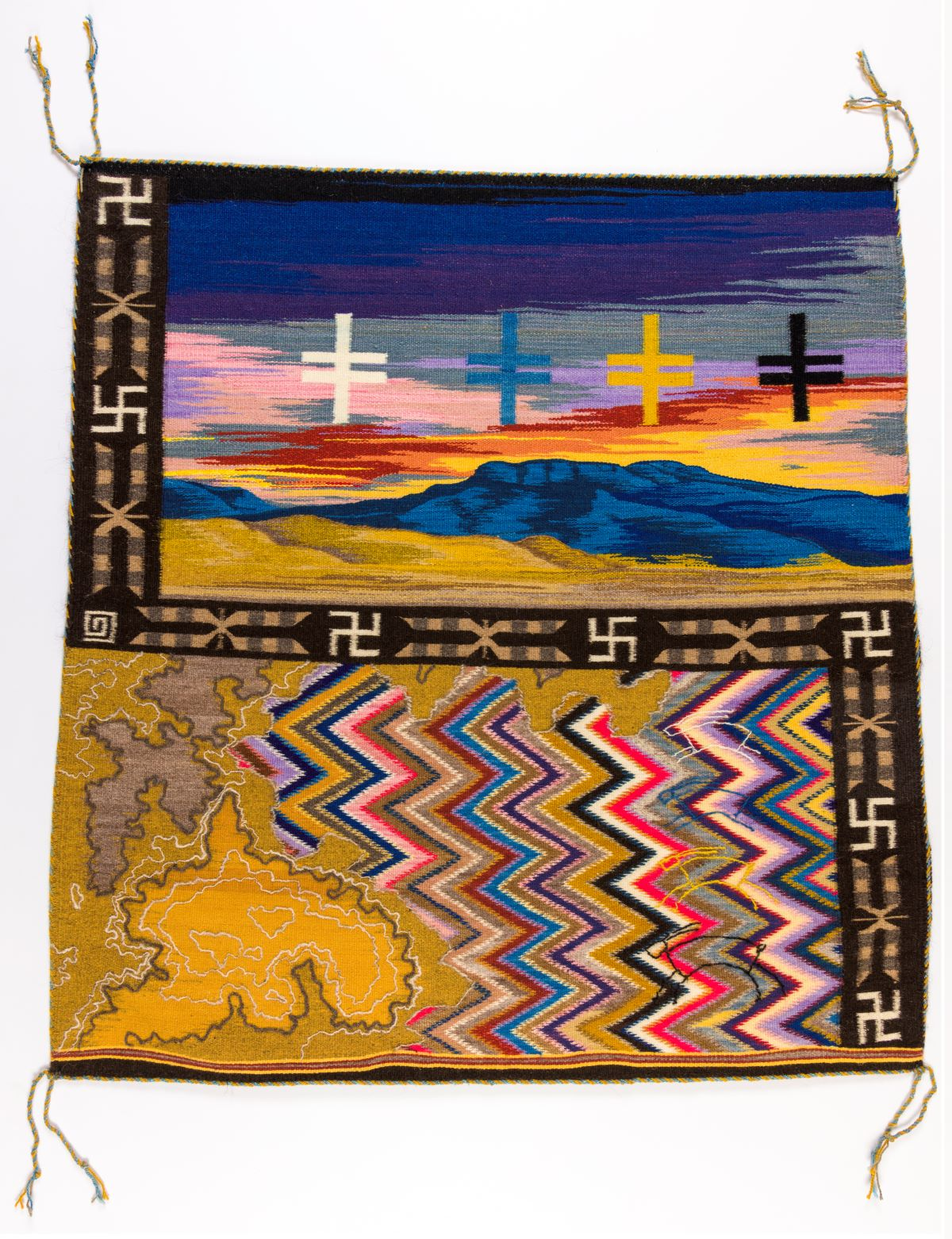
This is the kryptonite to the Bullshit target weaving, but so is Kevin Aspaas’ recent wedge weave that was featured in the show “Hands on the Loom: Diné Textiles Past and Present.”
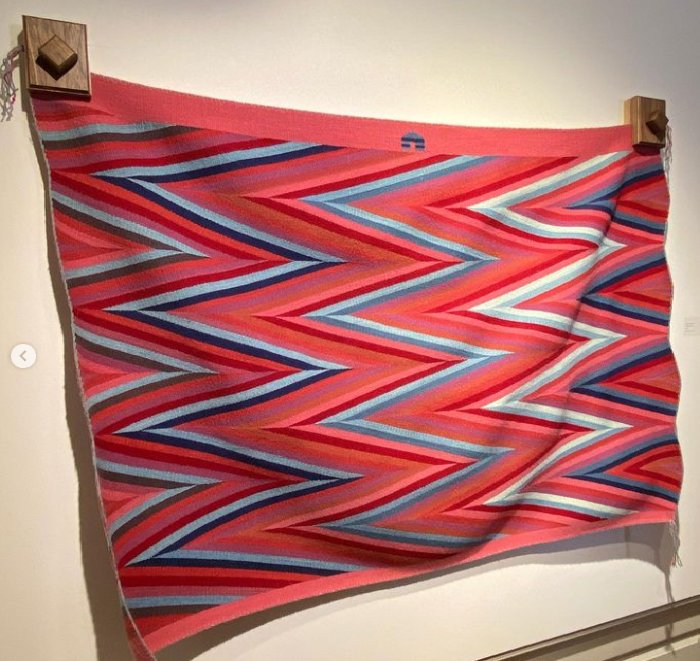
The list goes on and on. Also check the work of Zefren Anderson and Nikyle Begay. I just hope one day to hold a candle to this work. In the meantime, I still have the ability to make cool things for my bikes.
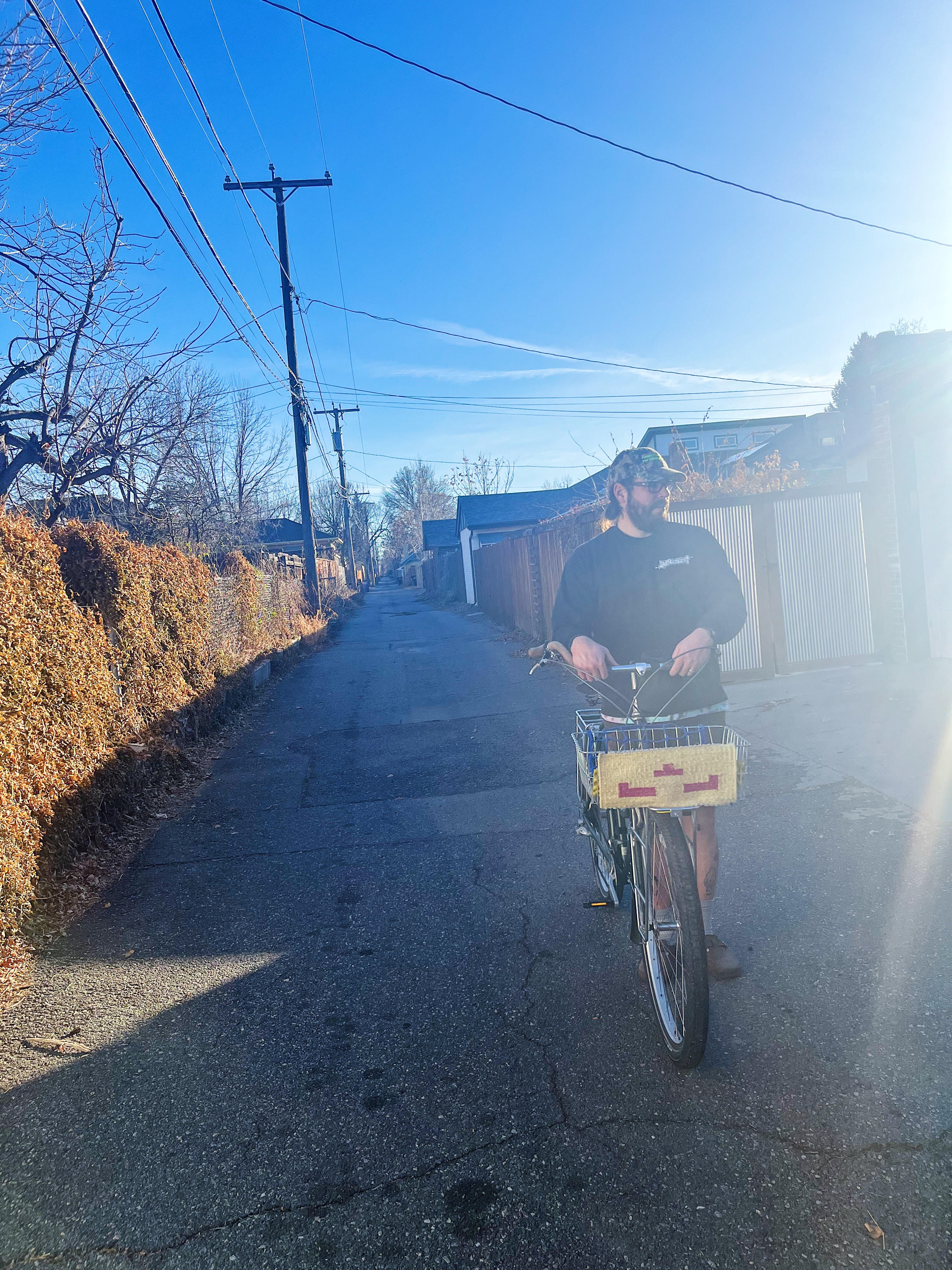
If you have a basket on the front of your bike, I want to make you a weaving. Shoot me an email to chat about pricing, colors, and dimensions.
Workshop Mix of the Week
Ok, new feature of workshop notes is the mix or song of the week. This is a song or a mix full of songs they help me to get into the mode to go analog by spinning yarn, weaving, or writing. This week is my ode to Aphex Twin. This mix includes tracks across his discography with some of his more subtle, melodic tunes, rather than his drum and bass or breakbeat songs. It veers more toward the vein of his Selected Ambient Works-type songs, because I wanted to imagine that I was a cyborg feeling emotion for the first time. Yes, you heard that right. I do indeed feel like I am disengaging from some extremely robotic self when I pick up a spindle or sit at a loom and am finding my own “soul in the machine” type moment. As someone who has read a lot of William Gibson, I sometimes imagine myself as someone who lives within the bridge trilogy in the shanty town on the Golden Gate Bridge, plying my craft for sale on the side of the street in the rain. This mix I put together on Youtube captures the soundscape of that life.
Thanks for being here, dear reader. This is the most fun I have had writing in a while. I hope you are well. I send you eternal gratitude for your support
Member discussion